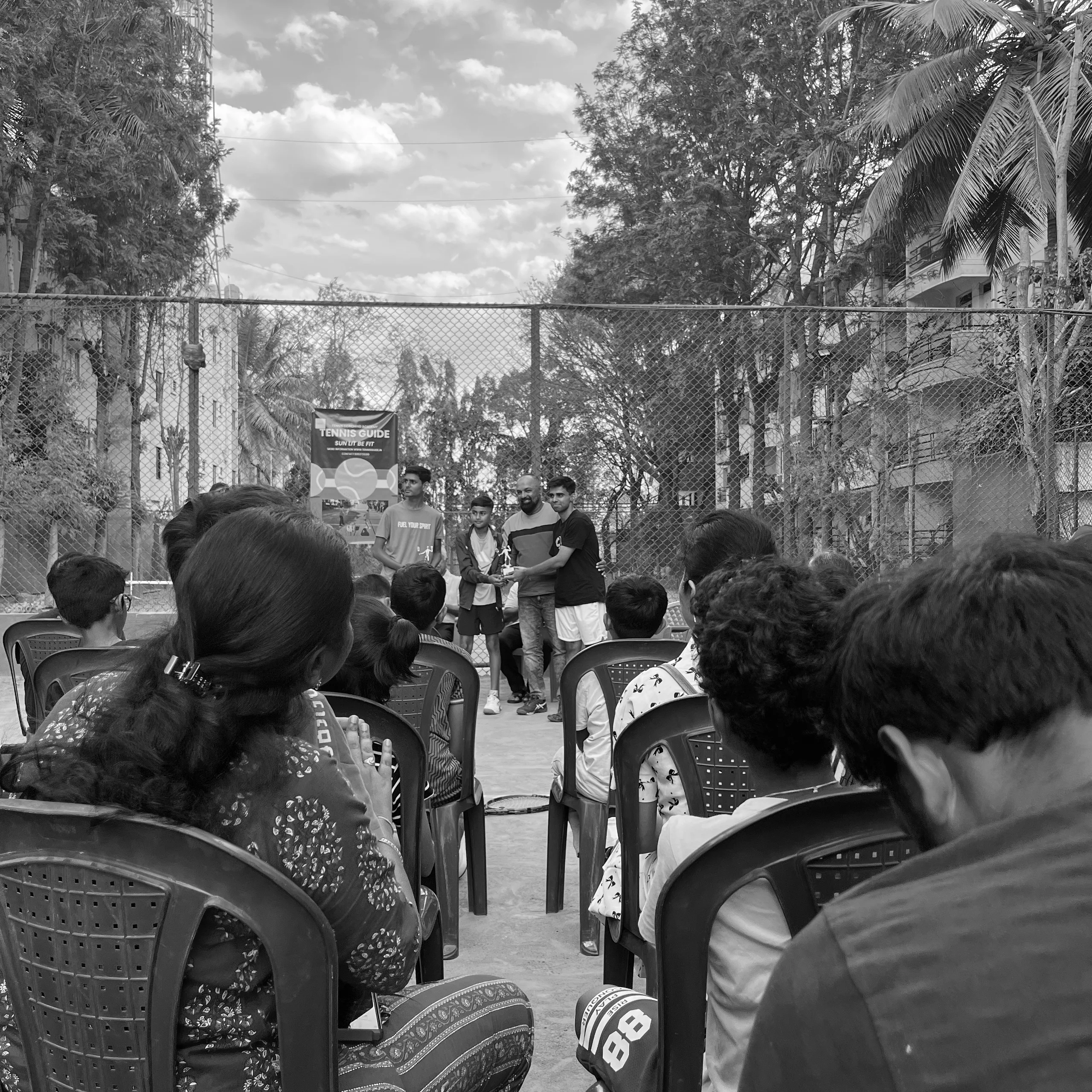
Seven months in, my first tournament
Doubles: Runner-up · Singles: Round Robin
Seven months after picking tennis back up after a decade away, I signed up for a two-day open tournament with no idea what I was walking into. By the end of day one I had a runner-up trophy, and by the end of day two I could barely stand.
I first played tennis as a child, two years of training and then a decade of nothing, and I dropped it the way children drop things when something else pulls harder. In July 2025 I picked it up again, abruptly and with more commitment than is probably sensible, which is how adults pick things up when they decide to. By February I was at the court six mornings a week, and I had signed up for my first open tournament (an open tournament is one that anyone can enter), the “Tennis Guide Annual Tennis Tournament”, held at my own academy.
I didn’t know what I was doing. I knew how to hit, and I had been working on depth and on not shortening my swing at the last second. Depth means keeping the ball landing past the service line, the line a little more than halfway from the net to the back of the court, because a ball that lands deep keeps the other player at the back and gives them nothing easy to hit. Shortening the swing is what nerves do to a stroke, the racket pulls up short just before the ball, and it is the first thing that goes when the score matters. My court sense, the feel for where the ball is going to be and where I should be by then, was that of a seven-month player, enough to feel the shape of a rally but not quite enough to trust it under pressure, and I signed up anyway.
Two weeks before the start I fell ill, with a week in bed and a week of recovery, and by the time I was back on court I had one week left to prepare. I trained through it, and whether that was sensible or stubborn is a question the tournament would answer.
Day one, doubles
The first day was open doubles, two a side, and I partnered with Sumit. We were playing on the courts I train on every morning, which I had assumed would help, but it didn’t - familiarity with a surface does not transfer to familiarity with competition. I had never played a competitive match before, and I didn’t know how I would respond to the scoreboard, to the net cord at 4-4, or to the opponent who was clearly better than me and knew it. A net cord is the ball that clips the top of the net and drops over for a point nobody earned, and at 4-4, four games each, one of those can turn a set.
The first match settled me. We won it comfortably, and I left the court thinking that was not representative of what this tournament is going to be, and I was right.
The second match was harder, and we lost it, which was the most useful thing that occurred on day one. I don’t think I played badly - the other pair were simply more coordinated, quicker to the net (which is where doubles points get finished), and tighter in the rallies. I walked off court and tried to figure out what had actually happened.
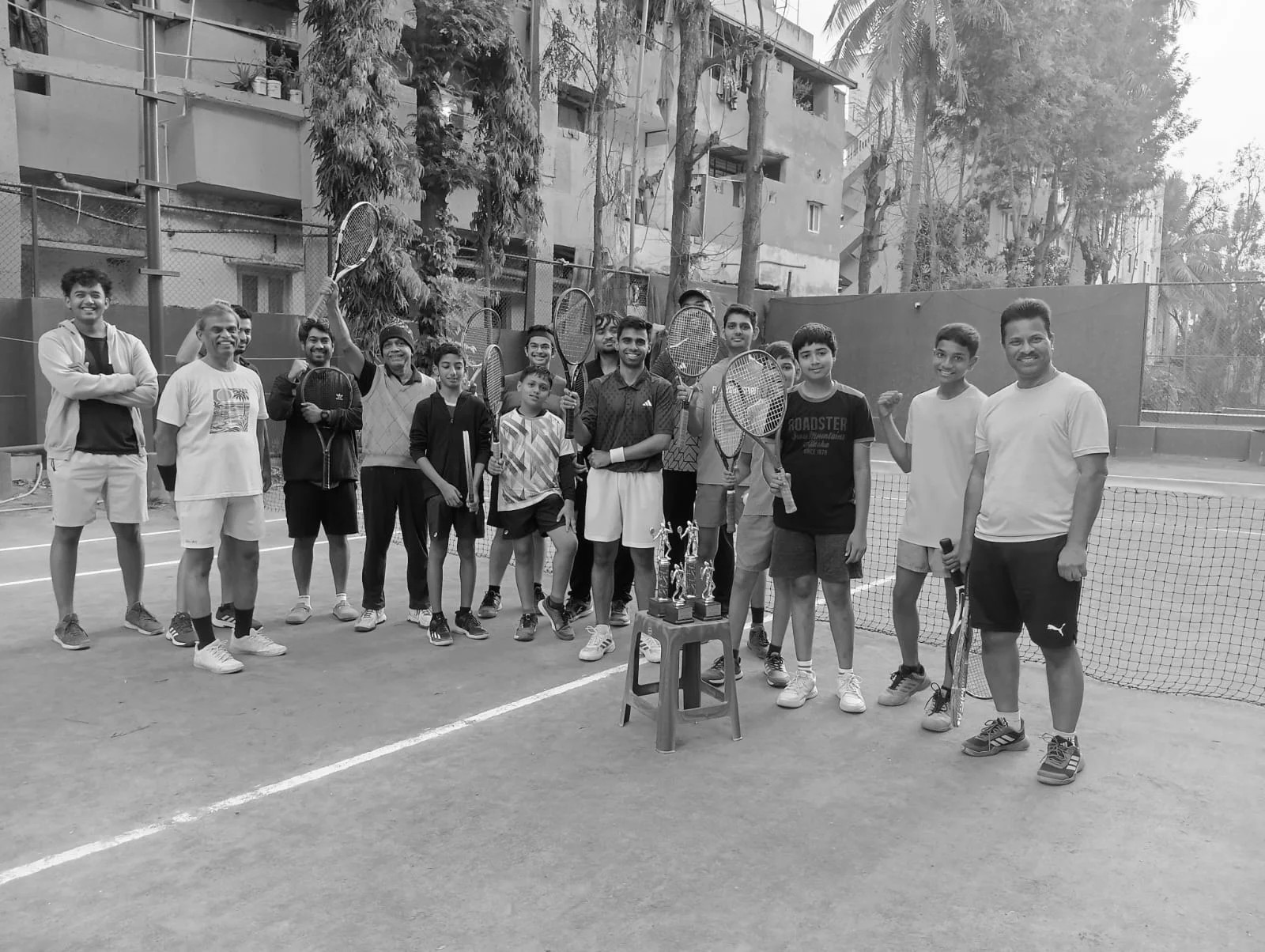
The third match we won, which put us through to the semi-finals.
The semi-finals we won with ease, more easily than I expected, which put me in a state of mild suspicion going into the final. Easy semi-finals often mean the final will not be.
The final was not easy, and it went to a super tiebreak. A super tiebreak is what doubles plays instead of a deciding set, one long tiebreak to ten points, won by two clear points, so the whole match comes down to a handful of points with nothing to fall back on. I don’t remember many of the individual points - competitive tennis compresses time in a way I had not anticipated, where full sets exist in the memory as impressions rather than sequences. What I do remember is the tiebreak itself, a point-by-point accumulation where the score was the only thing in my head and muscle memory either held or it didn’t, and at 8-8 I found out who I was. We lost 10-8.
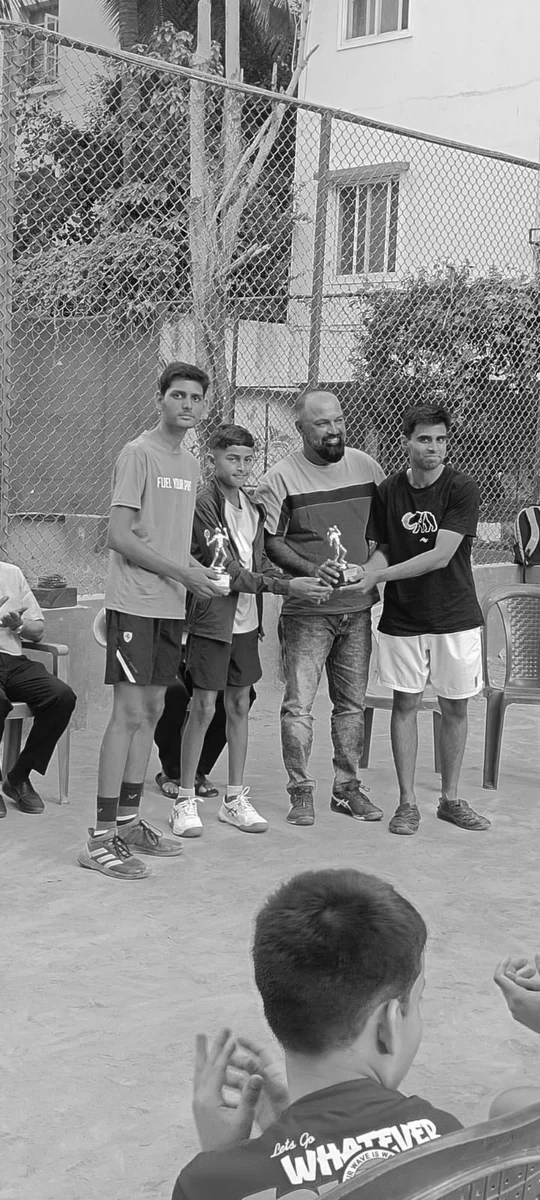
We finished second, and I collected a trophy. I don’t have strong feelings about trophies in general, but I have strong feelings about this one. It is the first piece of evidence that I belong on a tennis court in a competitive context, and that is worth more than the object.
Day two, singles
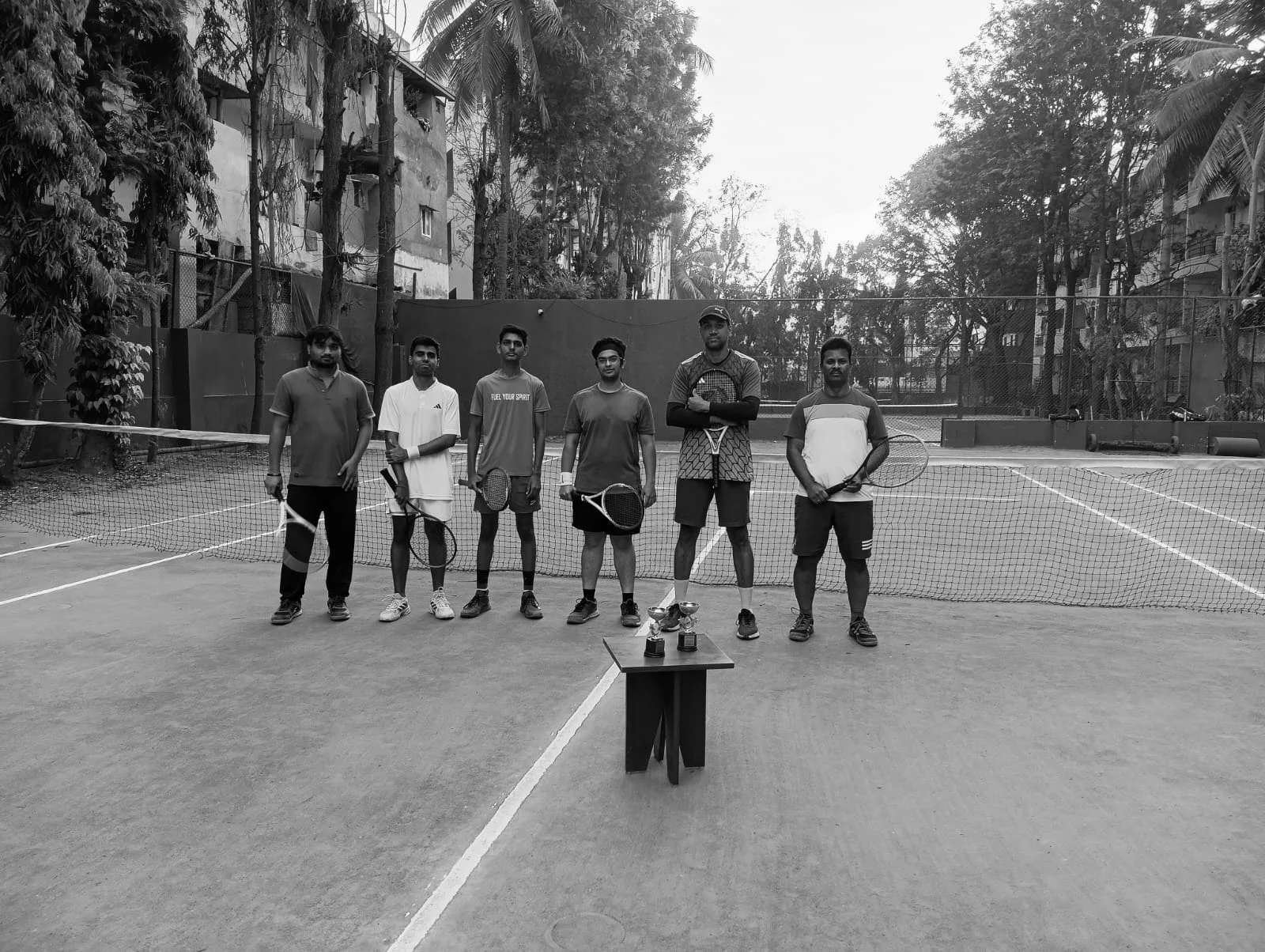
Day two was open singles, one against one, and I was exhausted in a way I had not properly anticipated. Seven months of early-morning training had given me a base of fitness, but tournament doubles is a different kind of effort (the few seconds between points to get your breath back, the sustained concentration, and the adrenaline of a close final). By the time I arrived on day two, my legs were heavy in a way that no warmup was going to fix.
The singles were played as a round robin, where everyone in a group plays everyone else in it and the best of the group go through, and I lost both my matches.
I don’t think I played well, and I don’t think I would have played well even without the fatigue. Singles exposes the parts of your game that doubles lets you hide. You get two tries at a serve, so the first one can be hit hard and the second one has to go in, which makes the second serve the careful one, and the careful one is the easier one to attack. The return is the shot you hit back off a serve, and when you have moved late the ball is on you before the swing is ready. And in a rally there is no partner to cover a gap you left, so every decision is yours alone. Every gap I had was visible, and I was too tired to close any of them.
I didn’t expect the response from the people I played against. Both opponents came to me after each match and said something, one that my ball was heavy for someone who had been playing seven months, and the other that I had a good eye. A heavy ball is one with so much spin on it that it feels heavier than it should when the other player’s racket meets it, and a good eye means seeing the ball early and judging where it will be. I don’t know how to evaluate compliments from people who just beat you, but they were specific (they had noticed something), and specific observations from strangers are worth keeping.
What I learned
Seven months isn’t long, I know this, and I am not under any illusions about where I stand in relation to players who have been at this for years. But the tournament showed me something I needed to see, which is that the gap between training and competition is real, and it’s not only technical. The technical part is the strokes, and training can fix those. The other part is what happens in your head when the score matters, and that was the part I had never tested.
I had trained under pressure in the sense that my sessions were demanding, and I had been working at things that were genuinely difficult for me. But competing against a stranger in a final is a different kind of pressure, with stakes that a training session cannot simulate, and I did not know how I would respond to it until I was in it.
I responded reasonably well. My shots held, my first serve held well enough, and I did not collapse at 8-8. I was also clearly limited - the range of shots I have is still narrow, the tactical reading of an opponent (working out what the other player can and can’t do, and playing to it) is still developing, and the singles game I have is the beginning of a singles game rather than a finished version of one.
The runner-up finish in doubles tells me that the consistency I have been working on is real and usable in competitive conditions. The singles result tells me I have a lot of work still to do, and that fatigue management is a skill I need to take seriously before my next tournament.