Twelve days in England and Scotland
I went to see the university I had only studied at online, Viren came along to tour the UK, and we kept asking one question - why can't India be more like this?
Last September I started a distance-learning MSc at the University of Edinburgh (UoE), and this trip was planned because I wanted to visit the campus I had only ever seen through a screen. Viren, a close friend from work, wanted to tour the UK along with me.
Over the twelve days we kept noticing the stark differences between the UK and India, and one question kept coming back to us - why can’t India be more like this? I’m writing it all down while it’s still fresh, from the planning to the flight home.
Table of contents
- Before we left
- Friday 14 June: Bengaluru to London
- Saturday 15 June: London in the rain
- Sunday 16 June: the train to Edinburgh
- Monday 17 June: Edinburgh
- Tuesday 18 June: St Andrews and Fife
- Wednesday 19 June: Technopole and Rosslyn
- Thursday 20 June: back to London
- Friday 21 June: a concert and a boat
- Saturday 22 June: Oxford
- Sunday 23 June: Bath
- Monday 24 June: the relaxed day
- Tuesday 25 June: home
Before we left
We started planning in December, six months in advance. The visa came first (forms, an appointment and then a wait), then the air tickets and then the hotels. We flew Air India, Bengaluru to Mumbai to Heathrow and back the same way twelve days later, with a baggage allowance of 46 kilos each.
The whole plan lived in a Word document called “Itinerary”. It ran from Leave home at 5:30 AM on 14 June to Arrive at KIA at 5:45 AM on the 26th, and every day in between was split into Morning, Lunch, Afternoon and Evening. Most dinners had a restaurant and a time against them, and on the Wednesday it said Lunch with Craig. We got it reviewed by our colleagues at AMD and by our families, and both sent back notes.
One Friday night at the end of April, Viren booked the lot in about an hour. The Premier Inn at Paddington for the first two nights went through at 11:29, the hub by Premier Inn on Rose Street in Edinburgh at 11:33, and Paddington again for the last five nights at 11:40, and the flight back from Edinburgh to London City followed at one minute past midnight. The confirmations were in my inbox by 12:26, and the train tickets came the same day (London to Edinburgh via Peterborough, Coach J, seats 61 and 62, £70.40 each).
June in the UK is colder than any June back home, hence there were clothes to buy. There was insurance to sort out too, twice over. The weekend before we left, I put everything in one folder as PDFs (flights, hotels, trains, the concert ticket, the tour and the policies), and we were still editing the itinerary on the tenth, four days before we flew.
The night before the flight, the bags were packed and the first line of the itinerary said Leave home at 5:30 AM. After six months of planning, that is when the feeling finally hit me - it’s actually happening.
A lot of the plan survived the trip, though not all of it. The Highlands tour turned into a day in Fife, the museum day turned into a visit to our own office, and at seven, when the plan said dinner, we were usually somewhere else.
Friday 14 June: Bengaluru to London
By seven that morning we were inside Terminal 2 at Kempegowda, which is built to feel like a garden, with plants trailing down from the ceiling. Our first photo of the trip is a portrait against a wall of leaves there.
We flew to Mumbai first, and then nine and a half hours to Heathrow, landing at seven in the evening London time. The itinerary had us at the Premier Inn in Paddington by ten, which is half past two in the morning by a Bengaluru body clock, and its last line for the day just said Retire for the night.
Saturday 15 June: London in the rain
Paddington Basin and the parks
For our first full day the itinerary listed eleven places, from Big Ben to Covent Garden, and under Morning it also said to ask the hotel for places to visit.
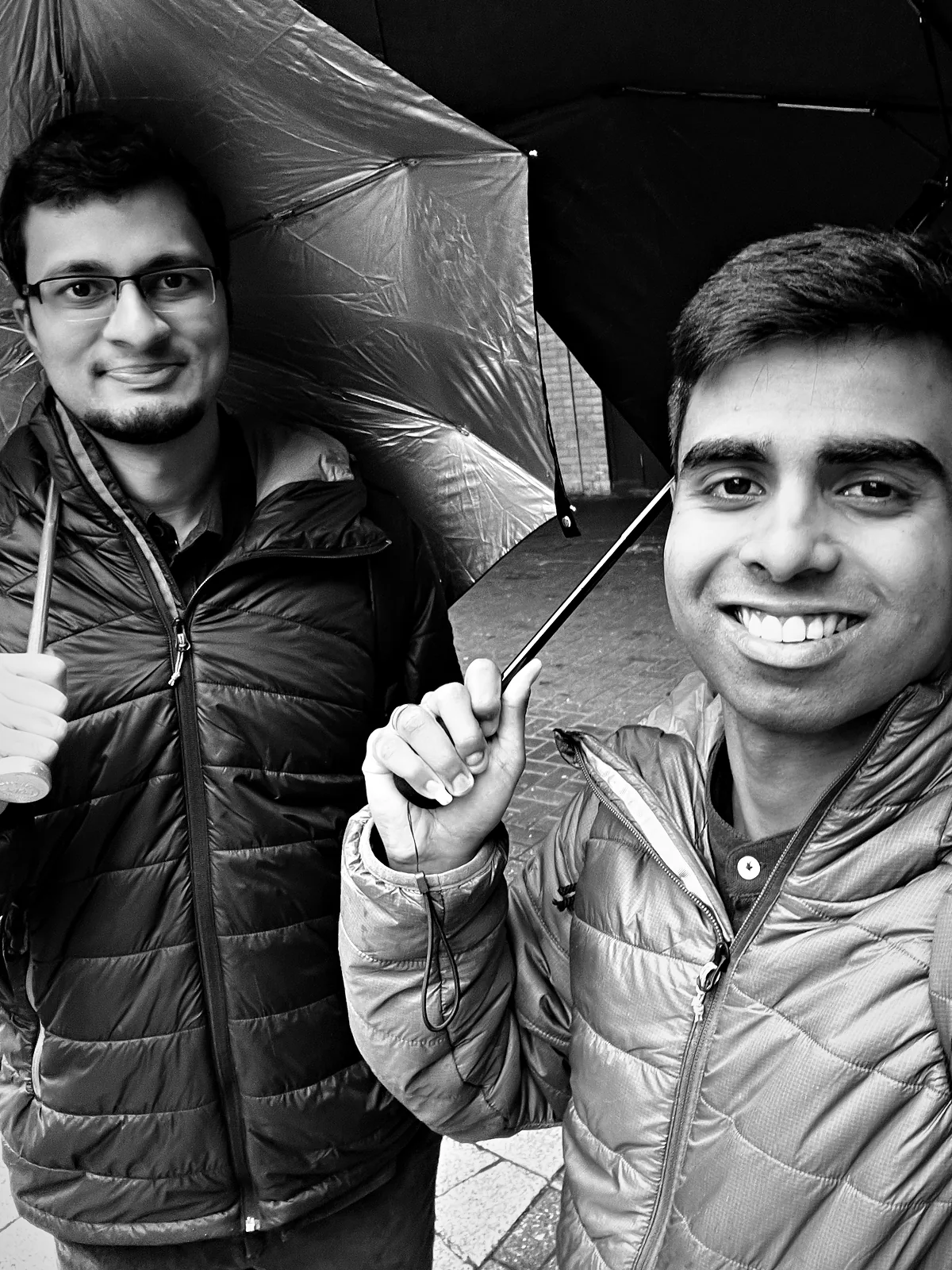
It was raining when we stepped out. Our hotel sits on Paddington Basin, at the end of a canal arm, and that morning it was glass offices around grey water, with a ring of fountains going off in the wet. By ten past ten our umbrellas were up.
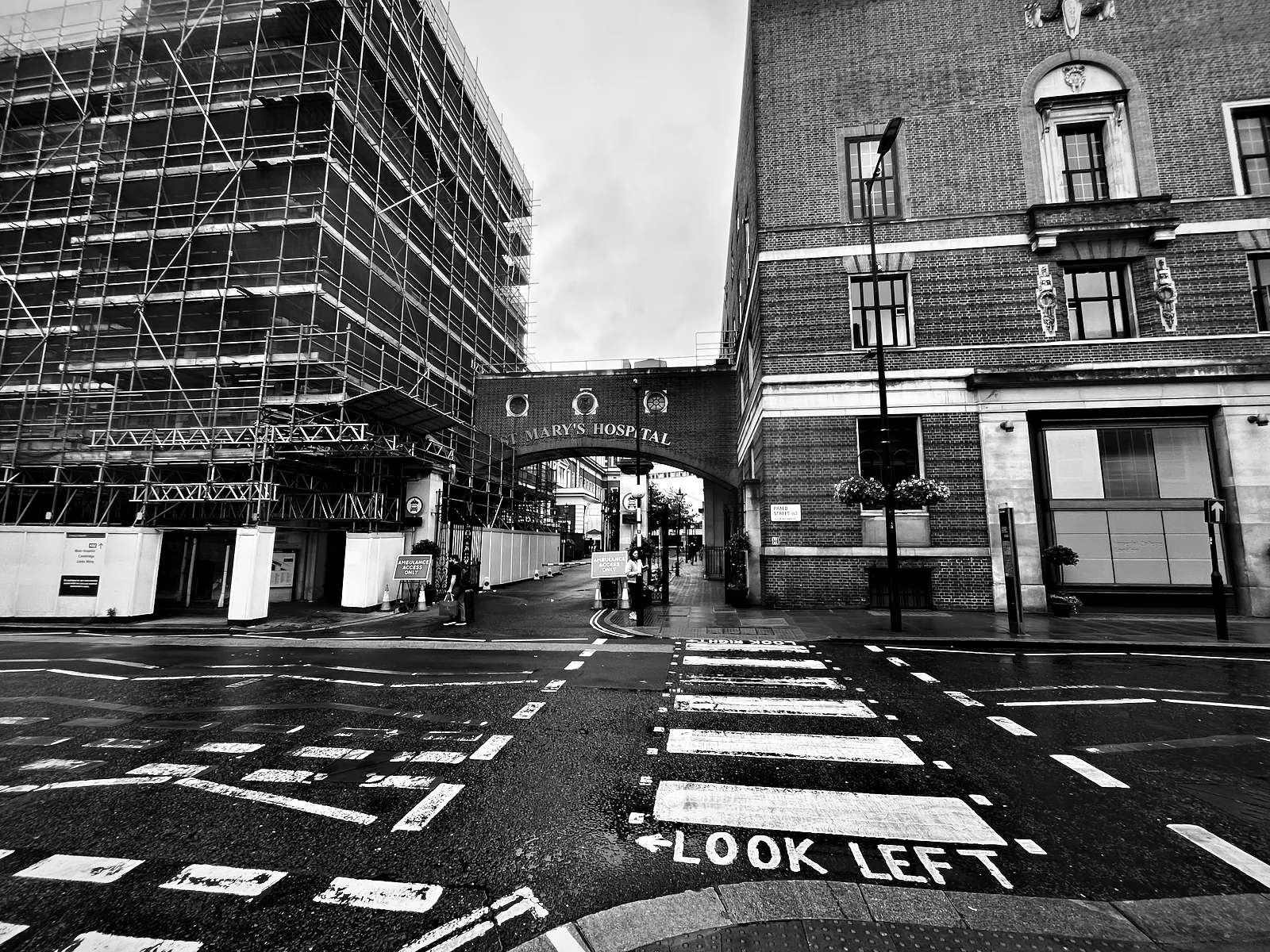
On the way to Hyde Park we crossed the road outside St Mary’s Hospital, where LOOK LEFT is painted at the kerb in big white letters. We noticed that the traffic in the UK waits for the pedestrian to cross, whereas in India crossing a road is a do or die situation.
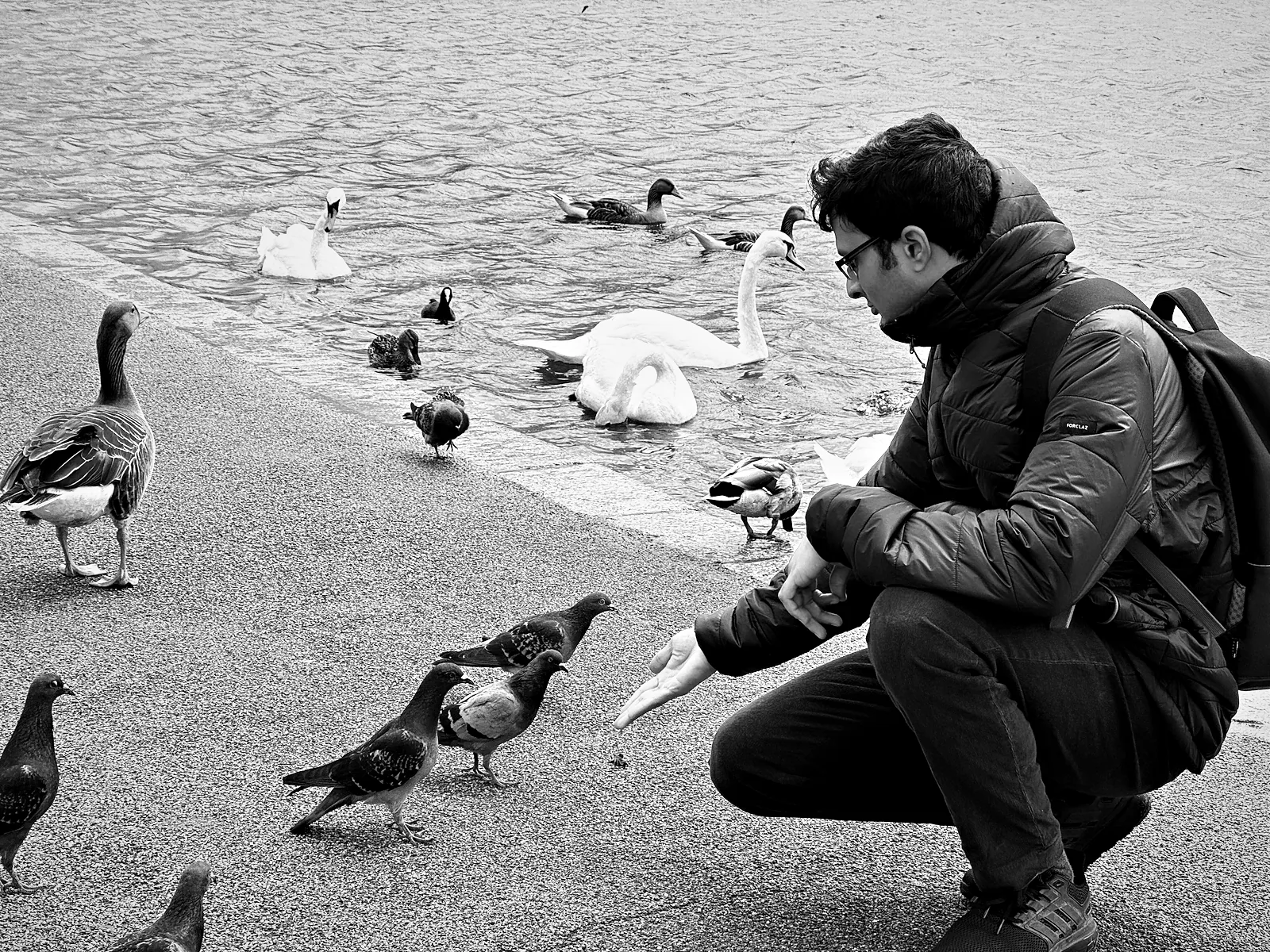
Hyde Park was long wet grass and empty benches, with the rain stopping and starting. At the Round Pond in front of Kensington Palace, Viren crouched down to feed the pigeons, and geese and swans came over as well. Beside the palace, the Cradle Walk runs around the Sunken Garden (a tunnel of lime trees trained over an iron frame, with arched windows cut into the green).
It was also the morning of Trooping the Colour, the King’s Birthday Parade, which was happening nearly four kilometres away while we were feeding the pigeons.
From Queensway to Covent Garden
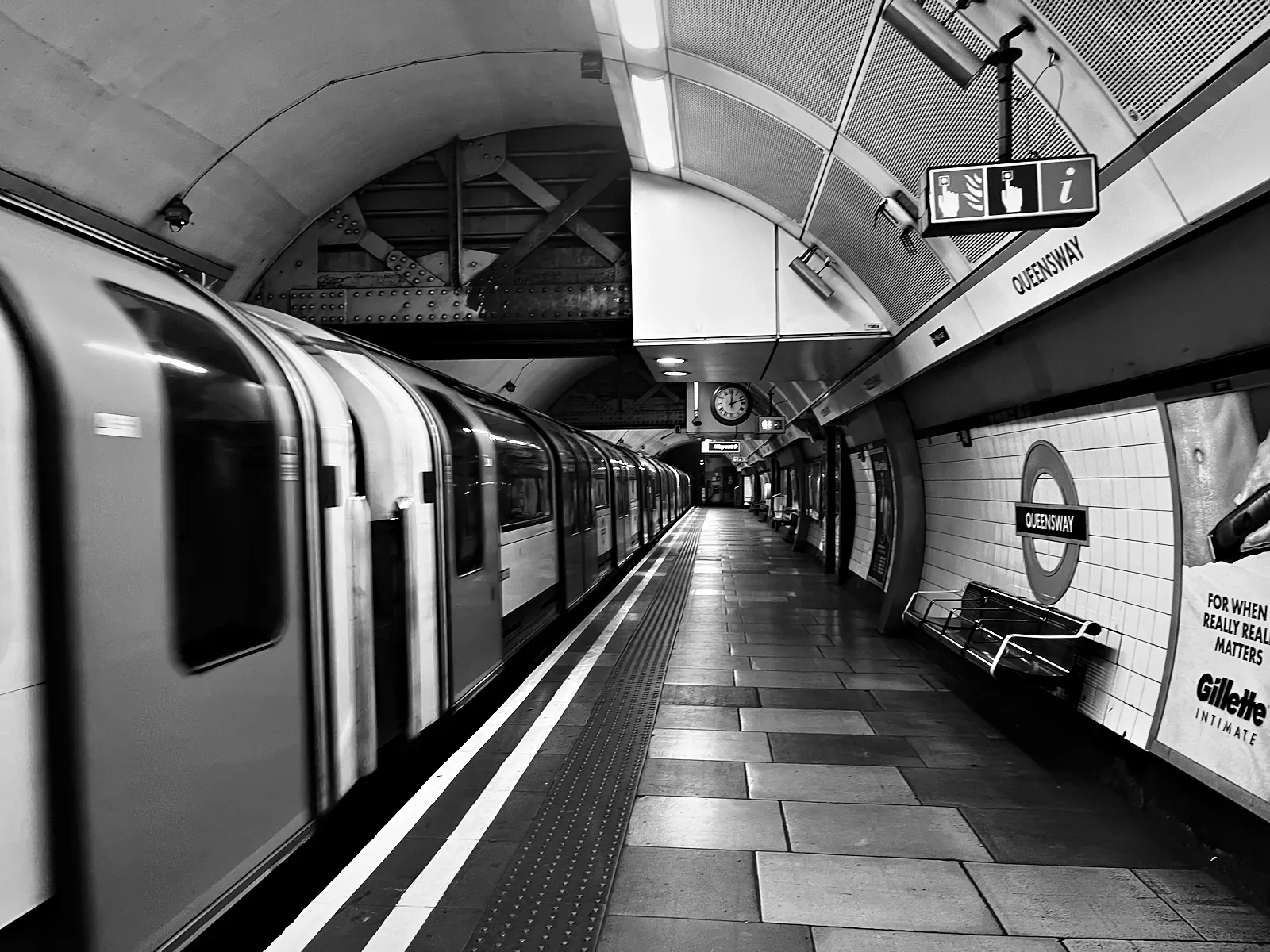
At ten past twelve we took the Central line from Queensway into the West End, holding paper Travelcards, day tickets for the Tube and the buses, stamped 15 JUN 24.
We came out into proper rain, with umbrellas up outside the Palace Theatre at Cambridge Circus, and by one the sun was out over Soho and the wet streets were shining. Covent Garden went exactly the way the itinerary said: Explore Covent Garden and watch street performances.
From the Mall to the Tower
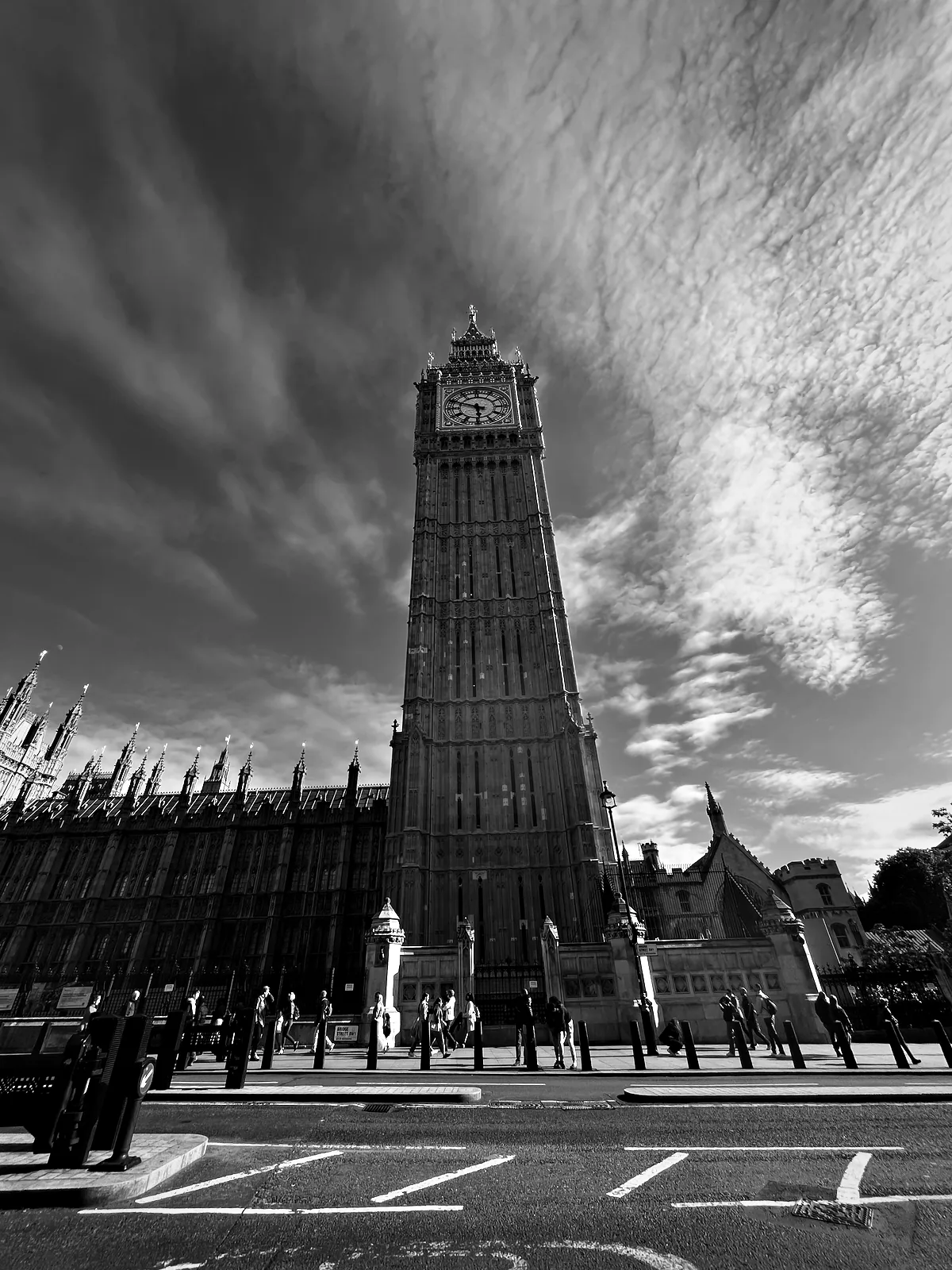
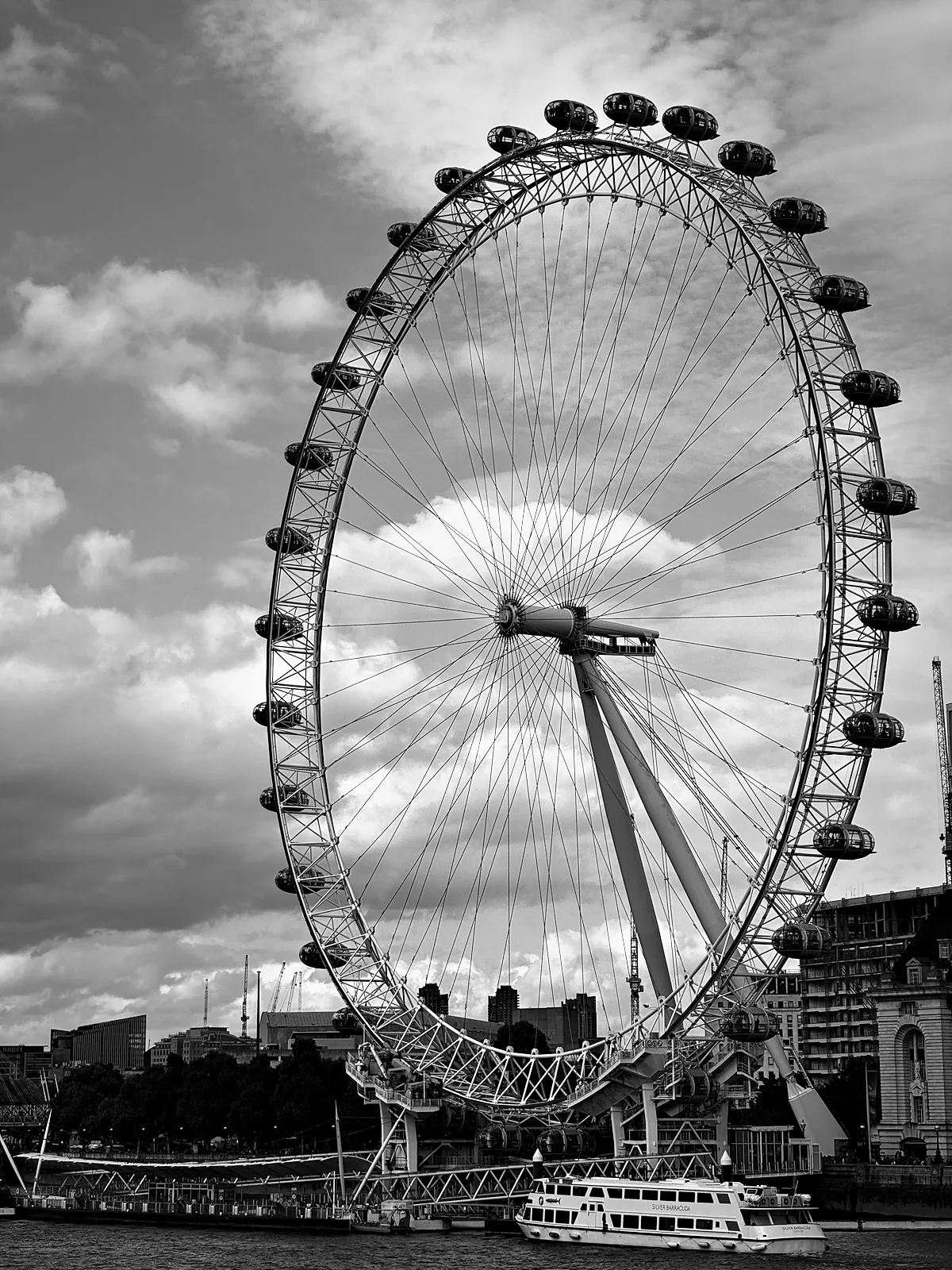
By five we had reached the Mall, still hung with Union flags from the parade, with crowds walking up to Buckingham Palace. On the way to Westminster we found an Egyptian goose sheltering under a park bench. At ten to six the Elizabeth Tower, the one with Big Ben in it, stood under a streaked sky, and then the rain came back as we walked along the Embankment past the London Eye.
The itinerary said dinner in Chinatown at seven, but at seven we were standing on London Bridge instead, looking down the river at Tower Bridge, with HMS Belfast moored below it.
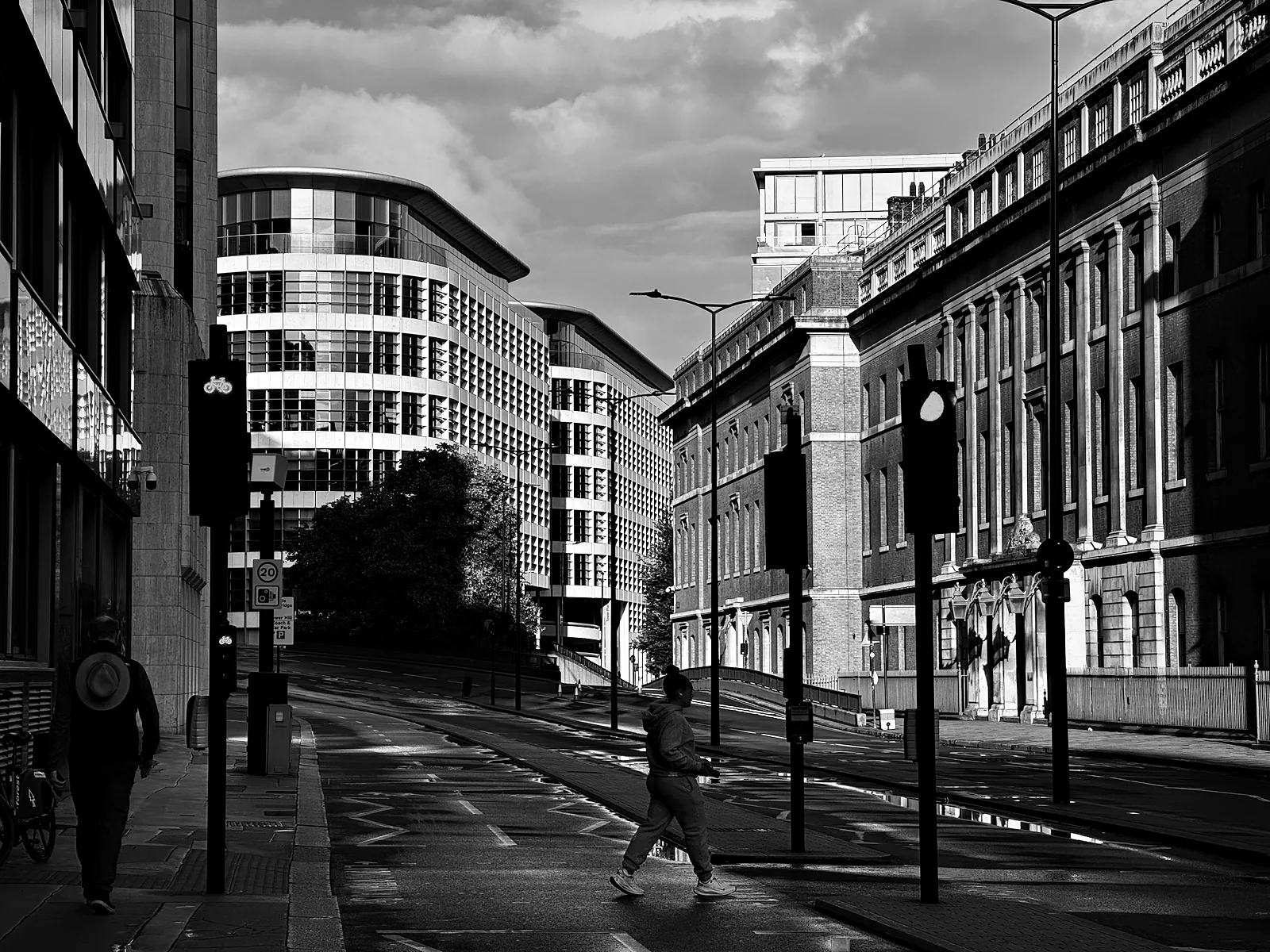
From there we walked east through the City. Lower Thames Street was almost empty in the evening light, with just one person crossing the whole width of it, and by half past eight we were at the Tower of London.
There are lions made of wire in the Tower moat, and real ones lived there from the 1200s until 1835, in the Royal Menagerie.
Sunday 16 June: the train to Edinburgh
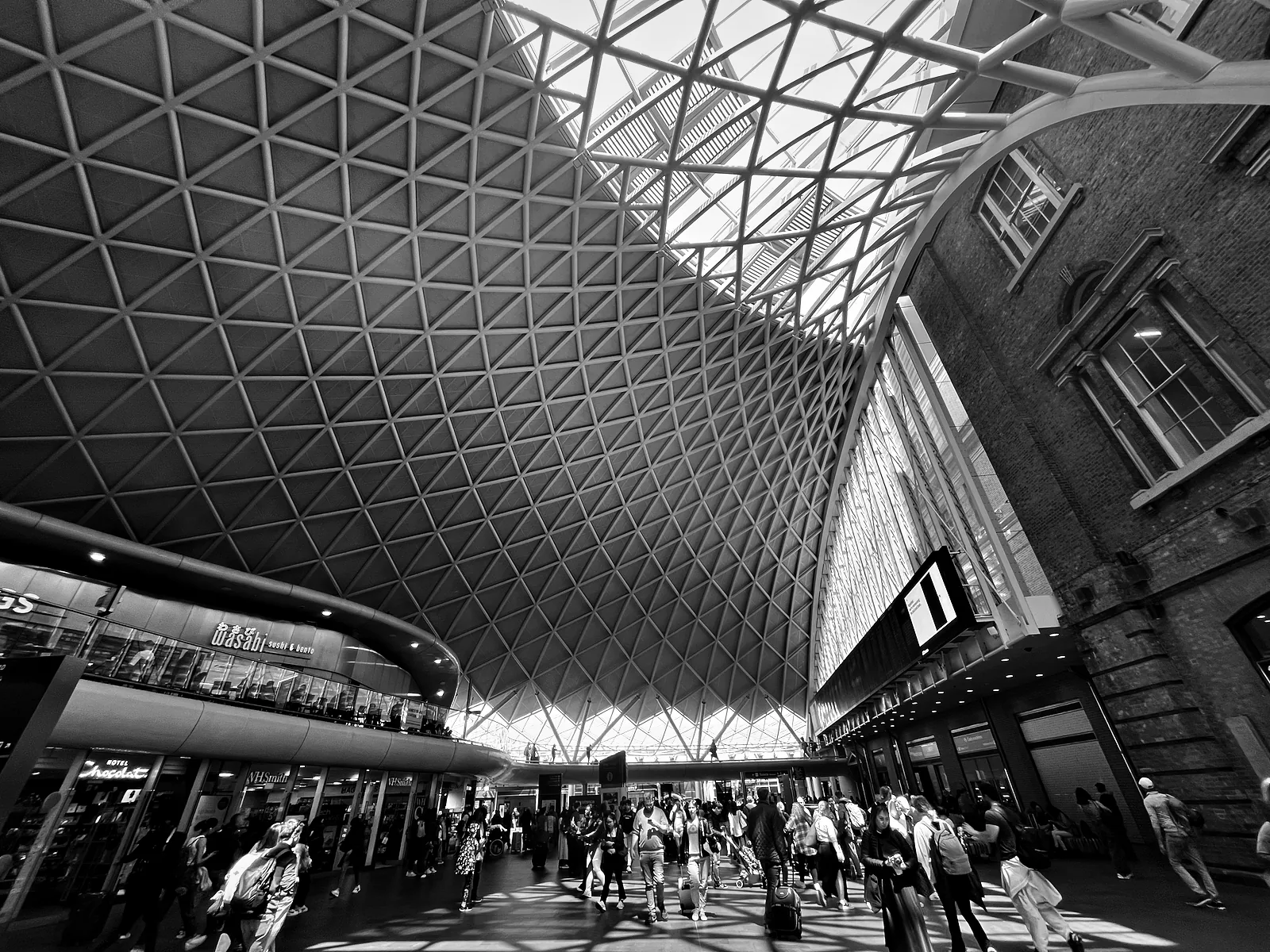
We checked out and were at King’s Cross by quarter to one, under the white steel lattice of its western concourse. We spent some time there looking around for Harry Potter merchandise and the Platform 9¾ trolley half into the wall, and came away with keychains. We each had two LNER tickets for the same seat on the same train (London to Peterborough, then Peterborough to Edinburgh), which is an old trick for paying less on British railways. Then our train was cancelled.
The next train to Edinburgh was full, but we got on it anyway, without seats, and stood at the end of the bogie beside the toilets for the entire four hours.
Typically in India this would have been the worst experience - the toilets stink, people keep moving around, there are vendors everywhere and the journey is jerky, so nothing about it is comfortable. Here it was effortless. People passing by offered us their seats, and the ride north was one smooth journey. The views were breathtaking (flat fields under the wires, wind turbines on the horizon, and the Tyne at Newcastle just before four, with the city’s bridges lined up downstream). At half past four we crossed the Tweed at Berwick on the twenty-eight arches of Robert Stephenson’s railway bridge, and a few miles on we were in Scotland. We didn’t even realise we had been standing beside the toilets for four hours until we got off.
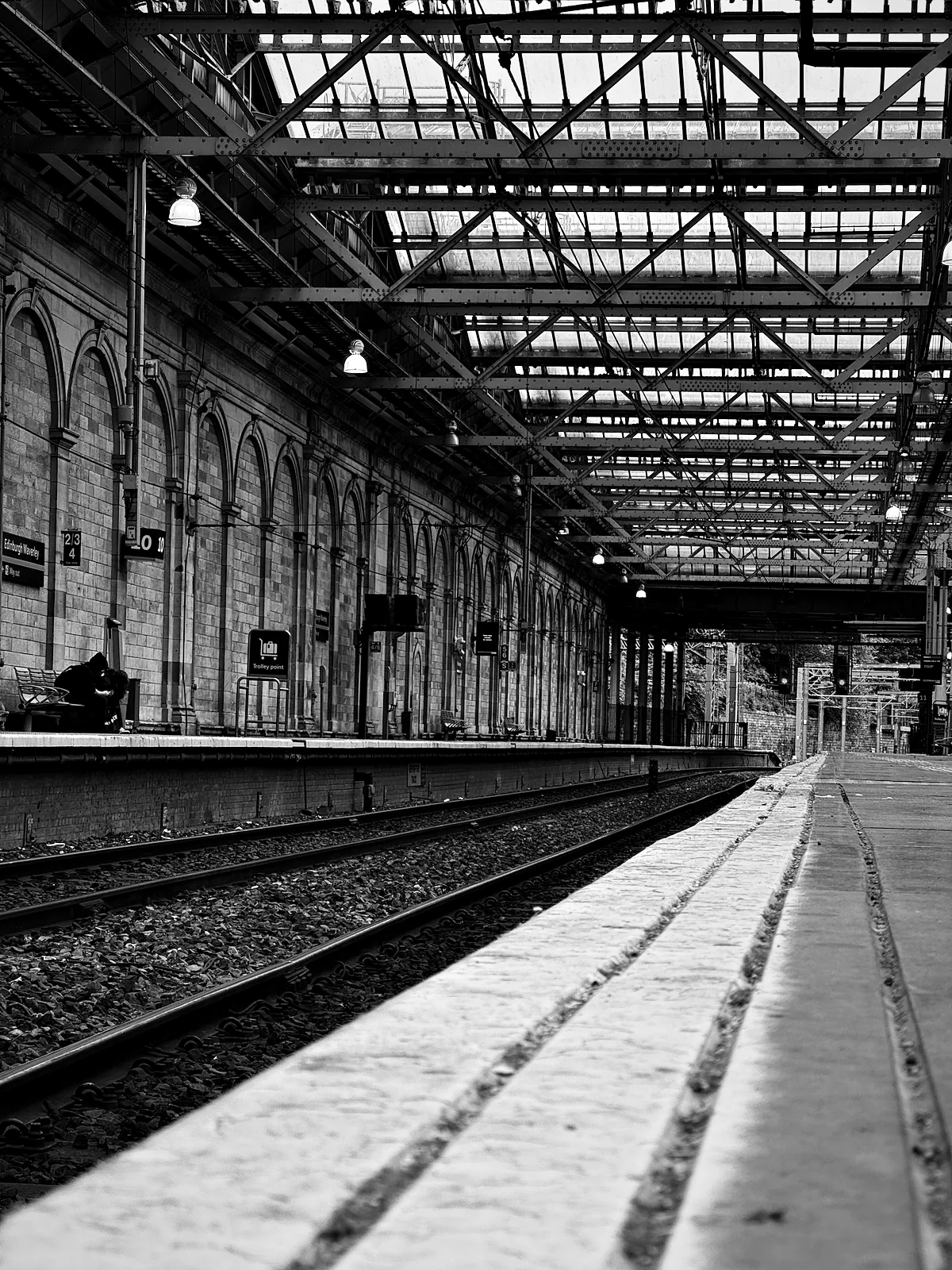
We pulled into Edinburgh Waverley around twenty past five. It is said to be the only railway station in the world named after a novel, Walter Scott’s Waverley. Five minutes after we got off, the platform was empty.
At the hub by Premier Inn on Rose Street, we found that our room had just one bed instead of two. There were no other rooms left, so we went room hunting in the nearby hotels. It was a tense situation, but I had just walked out of the station into Edinburgh, and I was blown away by its beauty, so much so that the tension didn’t feel like anything. I kept saying - “How can anyone be sad in a place like this?” We ended up at Fraser Suites, on St Giles Street just off the Royal Mile, and the trip continued.
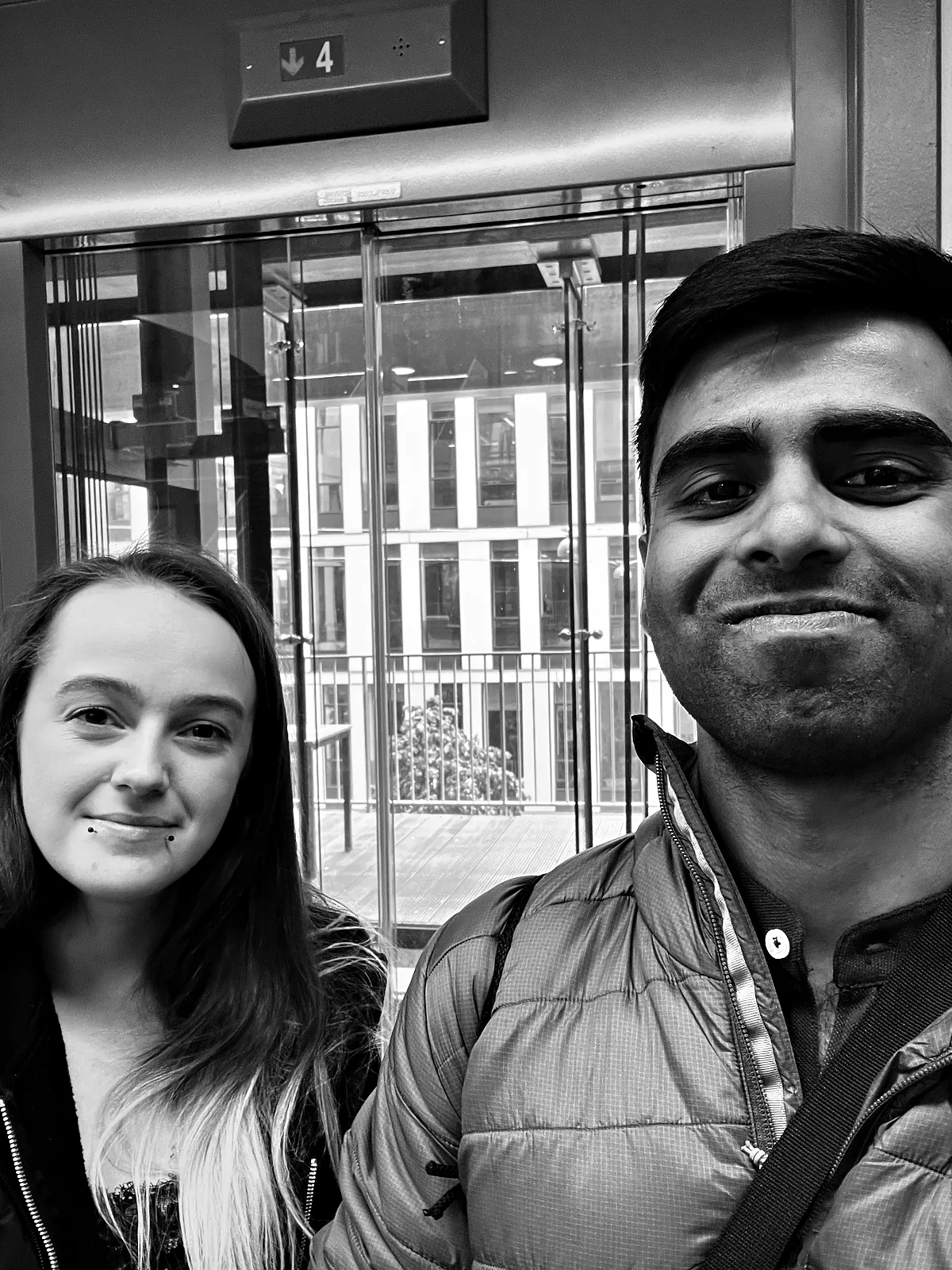
At quarter to nine we went back out to the Royal Mile in broad daylight, since in June the sun sets in Edinburgh after ten. We took our first selfie in Scotland under a Saltire, the white cross on blue that is Scotland’s flag, flying near the Tron Kirk, an old church on the Mile.
Monday 17 June: Edinburgh
The Old Town
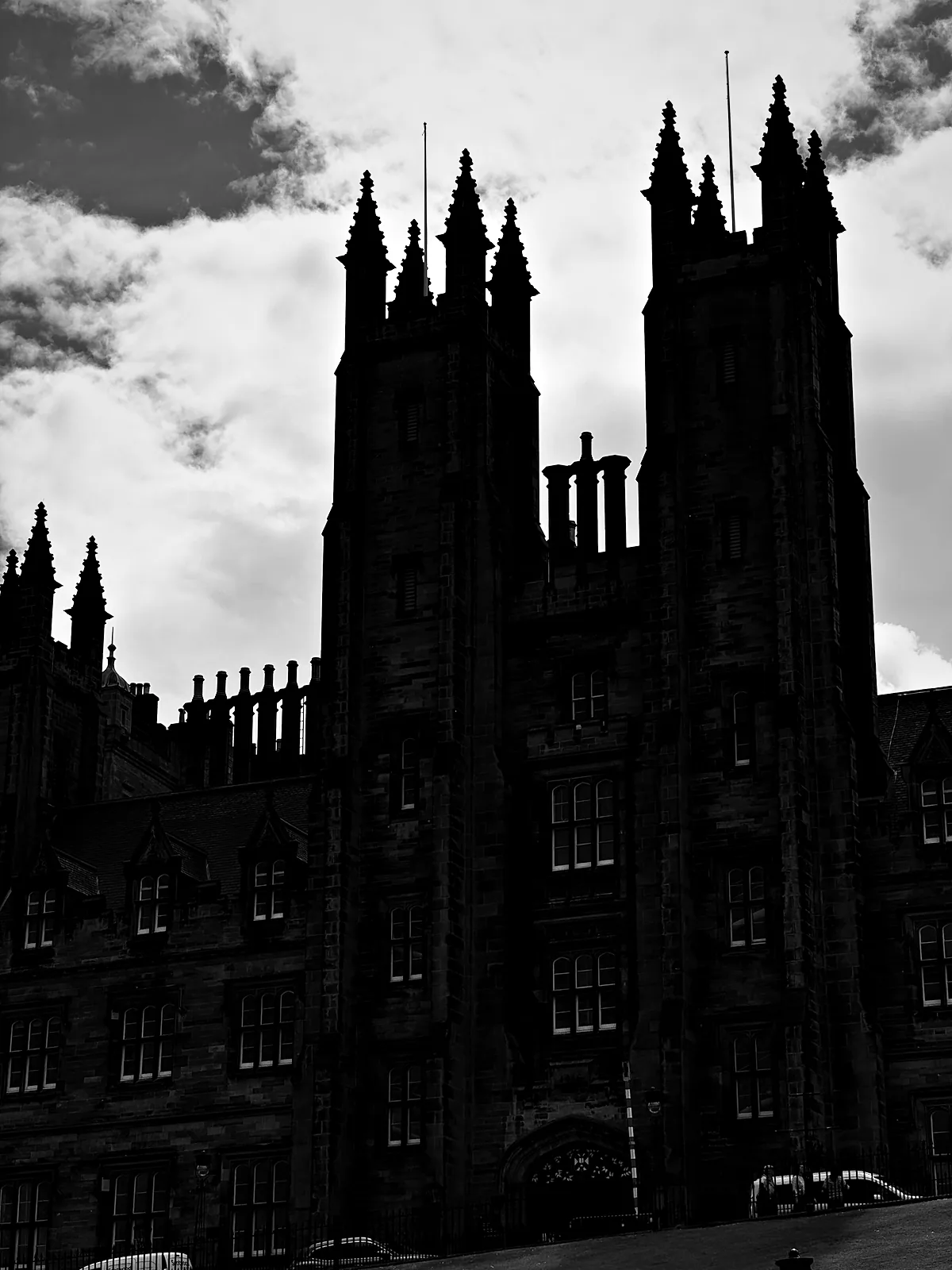
Monday started at St Giles’ Cathedral on the Royal Mile, whose spire is a crown of stone arches. Outside its west door the Heart of Midlothian is set into the cobbles where the old prison stood, and people spit on it for luck. From there we walked down the Mound, the sloping road that joins the Old Town to the New, with the two towers of New College, the university’s divinity school, dark against the sky above us.
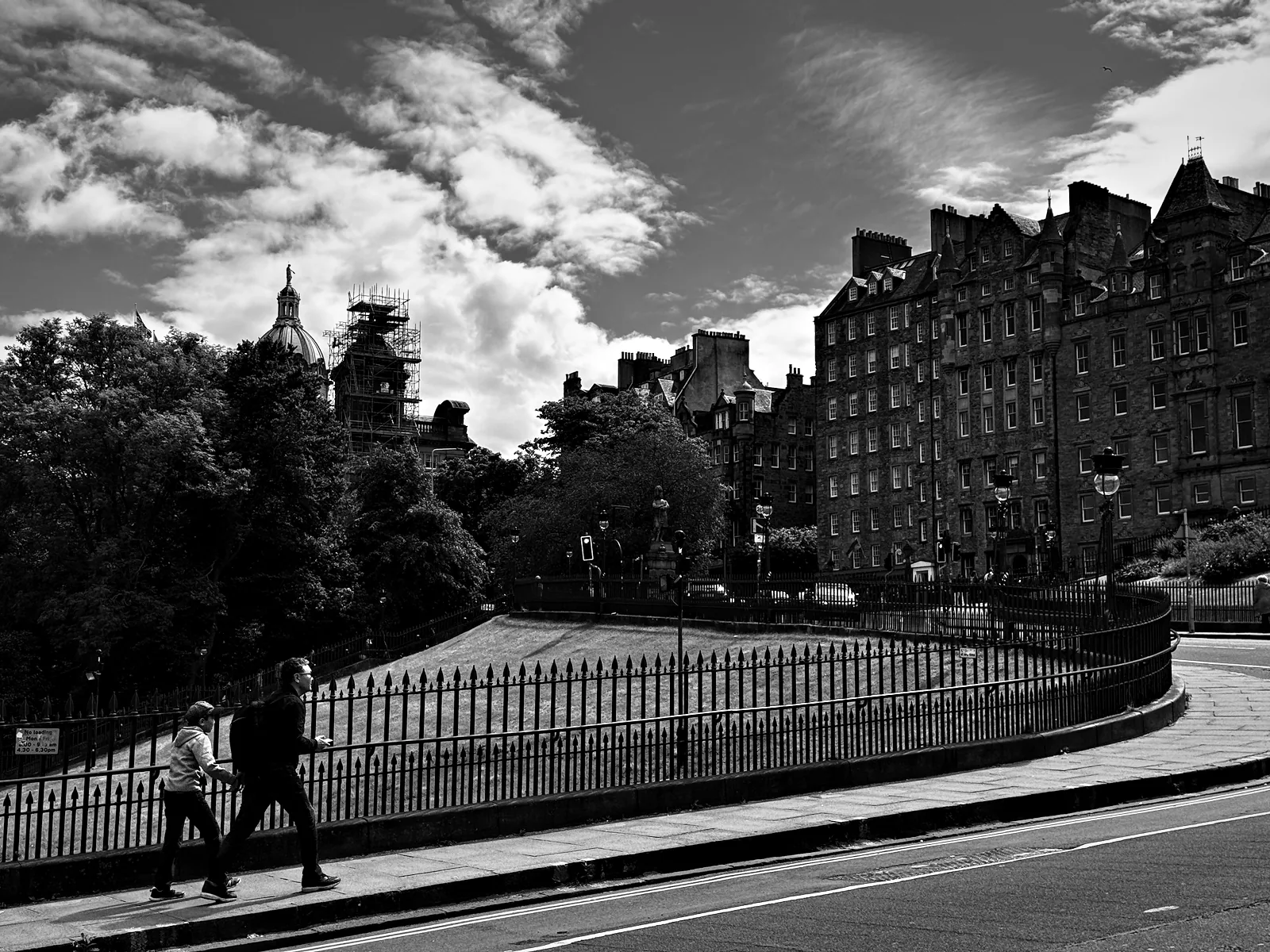
Edinburgh is built in layers. From the bottom of the Mound, the Old Town’s tenements, its tall old blocks of flats, are stacked above Princes Street Gardens, and the Old Town’s streets cross its valleys on bridges, with the Cowgate running along the bottom of the gorge underneath. Victoria Street curves down from George IV Bridge in painted shopfronts, and on both sides of the Royal Mile the closes drop away as narrow stone passages that are mostly stairs.
EPCC and George Square
My MSc is in High Performance Computing, run by EPCC, the university’s supercomputing centre. So Tour the University of Edinburgh in the itinerary meant walking into my own department for the first time, after nine months of it being a laptop screen in Bengaluru.
EPCC is in the Bayes Centre, the university’s building for data science and artificial intelligence. Jemma, the student coordinator, met us there and gave us a wonderful tour of the whole facility, and we met Weronika, who directs the MSc programme, along with some of the other professors. I got my student ID card, and with it access to the Bayes Centre. At half past one we took turns under the EPCC sign at the door.
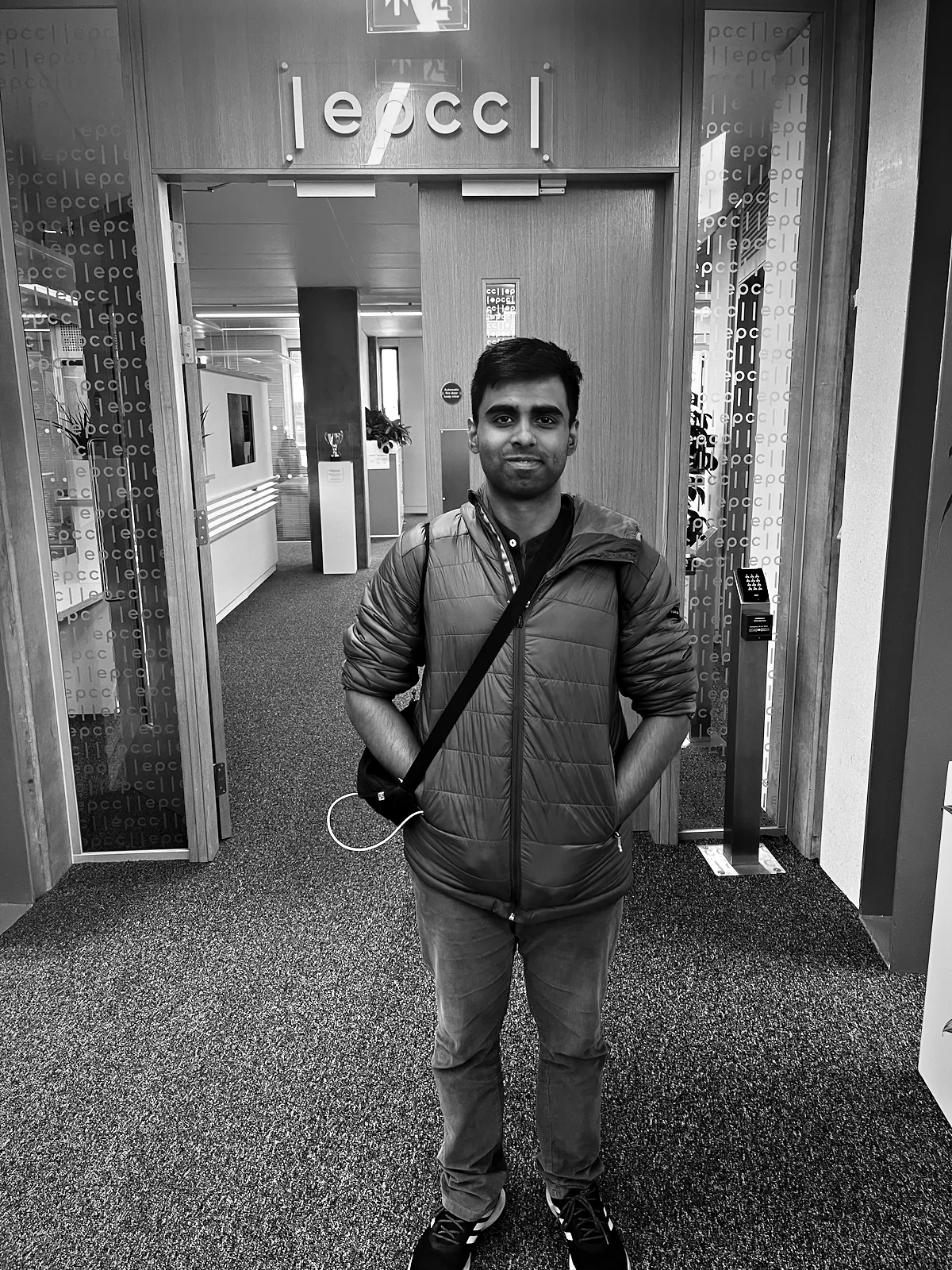
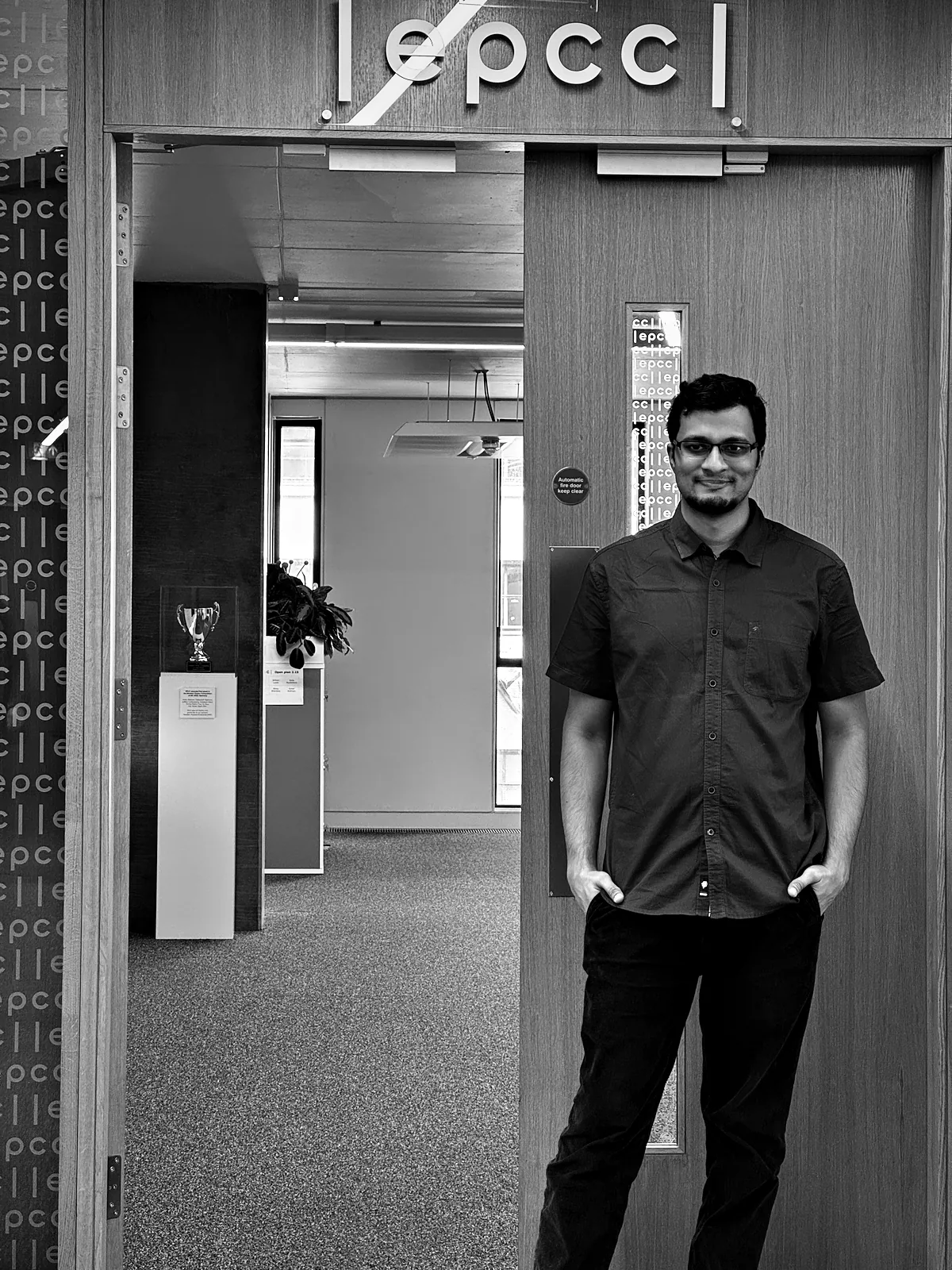
Getting my ID card and having lunch at the canteen, and later at a place nearby, really hit home that I am a student at this prestigious university. I have only ever studied online, so that physical experience put everything into perspective, and it was an awesome campus to finally walk around.
In the afternoon we walked around George Square, in the middle of the central campus.
Calton Hill
On the way to Calton Hill we passed the Scott Monument, built for the novelist Walter Scott, its blackened Gothic spire cut out against the clouds. At the end of Princes Street is the Balmoral Hotel, whose clock is kept three minutes fast so that nobody misses a train at Waverley.
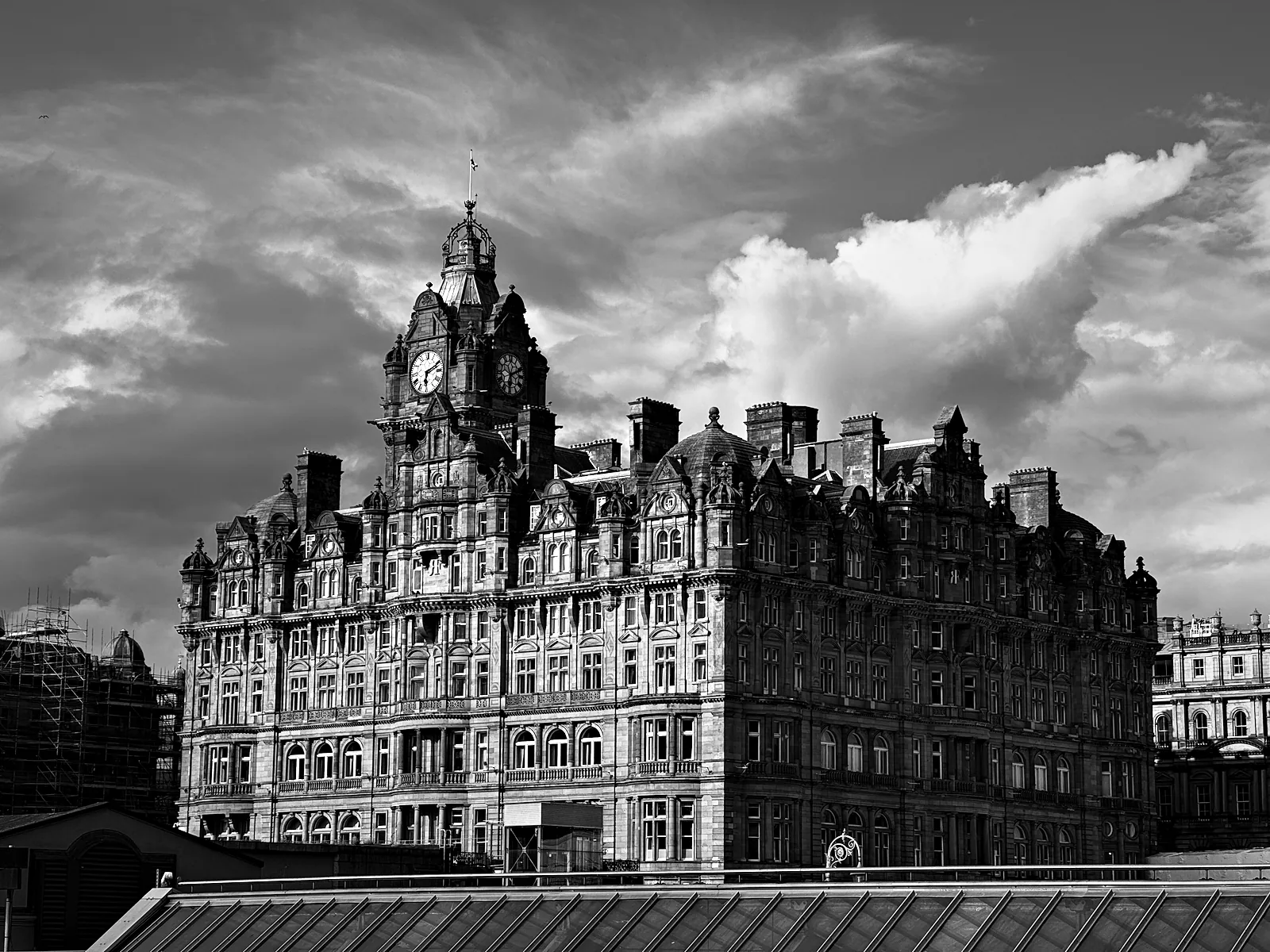
Calton Hill is a short climb from the end of Princes Street, and the top is crowded with monuments. The National Monument was meant to be Scotland’s own Parthenon, but building started in 1826 and the money ran out in 1829, which is why it has been called Edinburgh’s Disgrace ever since.
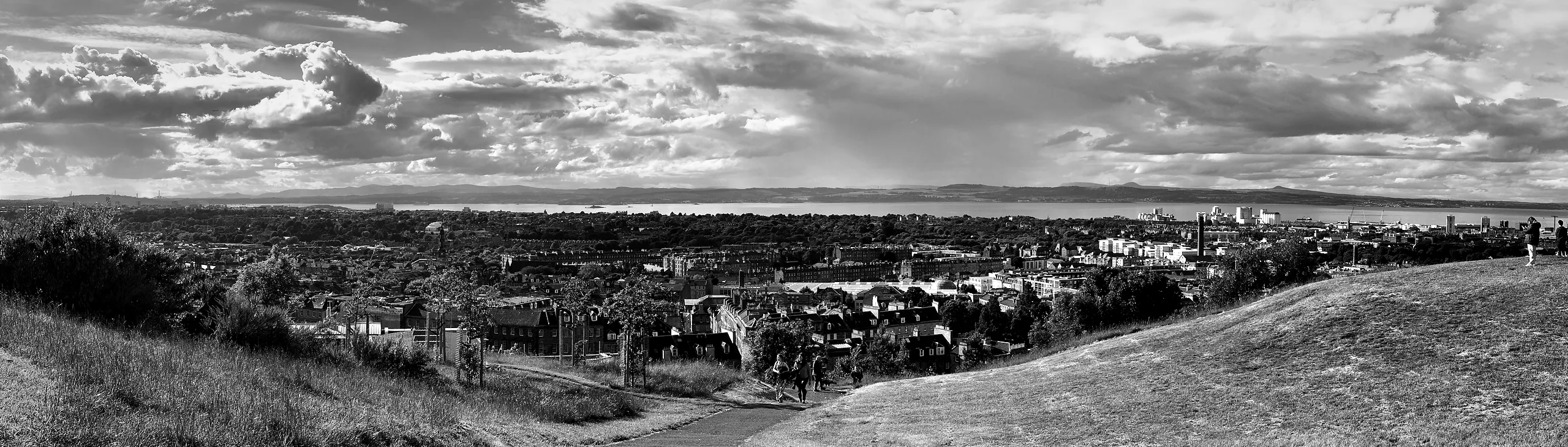
From the top, the city runs all the way down to Leith, the port, and past it the Firth of Forth, the wide mouth of the river Forth, opens out towards the North Sea, with Fife on the far shore. Seeing that breathtaking view, I felt alive. I went down into vajrasana, the kneeling pose, to bow down to this beautiful and majestic scene, and I said it out loud - “This is what it means to be alive.” We stayed an hour.
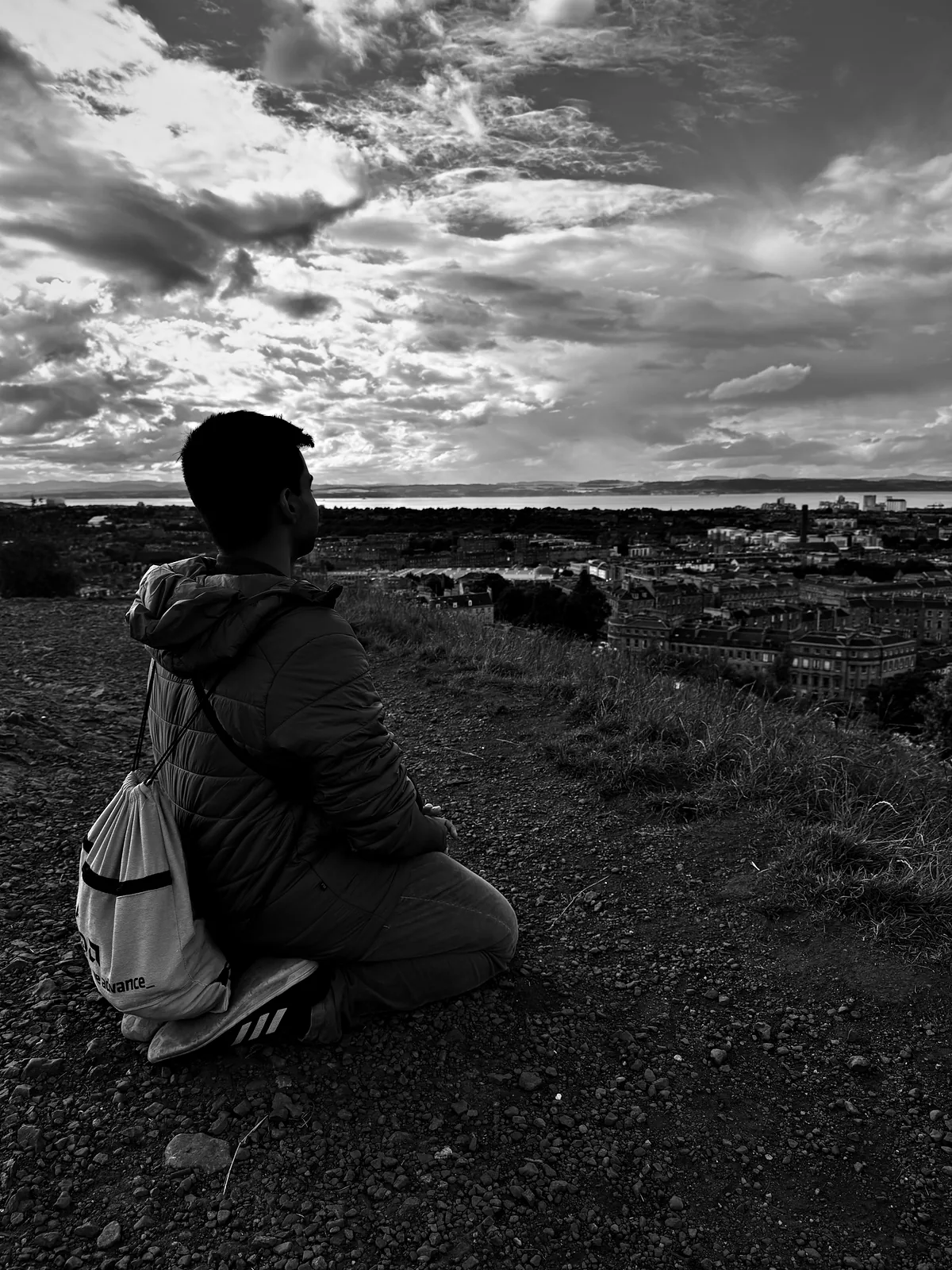
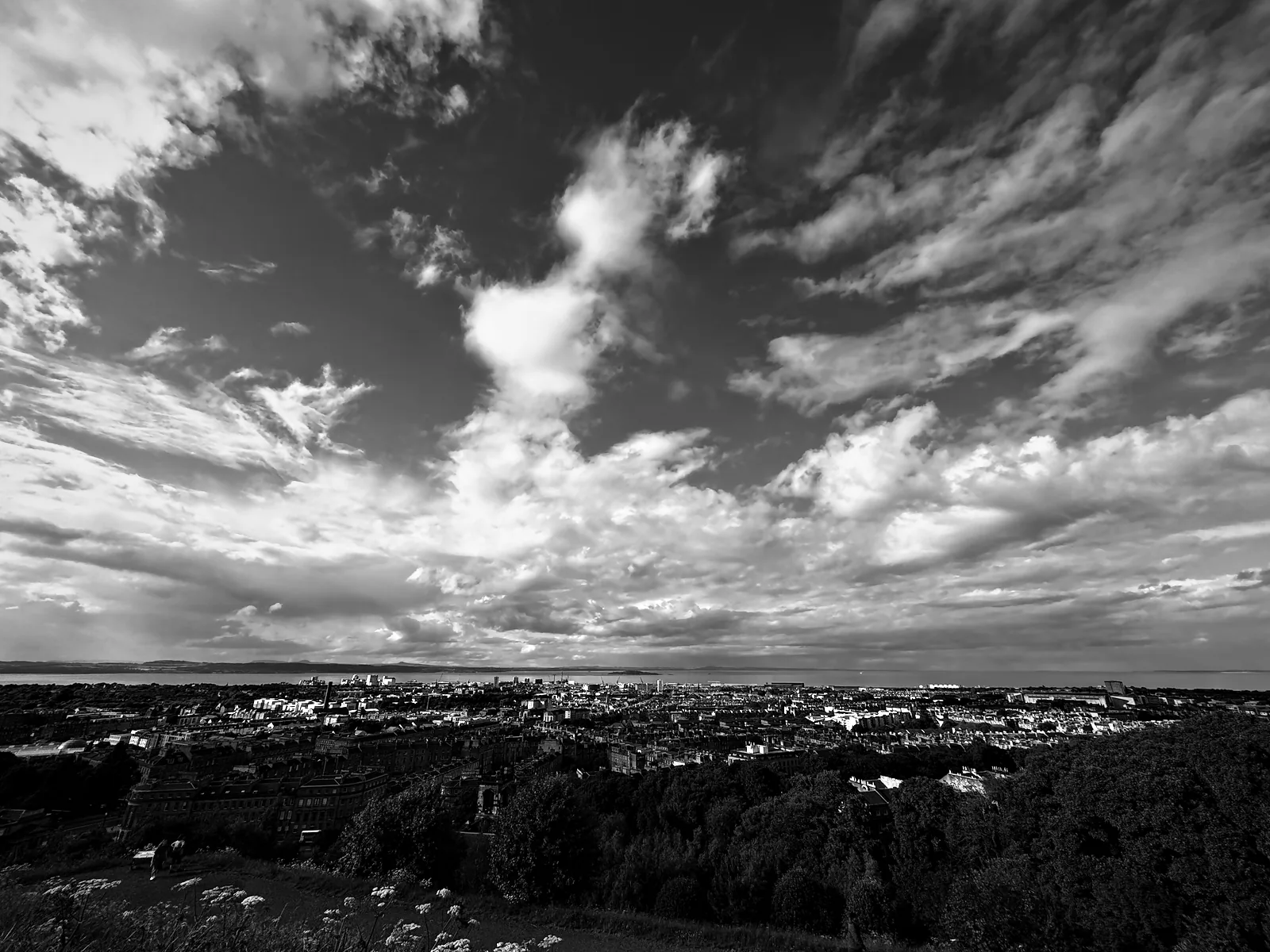
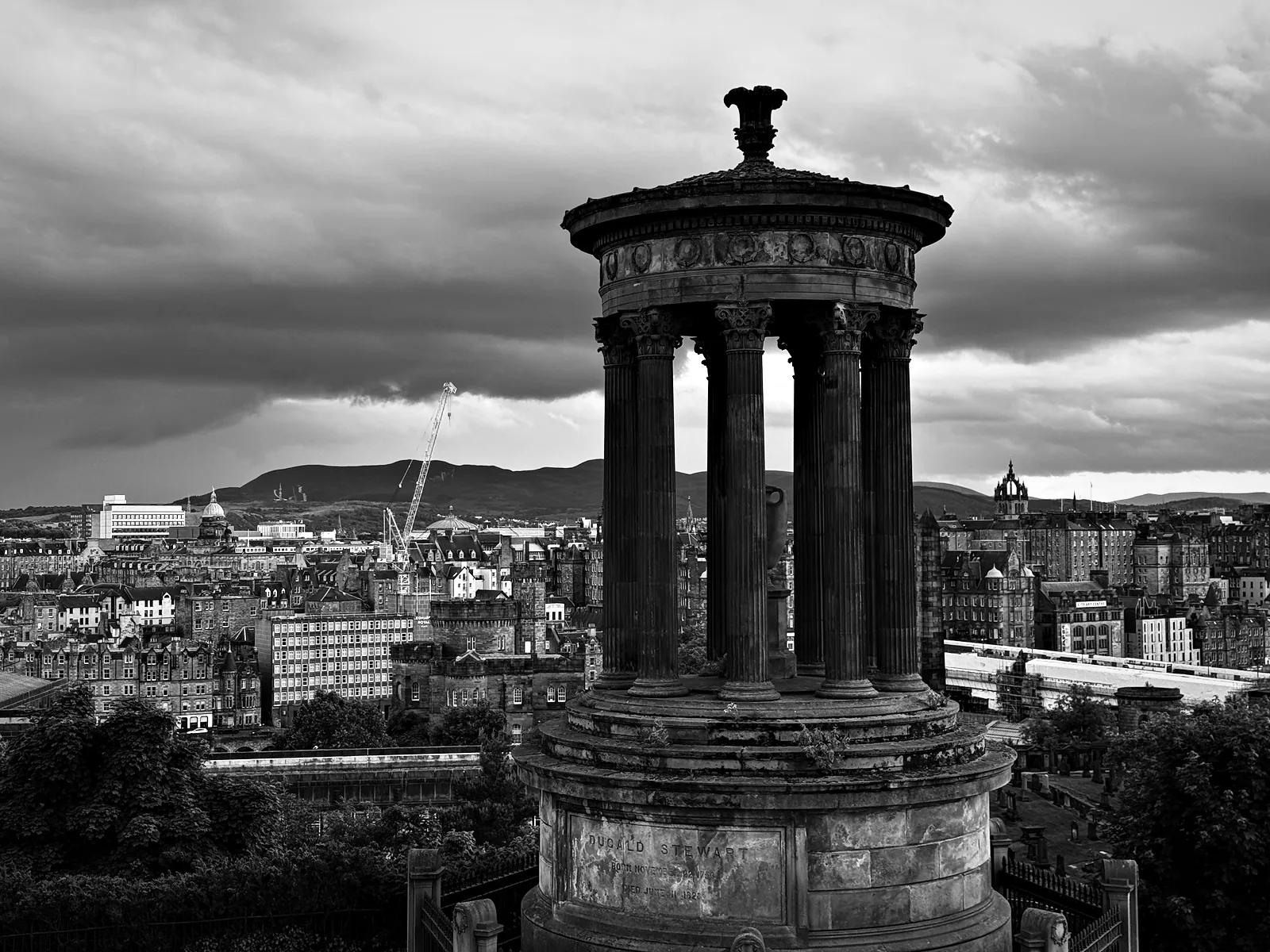
When we walked back across North Bridge just before nine, the Old Town’s tenements were lit gold by the low sun under a dark sky.
Tuesday 18 June: St Andrews and Fife
The itinerary for Tuesday said Take a guided tour to the Scottish Highlands (8 AM - 6 PM). Visit Loch Ness, Glencoe, and the Highlands. That only changed because Craig, our colleague in Edinburgh, mentioned that Fort William might be a much easier tour of the Highlands than Loch Ness in such a short time. Instead, the day became a Timberbush Tours trip called “St Andrews & The Fishing Villages of Fife”, leaving from the top of the Royal Mile at nine. At six that morning the light over the rooftops outside our window was already full.
Three bridges
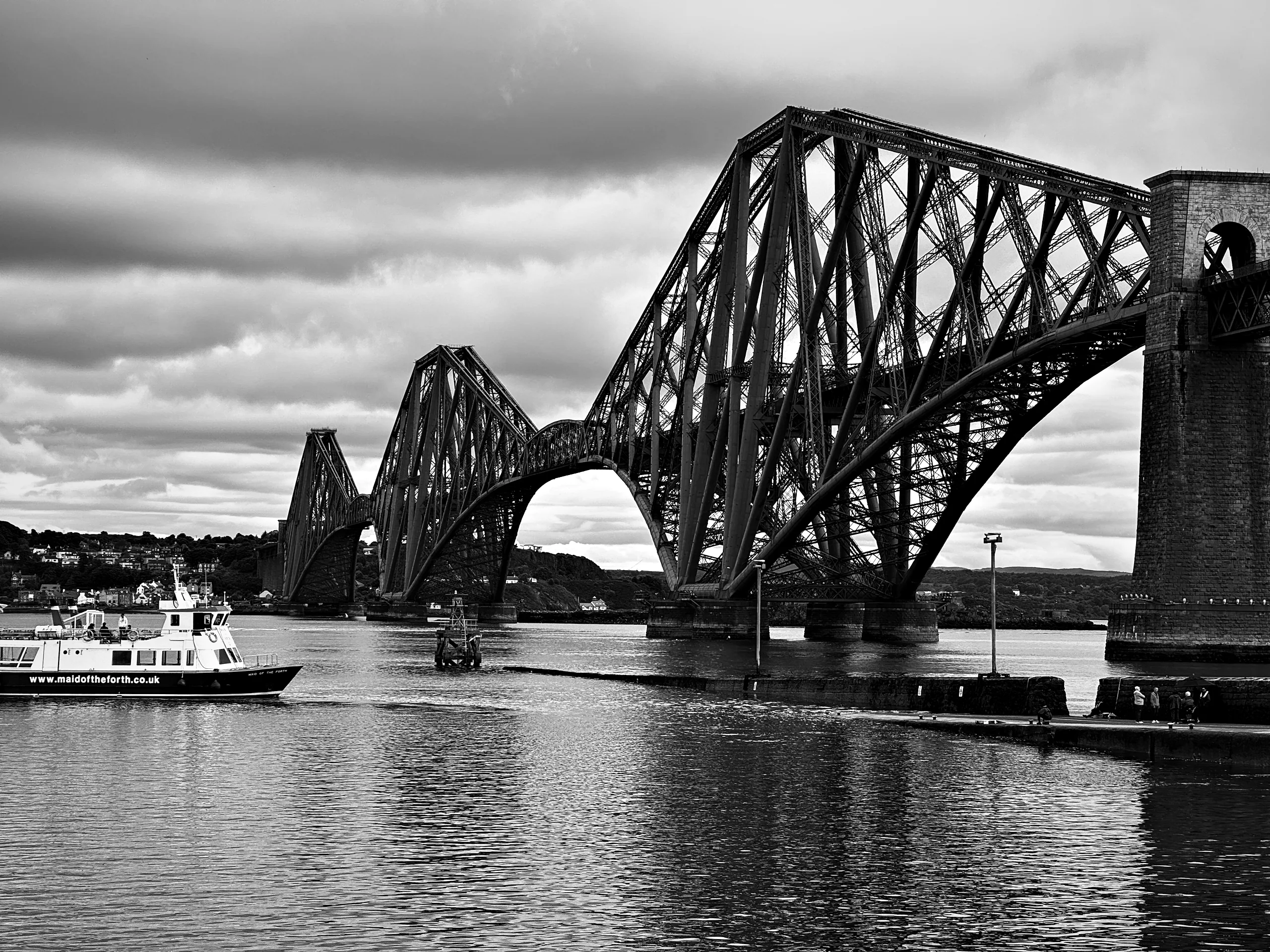
The first stop was South Queensferry, where three bridges from three centuries cross the Firth of Forth side by side, the oldest being the red railway bridge from 1890. While we stood on the shore the Maid of the Forth, the little tour boat, went under it, which is the photo at the top of this page. On the drive out we had passed one shaggy Highland cow in a field.
The East Neuk
From the bridges the bus crossed into Fife and followed the East Neuk, the fishing villages along its south-east corner. At Elie it was low tide at eleven, with one dog walker far out on the wet sand, the village behind, and the Forth lying flat under a grey sky.
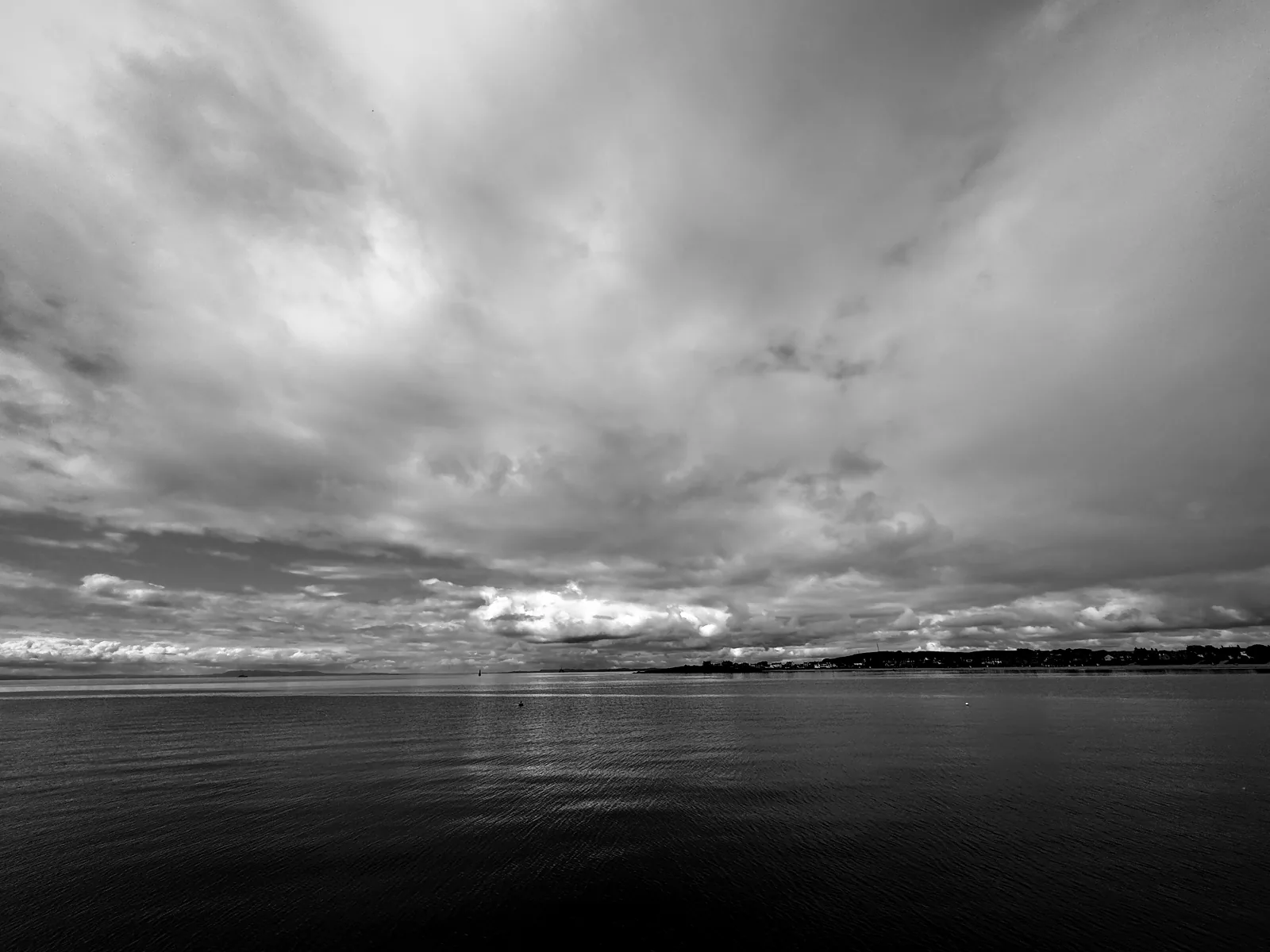
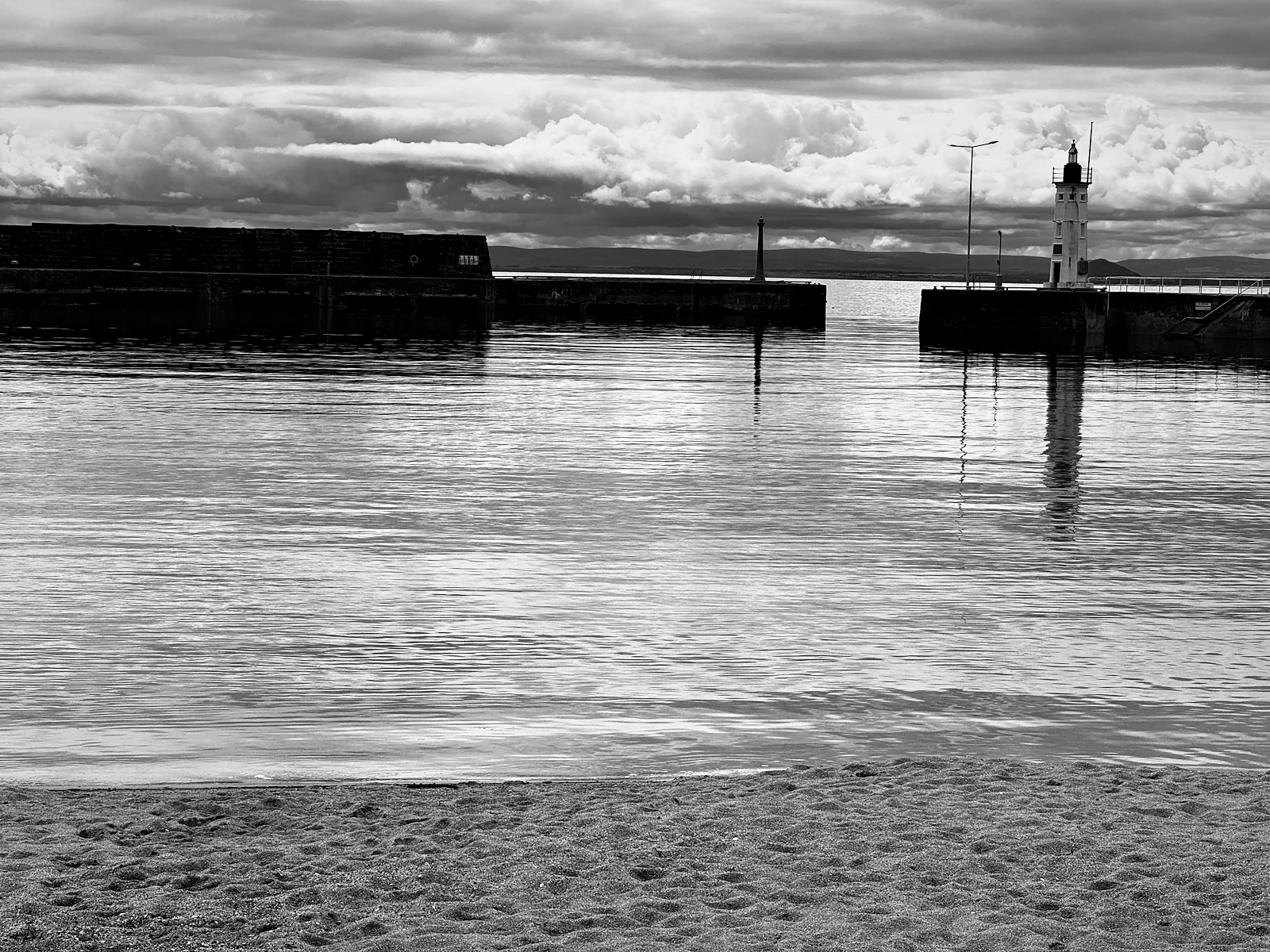
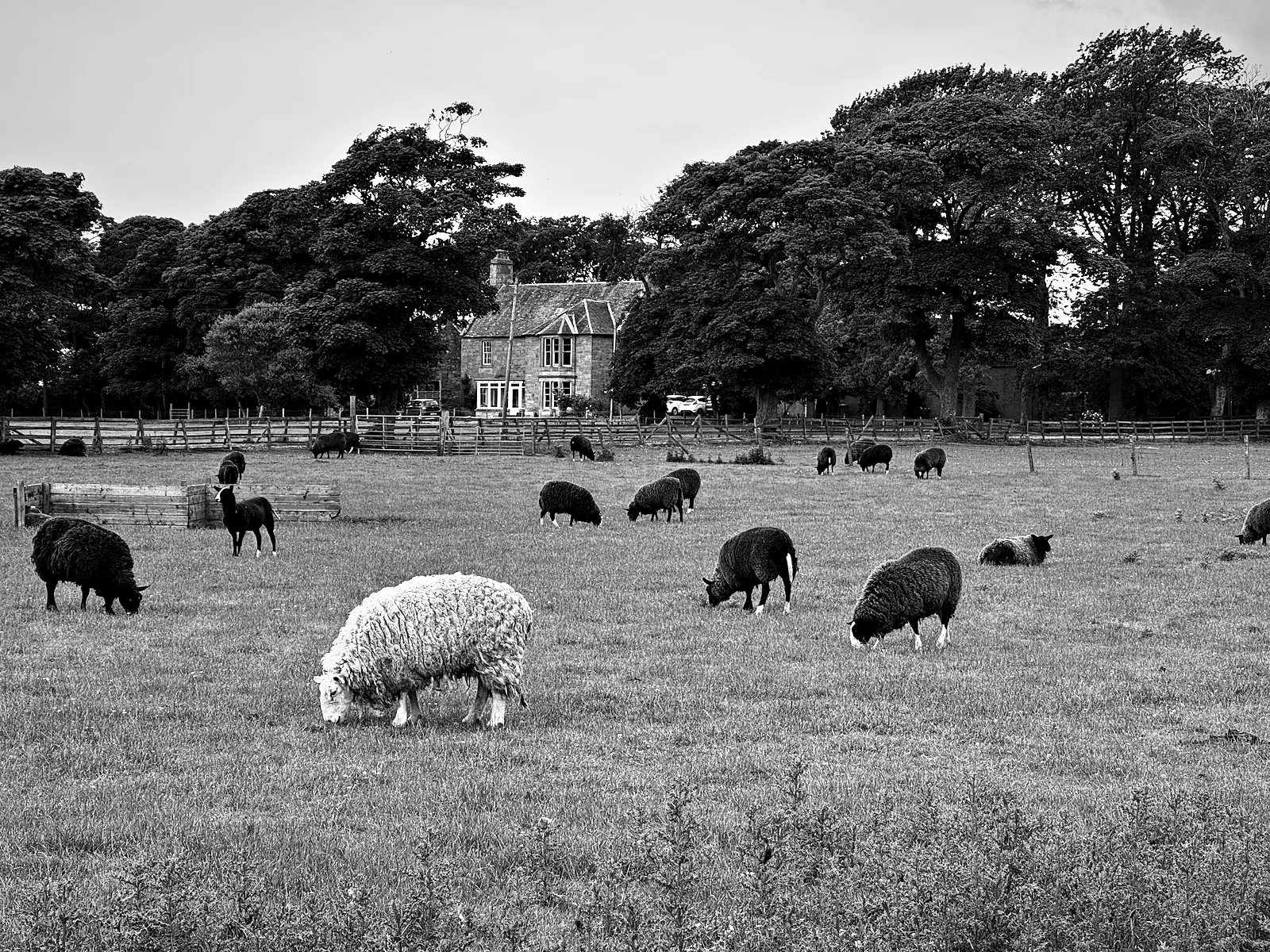
Anstruther is the biggest of the villages, and at the quay the May Princess was waiting to take people out to the Isle of May, where the puffins nest. The harbour was so still that its little lighthouse was reflected in the water. Near Crail we passed a field of black sheep with one white sheep grazing right at the front.
St Andrews
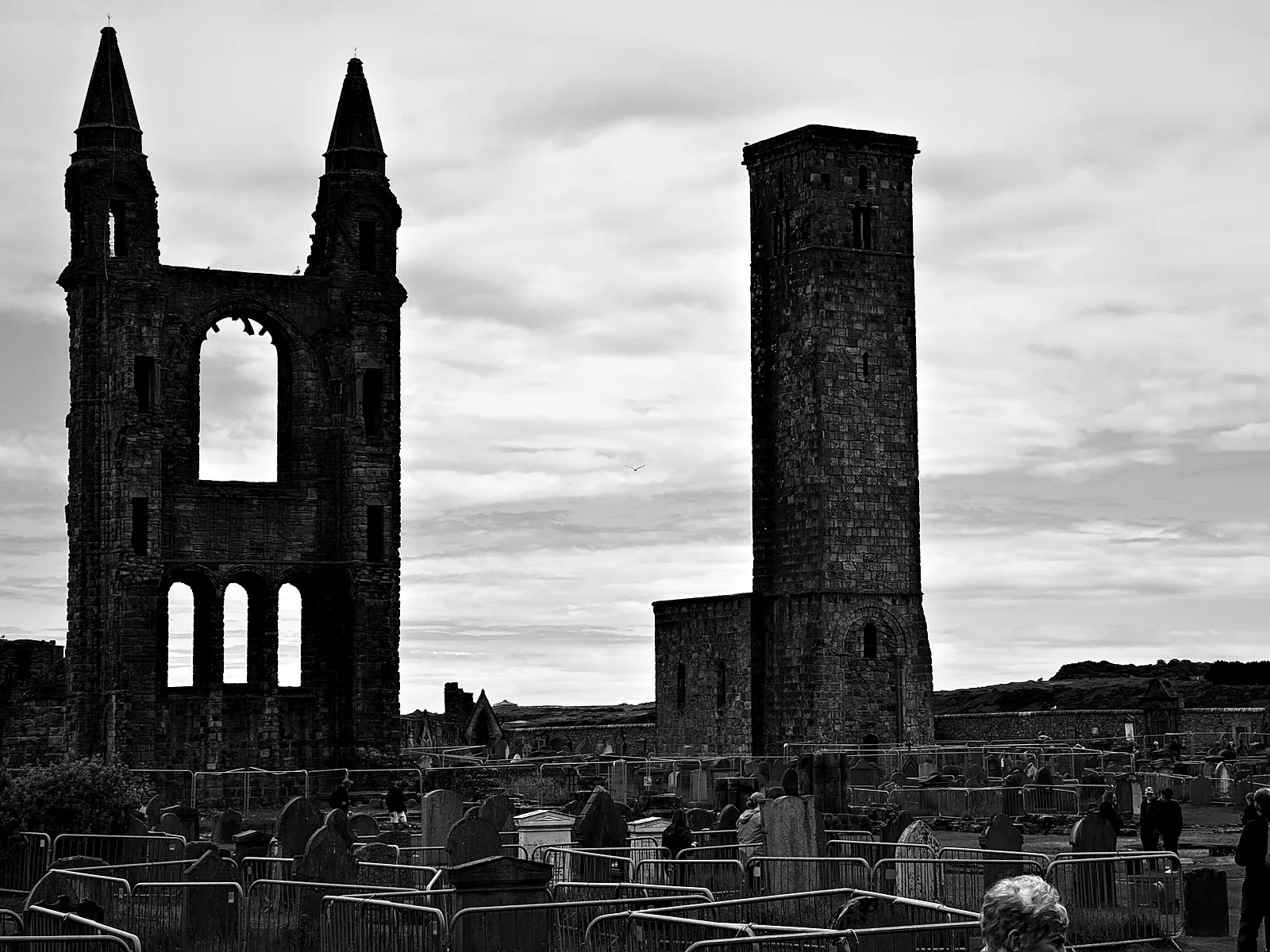
We reached St Andrews around one, just after a shower, with the streets still wet. We went to see the cathedral, which was the biggest church in Scotland until the Reformation, when Scotland broke with Rome, stripped it in 1559, and it was left to fall down after that. The east gable still stands with its two turrets, and next to it is St Rule’s Tower, which is older. Our ticket had warned that the cathedral and the castle were closed for health and safety, and the grounds were fenced off in places, right down between the gravestones.
Below the town, flat rock ledges run straight out into the North Sea, and we went down to them.
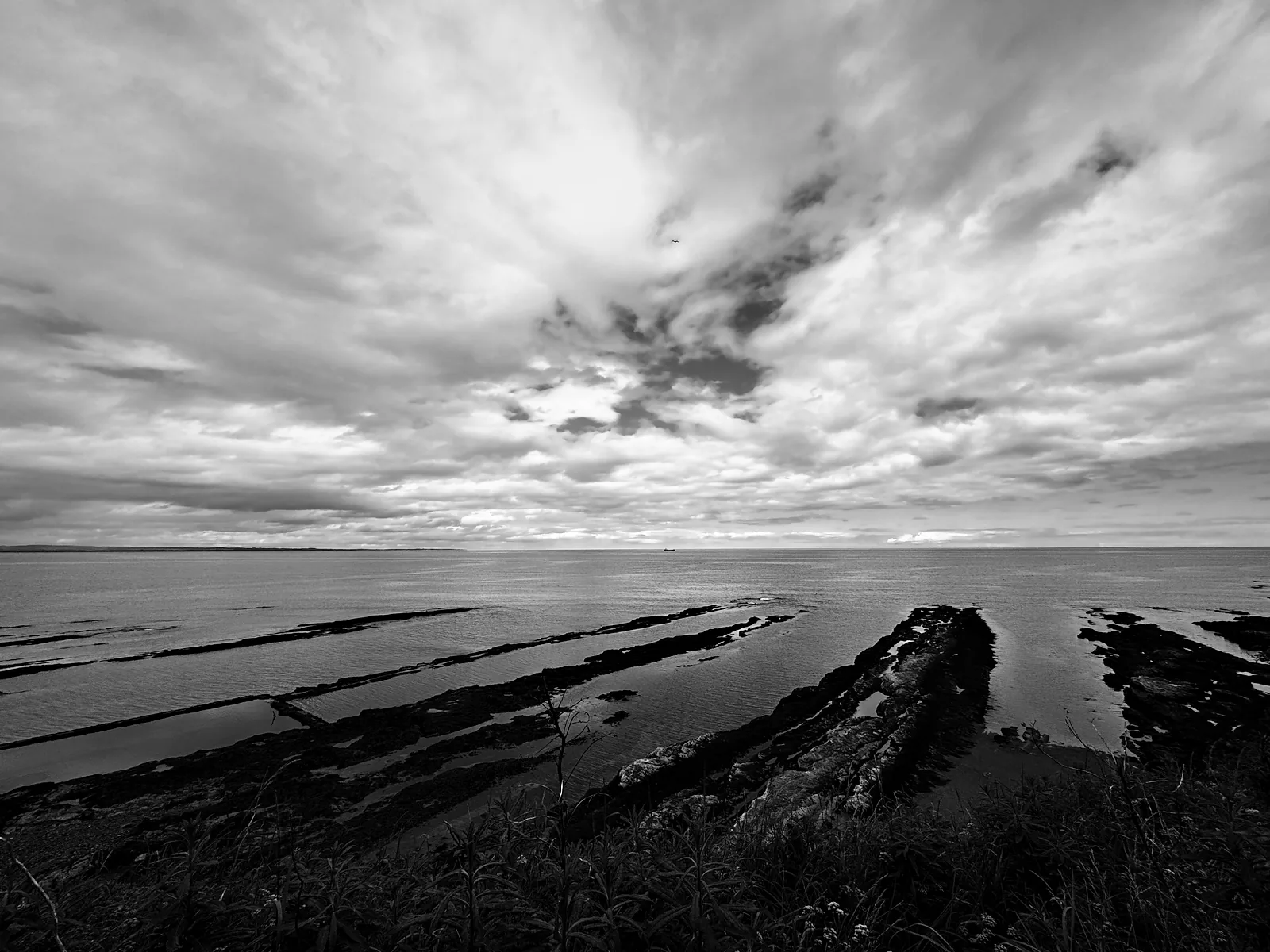
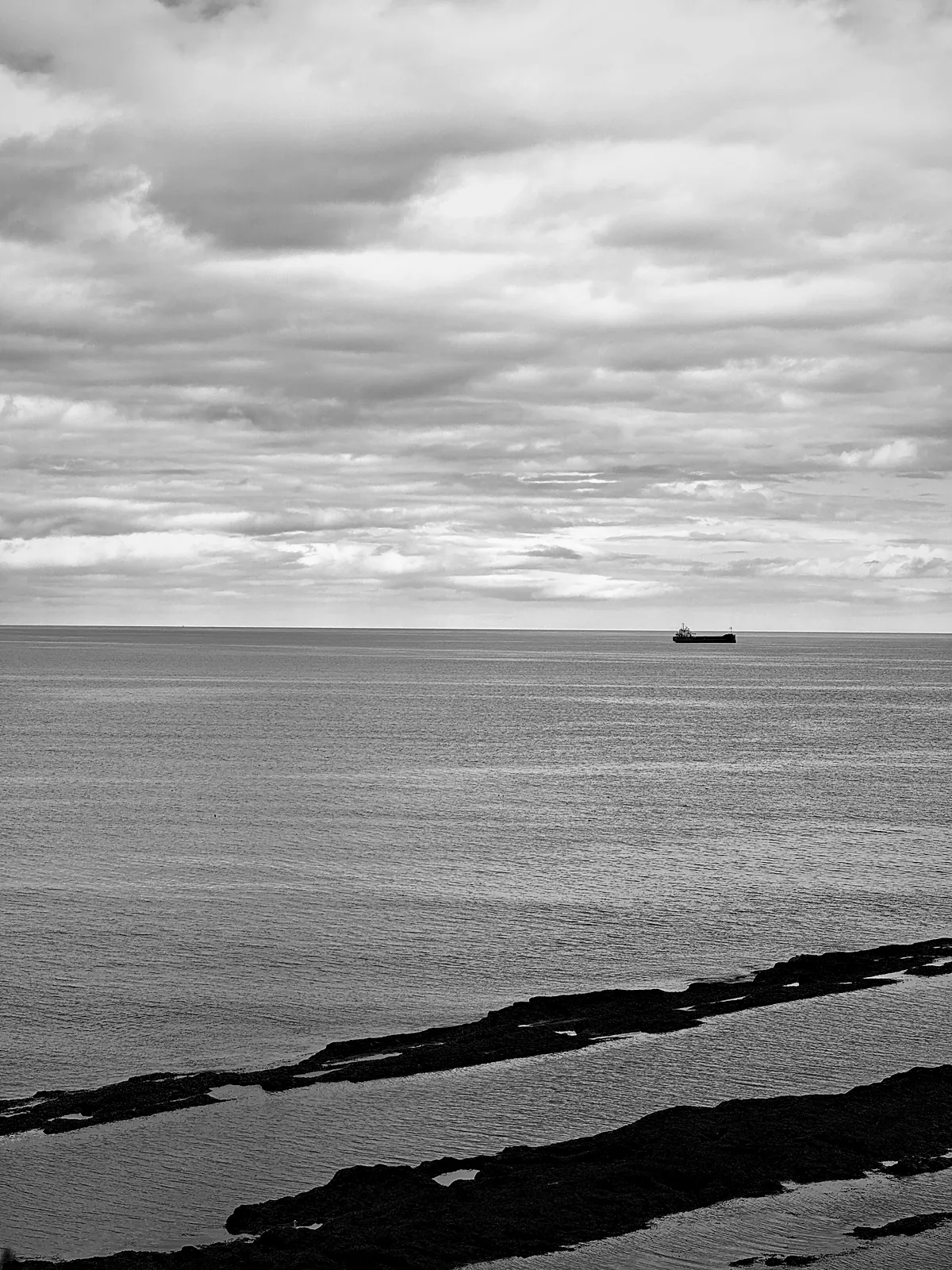
At three there was one ship out on the horizon.
Falkland
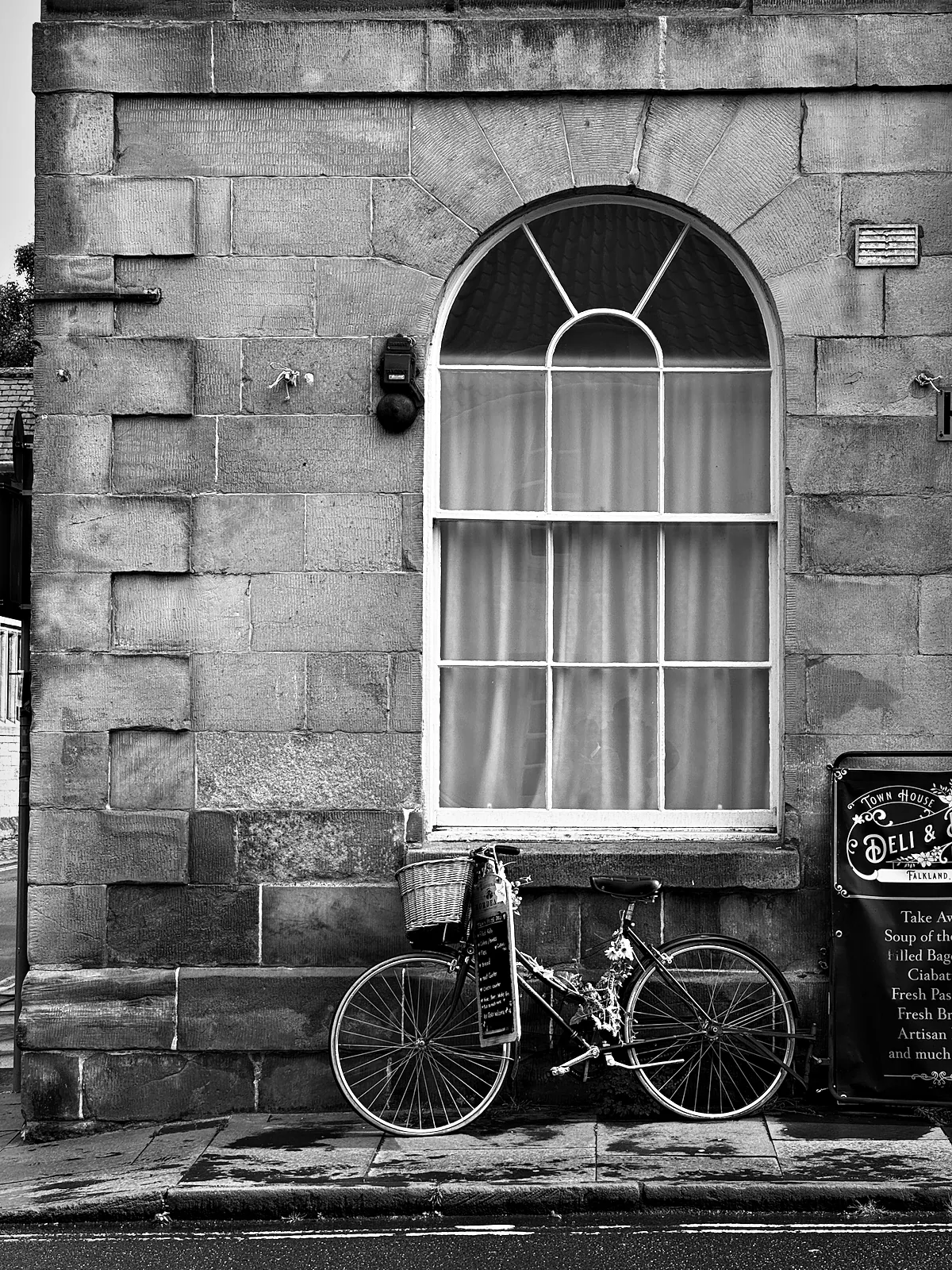
The last stop was Falkland, inland under the Lomond Hills, a village of white cottages and old stone around a small square with a fountain. Falkland Palace is in the middle of it, and behind its walls is a real tennis court built for James V in 1539, the oldest one still played on anywhere (real tennis is the older indoor game that lawn tennis grew out of). Outside a deli, a bicycle with flowers tied along its frame leaned under an arched window, and then the bus took us back to Edinburgh.
Wednesday 19 June: Technopole and Rosslyn
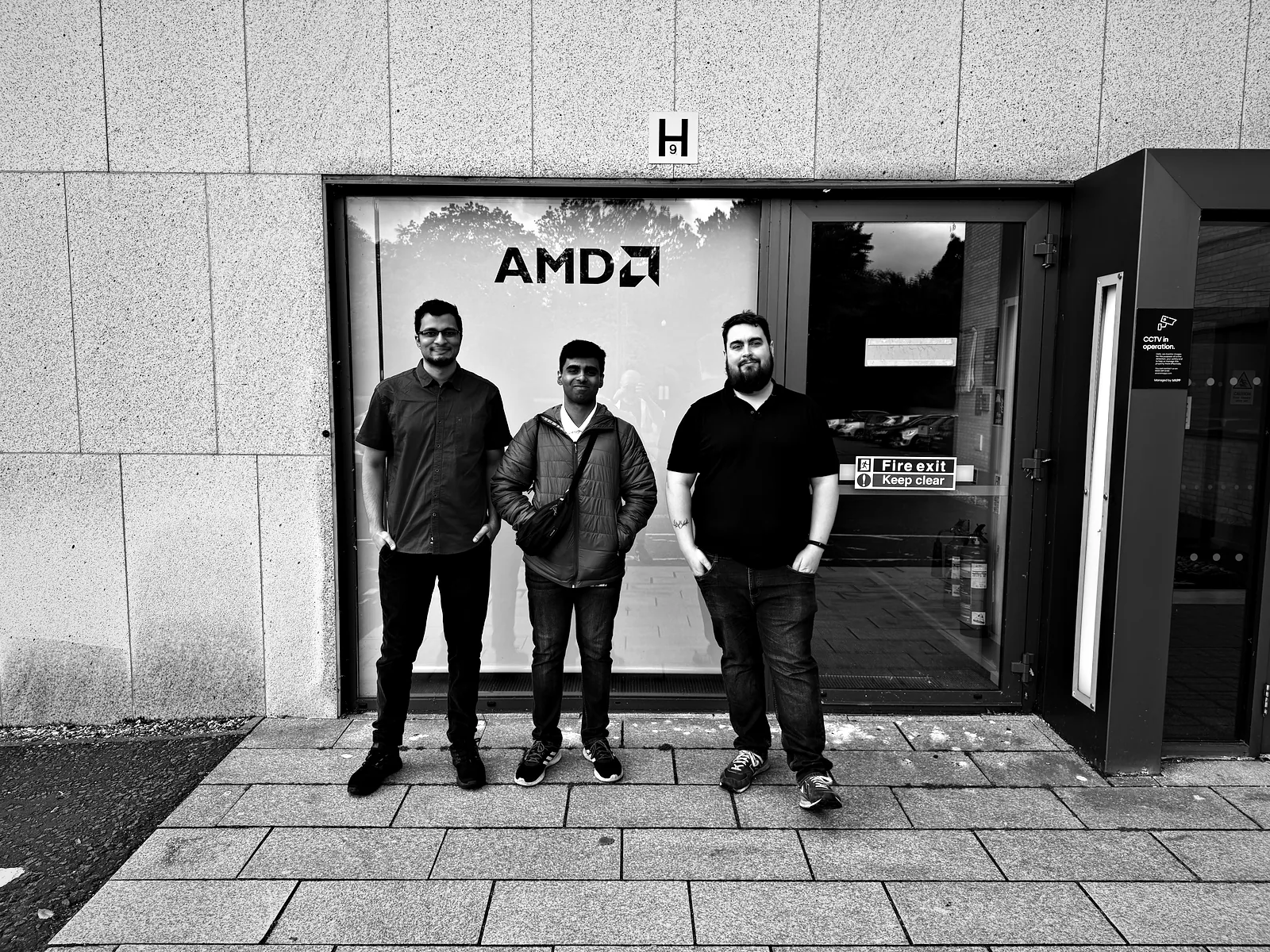
Viren and I both work at AMD, which has an office at Edinburgh Technopole, a science park out past the city bypass near Penicuik. So on Wednesday morning we went to visit the AMD campus there and meet our colleague. We found the AMD logo on the front window and stood under it for a photo.
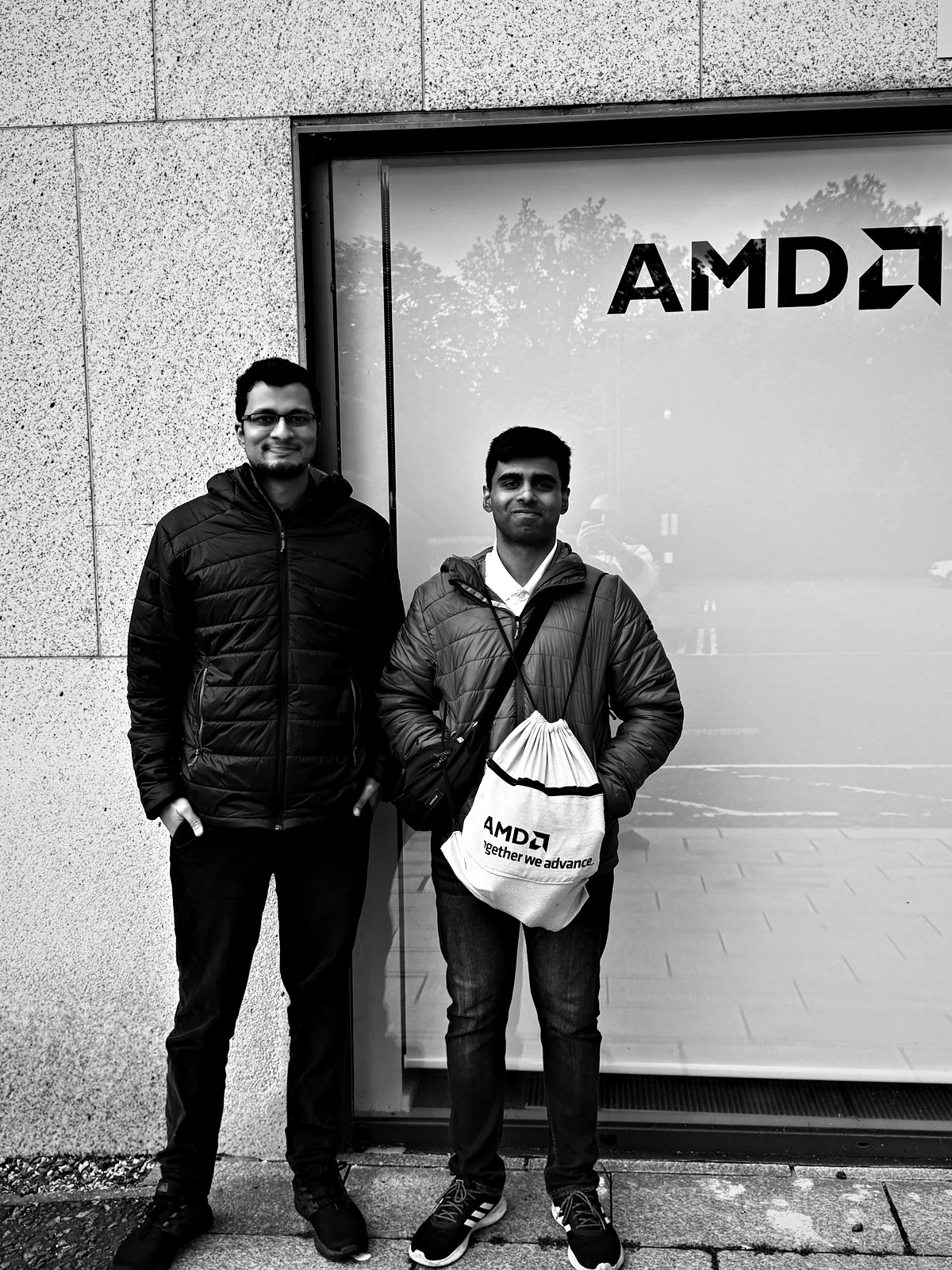
That colleague was Craig Wilson, the same Craig who had changed our Tuesday, and we met him at the office door. He had one more suggestion - Rosslyn Chapel was a couple of kilometres down the road, and the chapel and the area around it were worth seeing.
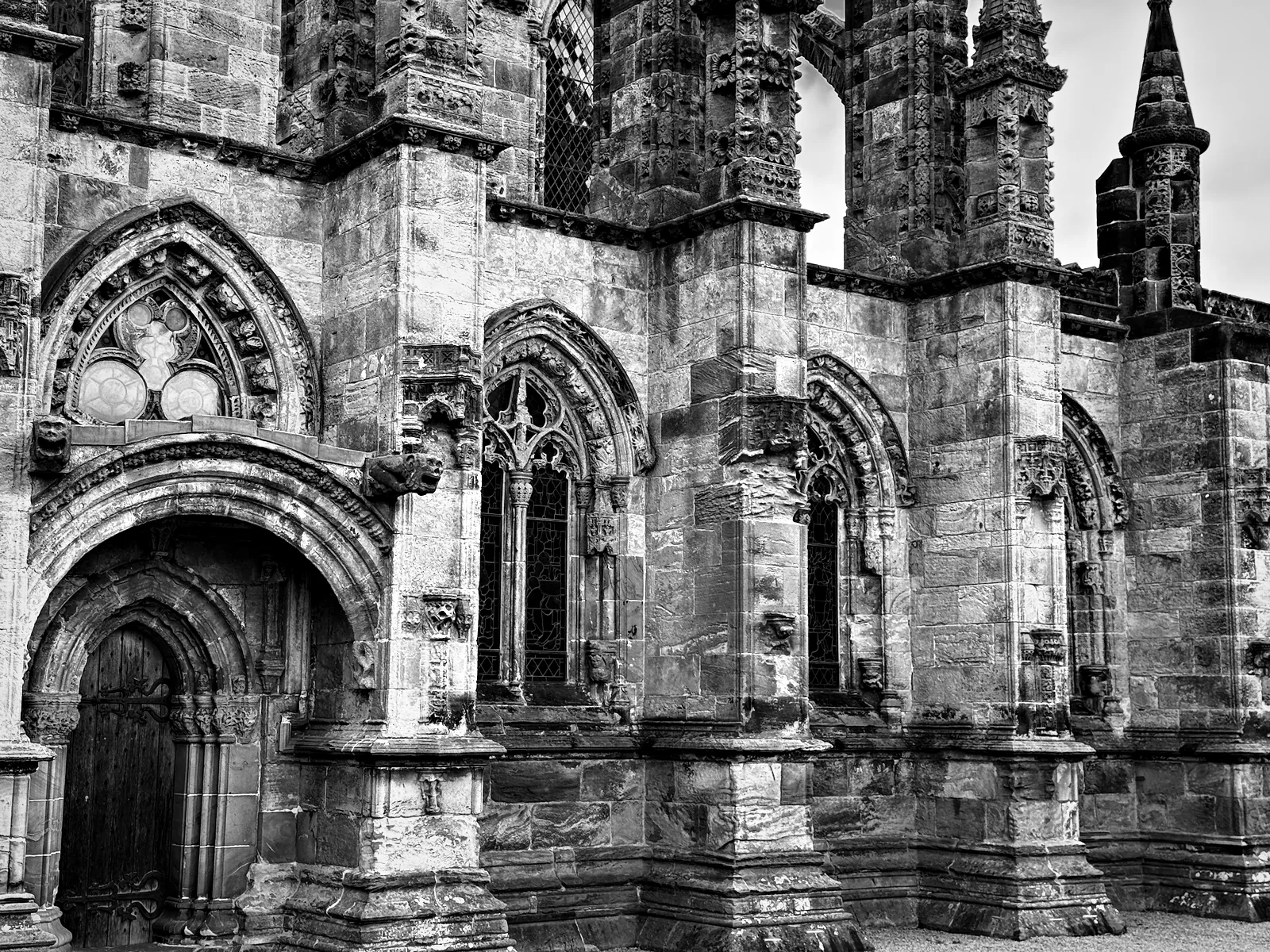
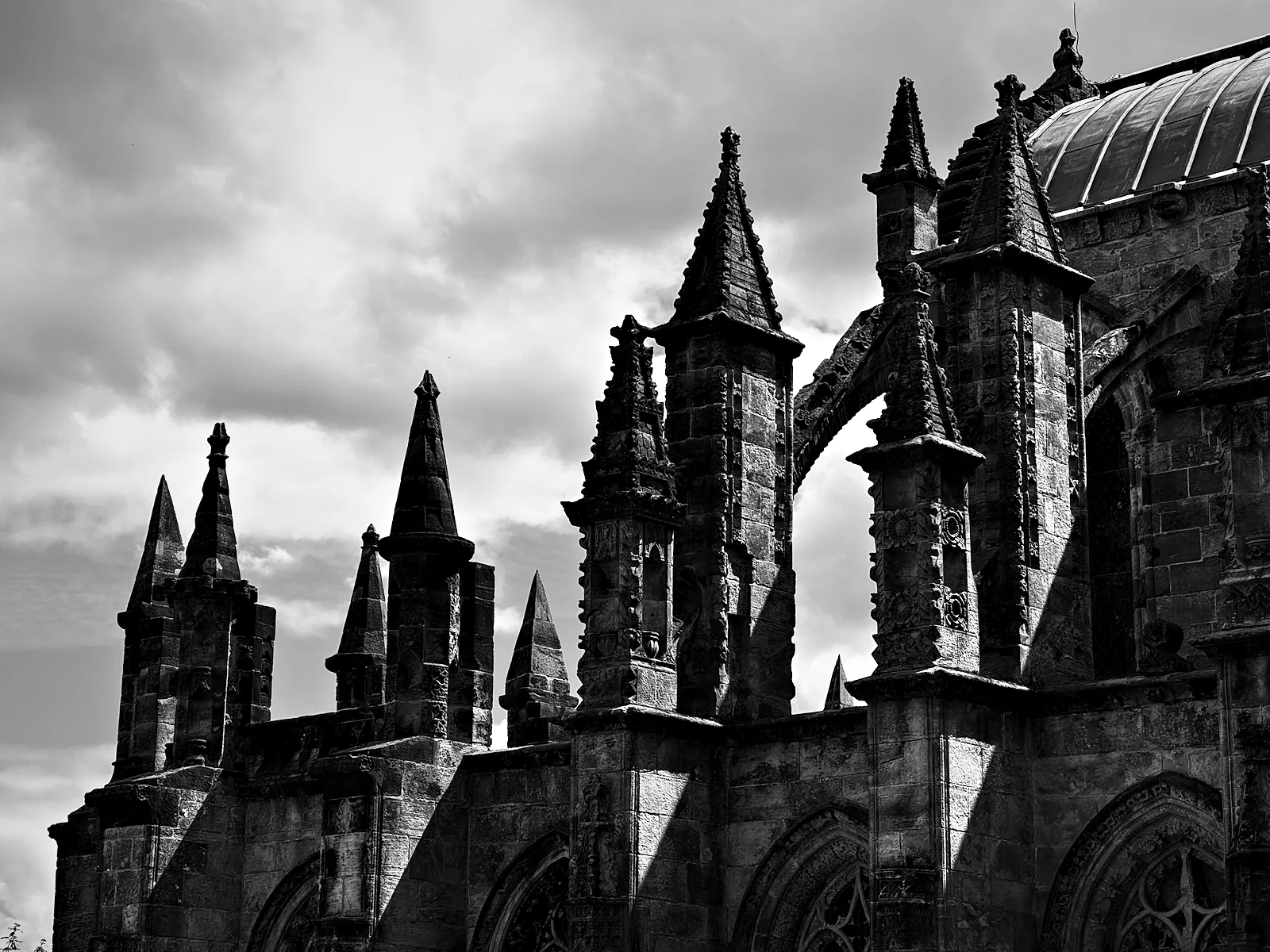
Rosslyn Chapel is in Roslin, the next village over. It was founded in 1446 and never finished, and what stands is only the choir of the church that was planned, the end where the altar goes, with carving on nearly every surface. We didn’t go in, and walked around the outside instead, looking up at the carved doorways and, above them, the pinnacles and flying buttresses against the clouds.
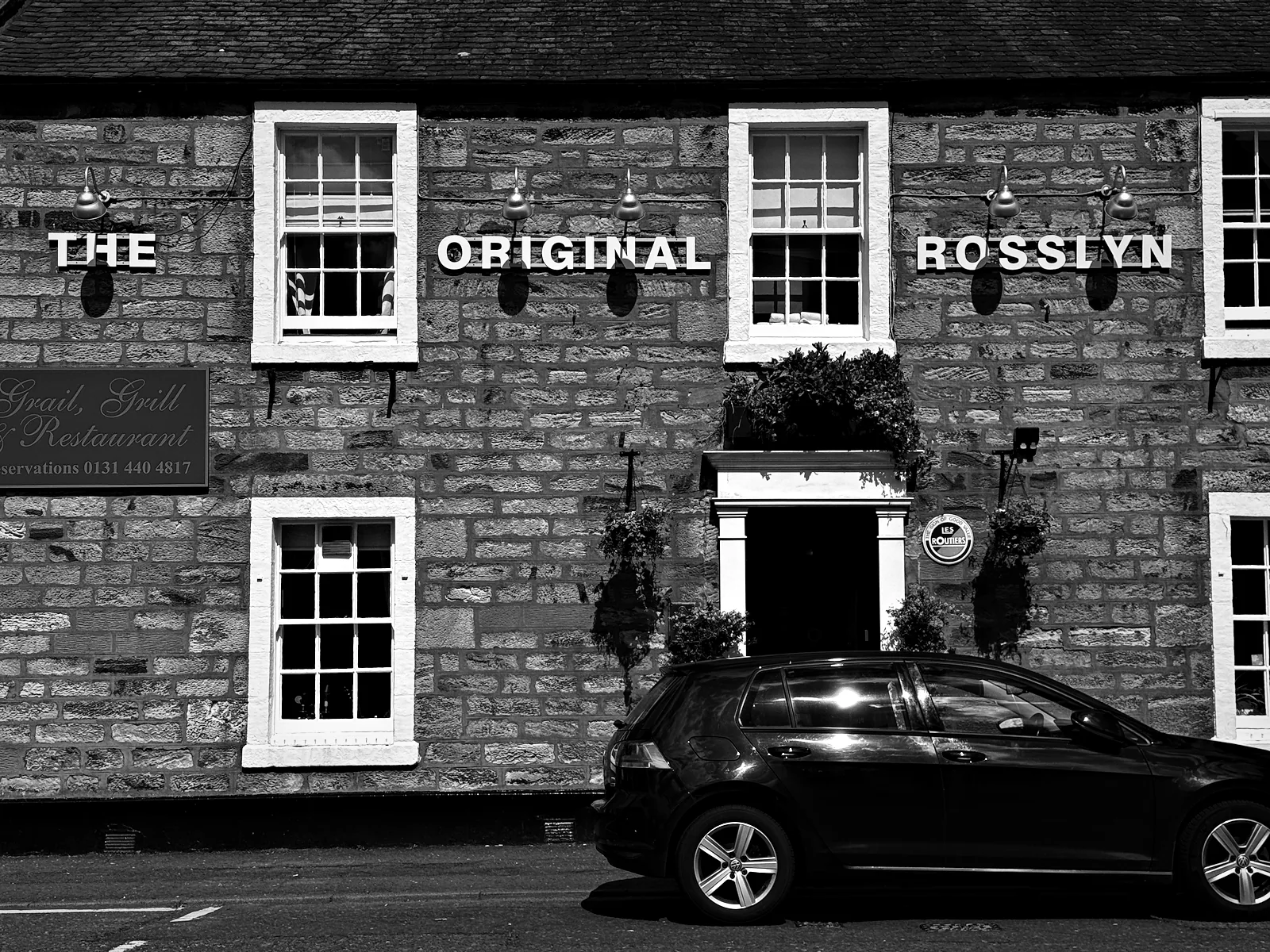
Down in the village is The Original Rosslyn Inn, which isn’t actually the original one. The inn where the poet Robert Burns had breakfast in 1787, after walking out from Edinburgh to see the dawn, was an older one, and it is a private house now.
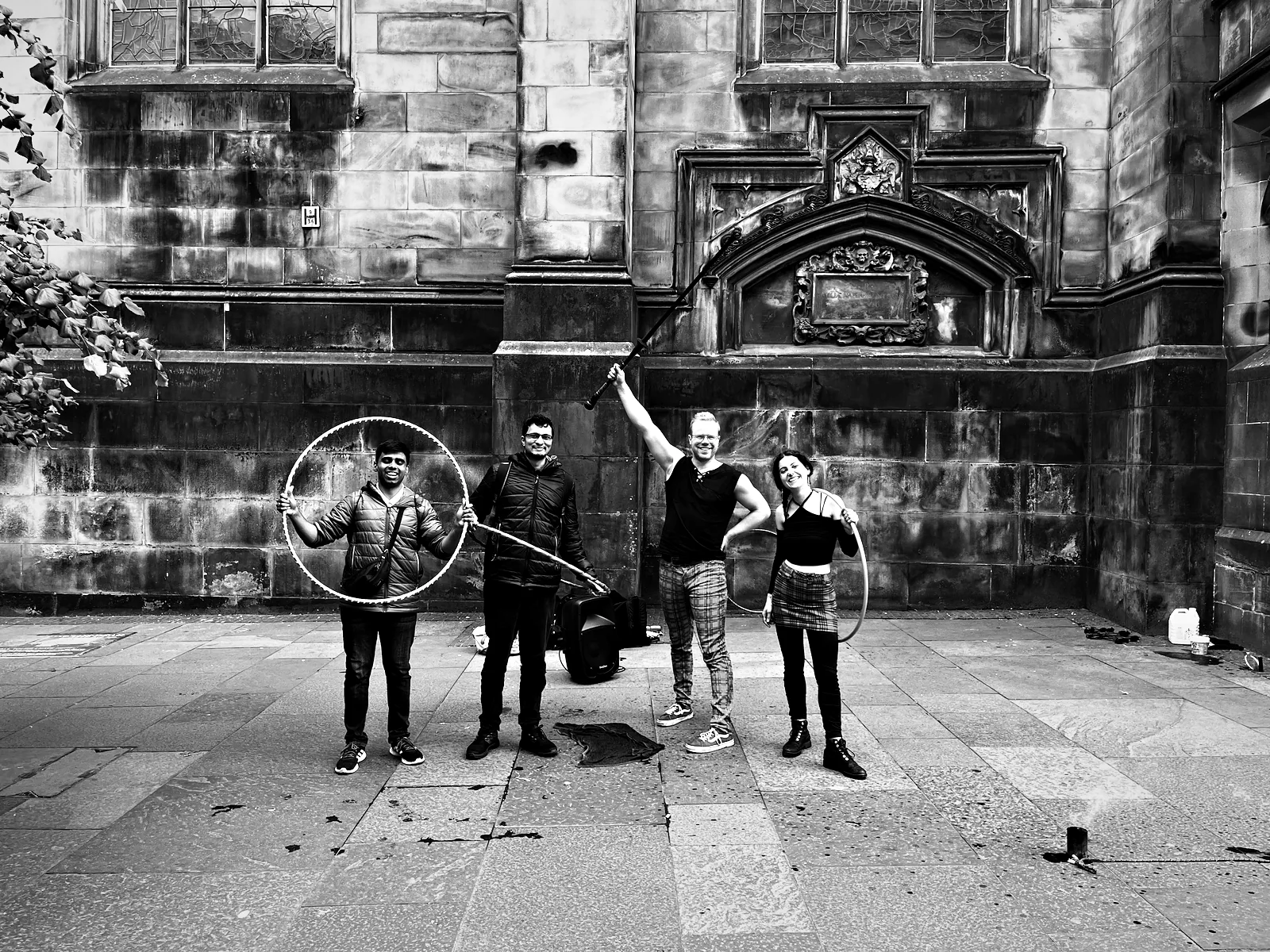
Back in the Old Town at four, a street circus was performing on the Royal Mile beside St Giles’, and we ended up in a photo with two of the performers, each of us holding one of their hula hoops. Half an hour later there were punnets of strawberries and raspberries out along the Mile.
In the evening we walked down Victoria Street to the Grassmarket, past an old police box that sells ice cream now. The city’s gallows used to stand in the Grassmarket, and today it is full of pubs.
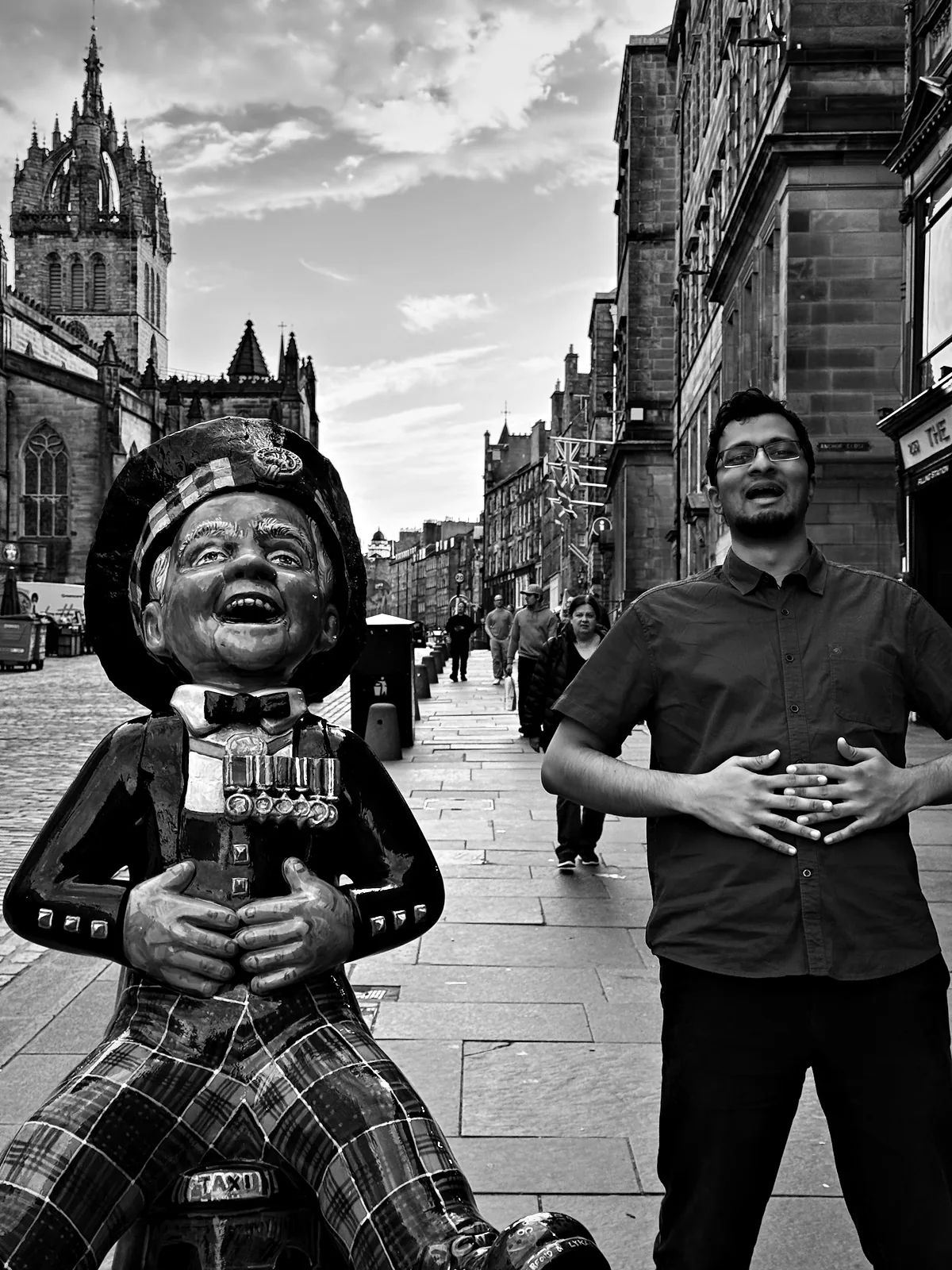
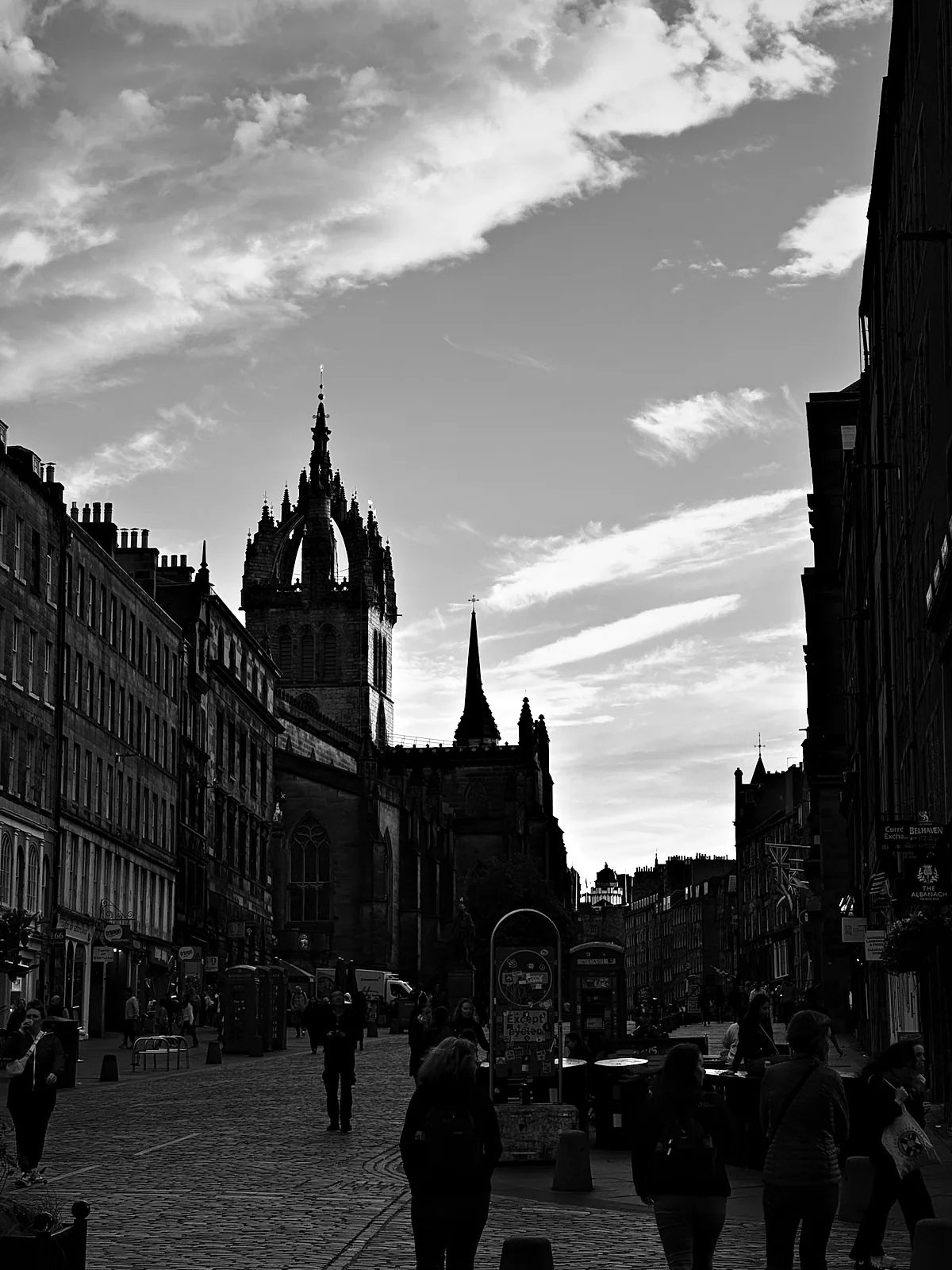
Back up on the Royal Mile at half past nine, there was a statue of Oor Wullie in tartan (the spiky-haired boy from the comic strip), laughing with his hands on his belly. Viren tried his best to imitate the laugh. At twenty to ten we were under the crown spire of St Giles’, with the sky behind it still light.
Thursday 20 June: back to London
Thursday was our last morning in Scotland, and we went past the Bayes Centre one more time. At ten past four we flew BA CityFlyer to London City, whose runway is a strip of land with water on both sides. Then it was back across London to the same Premier Inn at Paddington.
Viren and I did not agree on many things, and since this was the first time I had lived with someone apart from my parents, it was an experience in sharing my space with another person. We established ground rules and operated along them, and for the most part it was as smooth as it could get. That night at the hotel, the UoE hoodie and T-shirt I had bought from the university’s merchandise got laid out on the bed. I bought them to remember the visit and to feel that I am a student of UoE, since my programme is a distance-learning one.
Friday 21 June: a concert and a boat
Bloomsbury and King’s Cross
Friday’s plan was the Tower of London in the morning, a concert at one and Hyde Park in the afternoon, and only the concert survived.
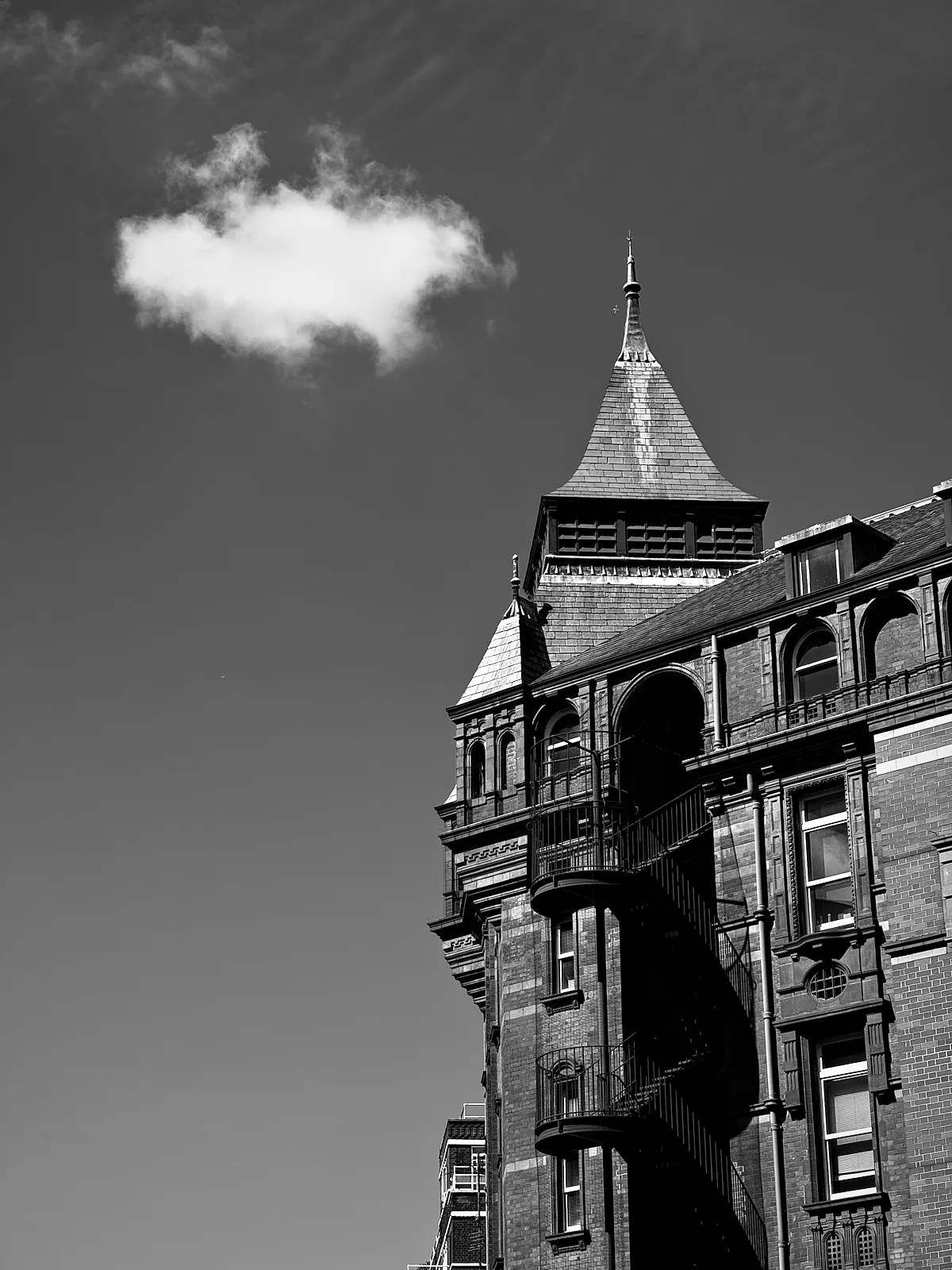
In the morning we went to Bloomsbury, to the Computer Science department of UCL, University College London, on Gower Street. On the way we passed the Cruciform Building (hard red brick and terracotta, with its wings running out diagonally from the middle), which was a hospital once and is a research institute now. After that we went up to King’s Cross, to Google’s building beside the station, just because we have a friend who works at Google.
Ragas with Soul
We had a good lunch and then went for the afternoon concert at St Martin-in-the-Fields on Trafalgar Square, part of “Ragas with Soul”, the lunchtime series that Darbar, the UK’s festival of Indian classical music, runs at the church. Harmeet Virdee played sitar and Junaid Ali tabla, on a low stage covered in a printed cloth. I play the sitar myself, and this was the only booking on the whole trip that had anything to do with it.
The concert was fantastic. Raags belong to times of day, and since it was an afternoon concert he played Bhimpalasi, an afternoon raag, with a gat in teentaal (a composition set to the sixteen-beat cycle). A raag performance opens with the aalap, slow and with no beat, and then the jod and the jhala bring in a pulse and quicken it. The smooth aalap and then the rhythmic jod and jhala put the two of us in a trance. The acoustics of the church itself were no slouch either, and the hall was beautiful and intimate, with us sitting close to the performers.
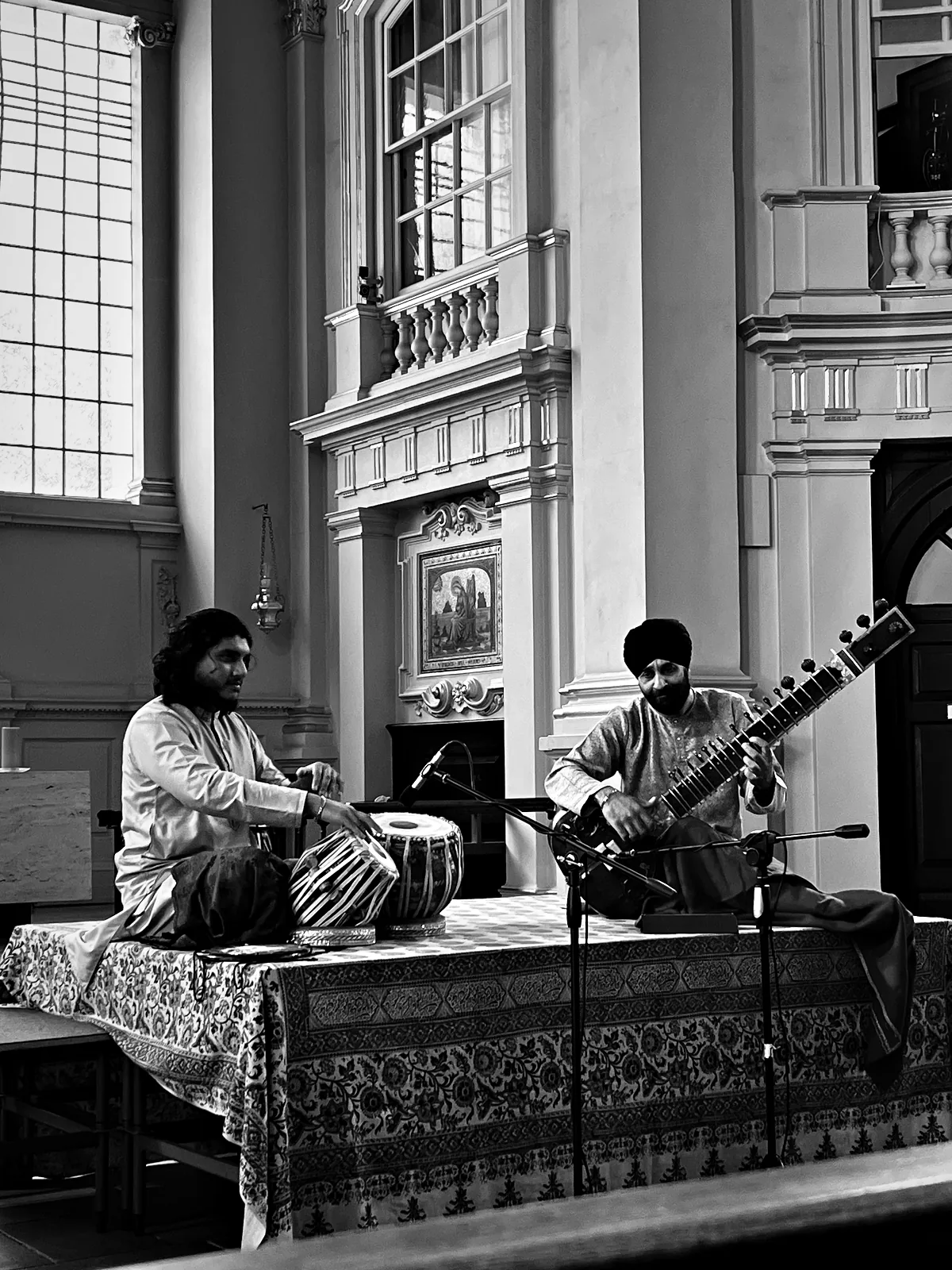
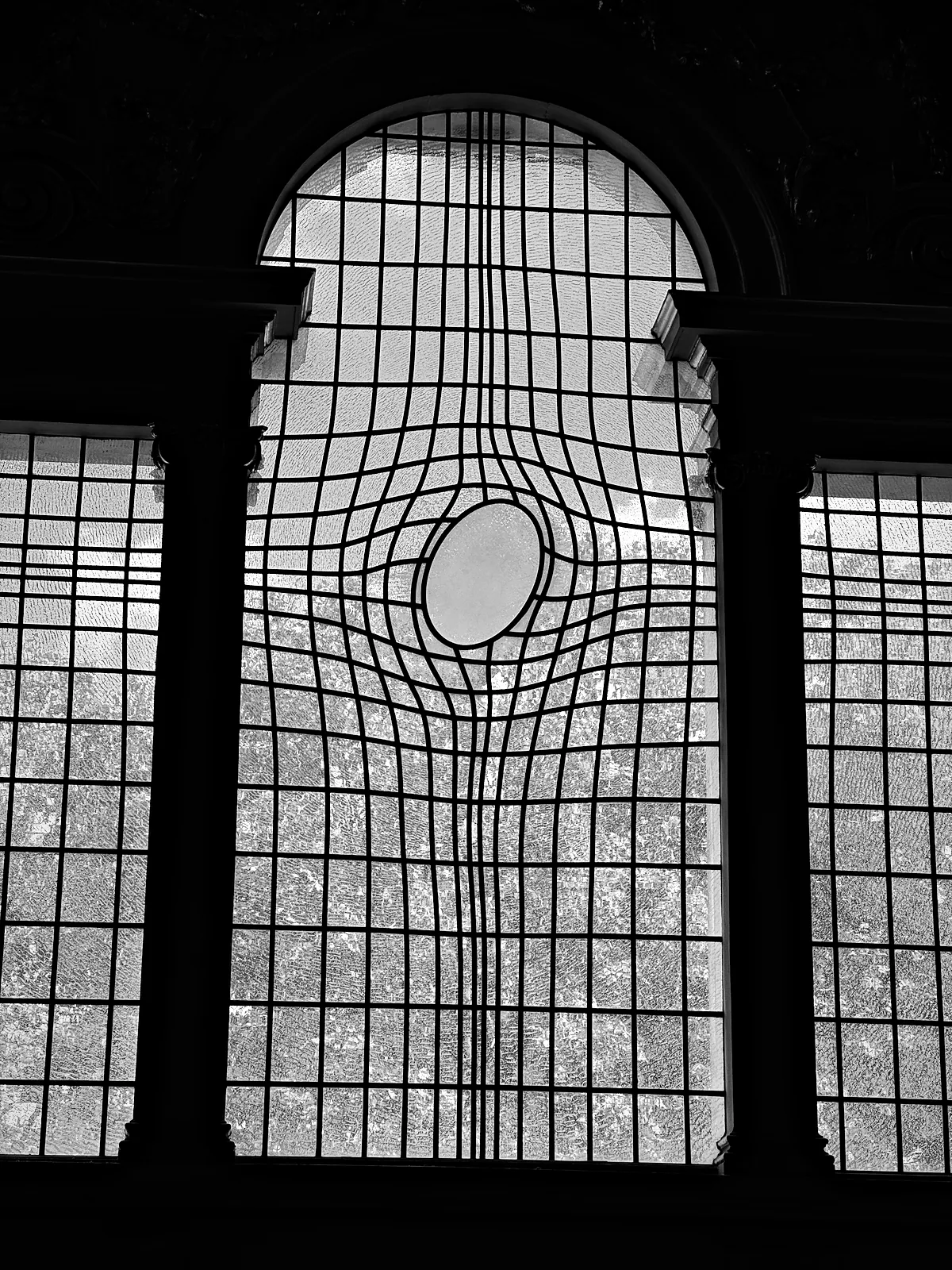
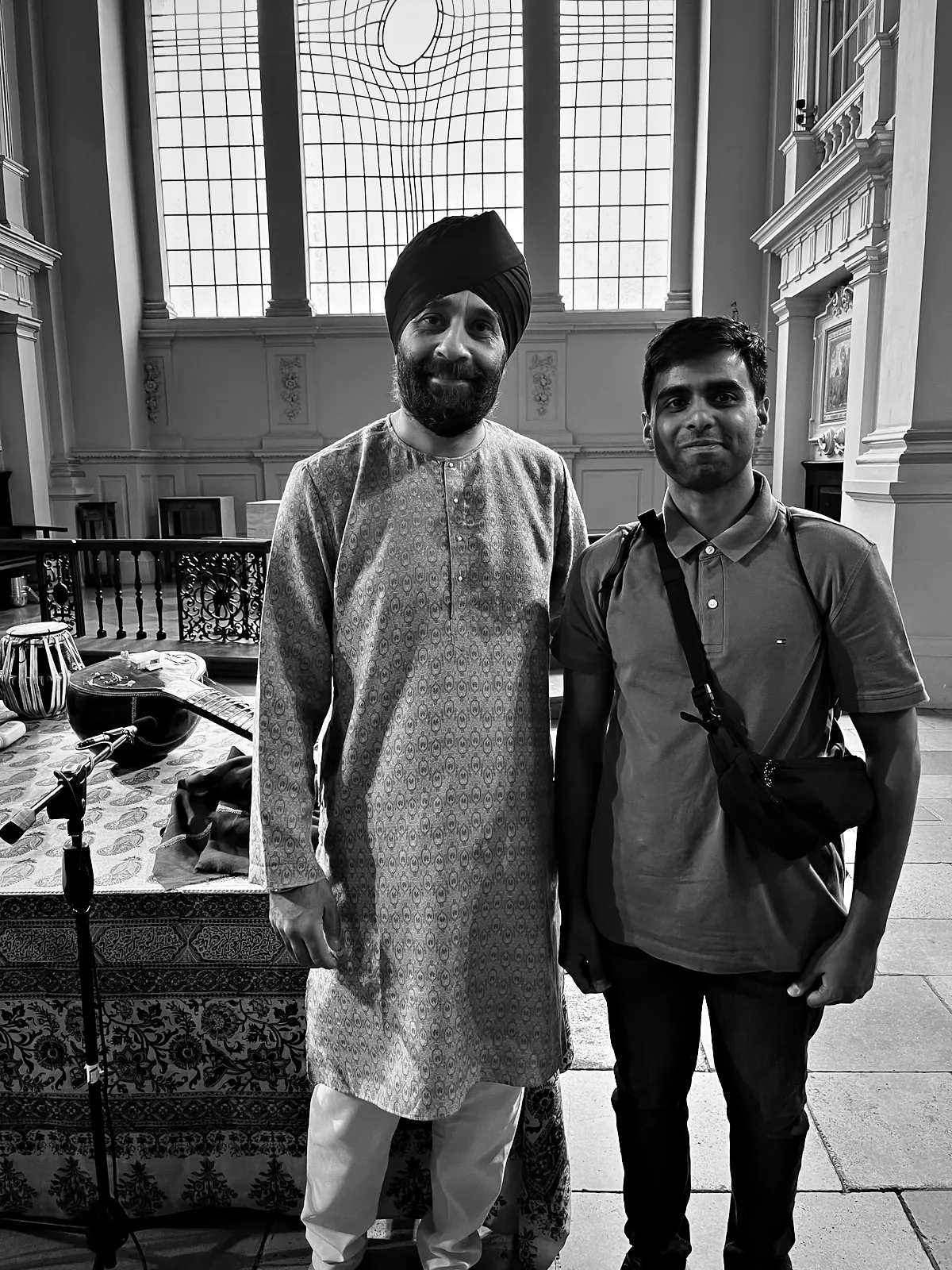
Behind the stage is the church’s east window, whose glazing bars bend in towards an oval of light. Afterwards I went up and took a photo with Harmeet, with the sitar and tabla still on the stage behind us.
Down the river to Greenwich
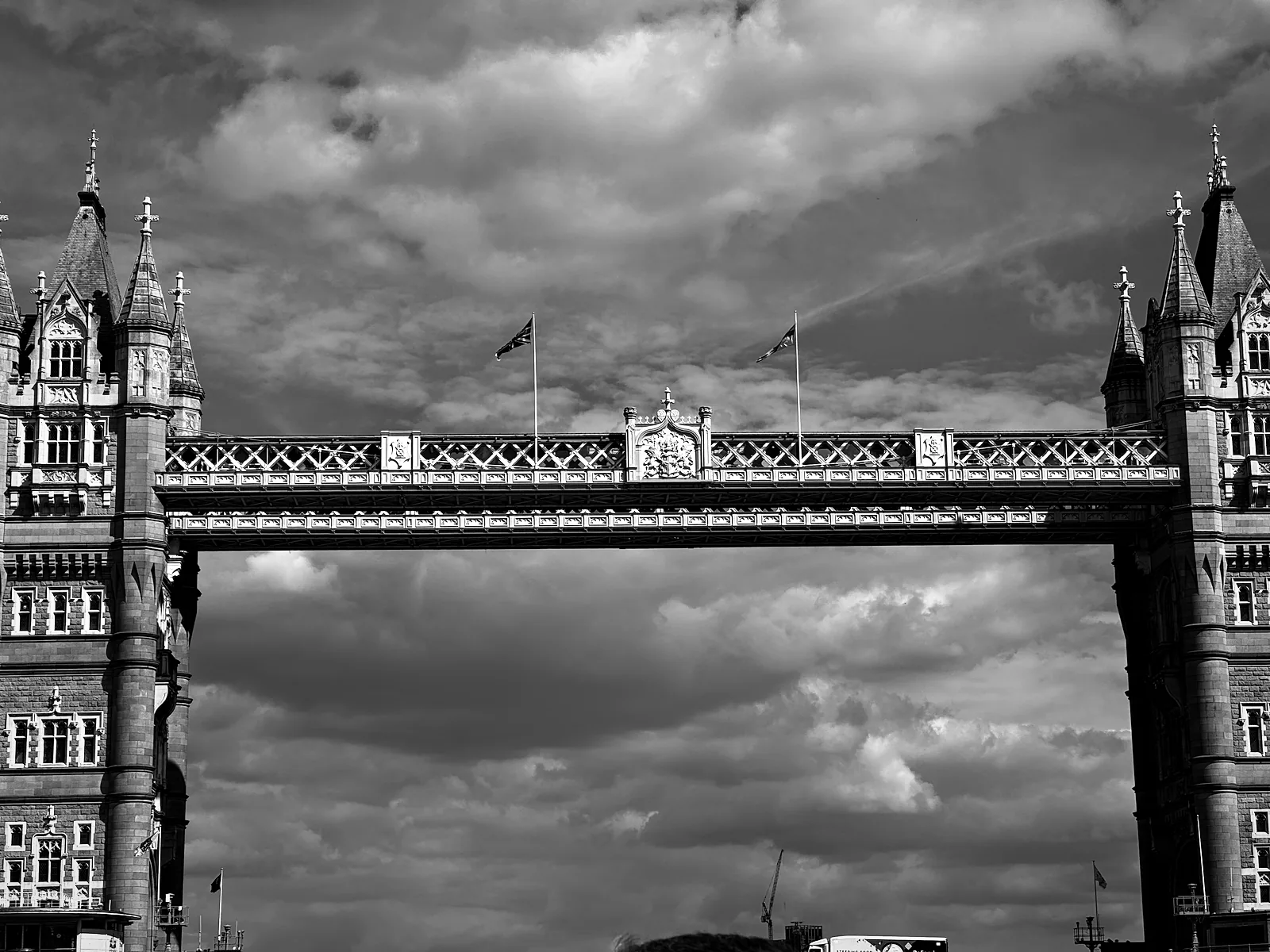
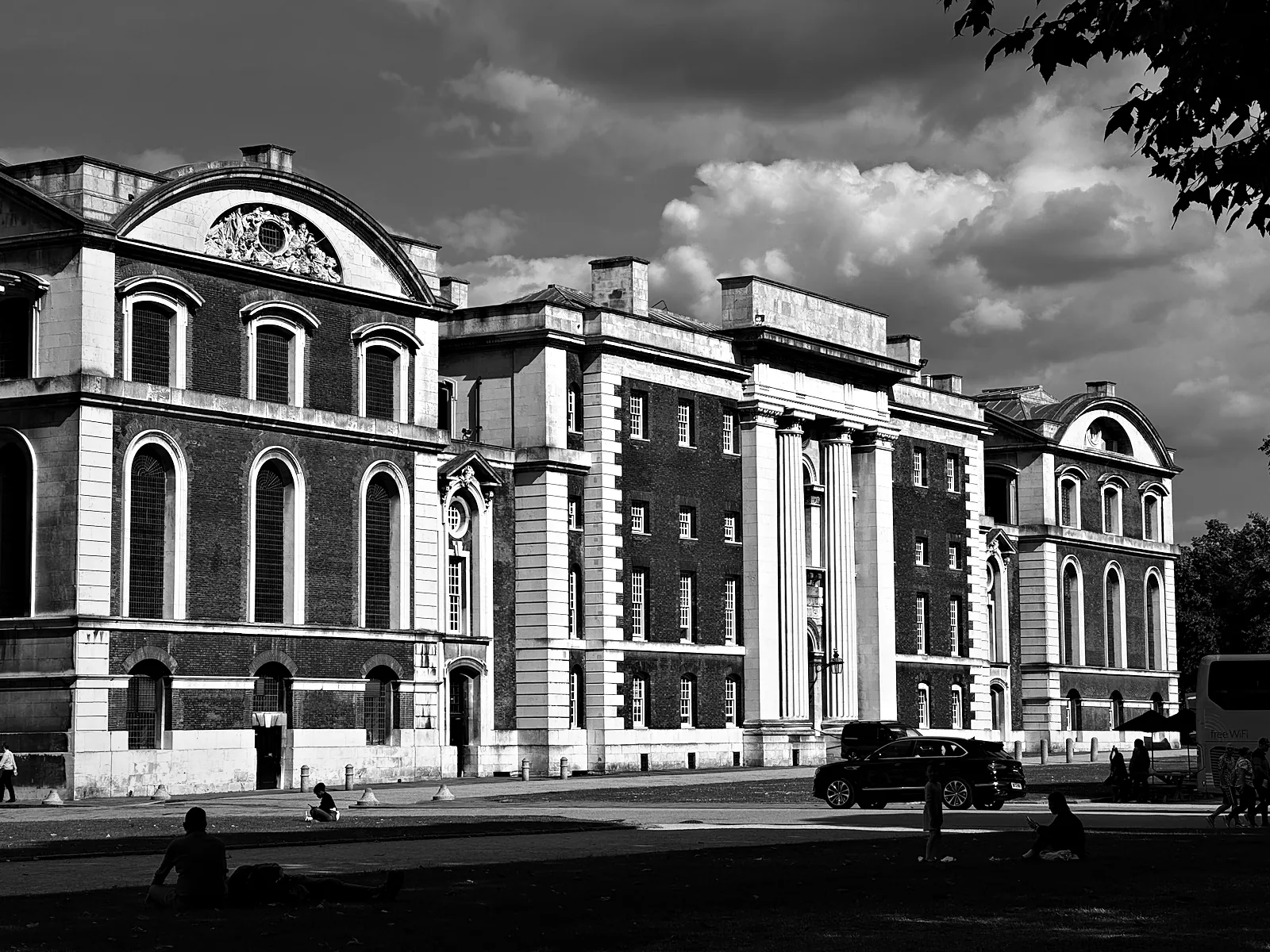
At half past three we took a boat from beside the London Eye down the Thames to Greenwich. From the water London comes past in order - the Royal Festival Hall, the chimney of Tate Modern with St Paul’s dome across the water, then the City’s towers bunching together, with the Shard going up past everything on the south bank. HMS Belfast, a warship from the Second World War kept as a museum, is moored just before Tower Bridge, and a little after four we went under the bridge itself. At Greenwich the boat came in beside the Old Royal Naval College (Christopher Wren’s pair of domes by the river, built as a hospital for retired sailors). We had a Maltesers waffle there, and even that simple dessert was delicious.
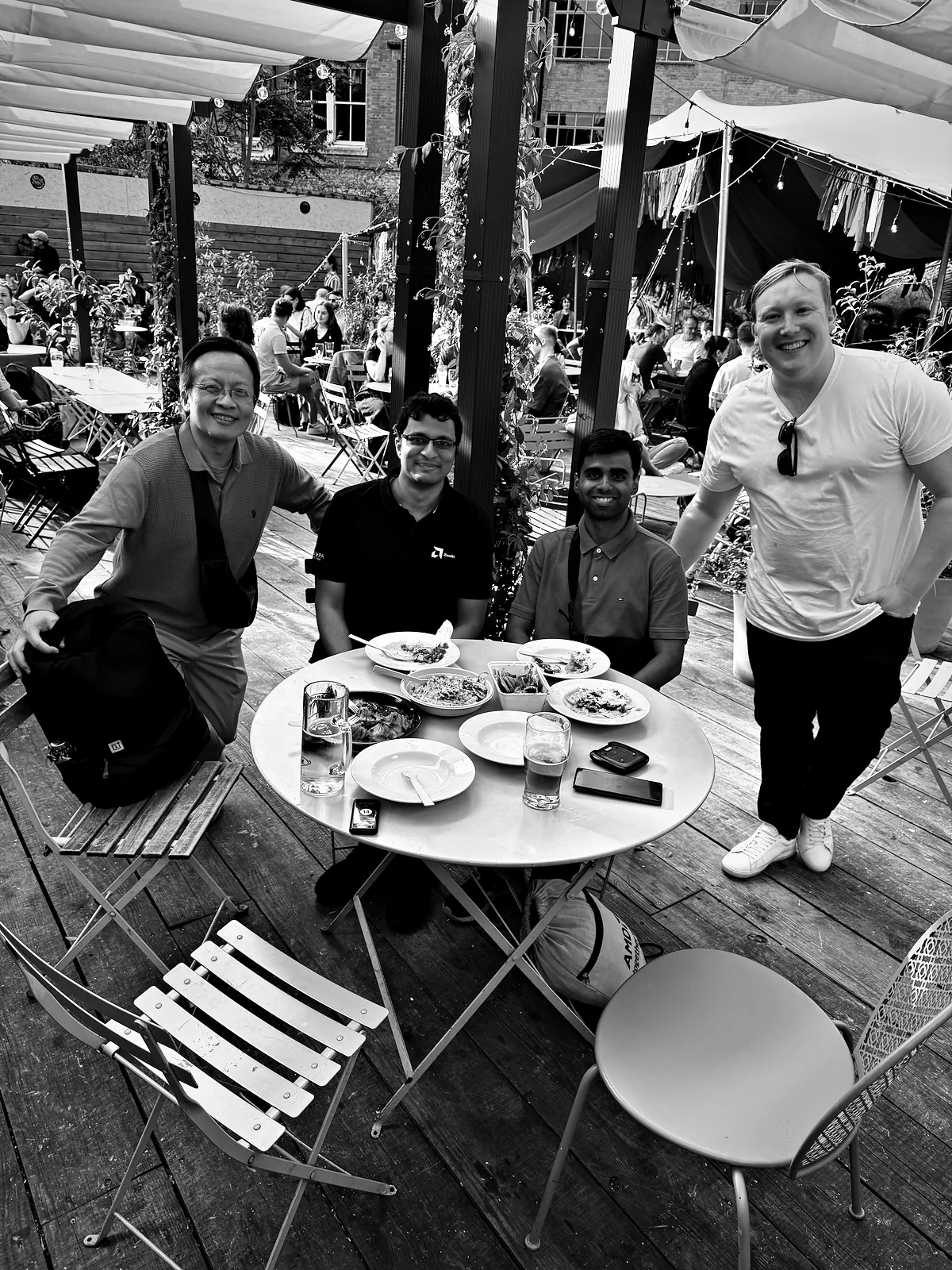
By seven we were back in town, south of the river, at an outdoor table with Ning and Harry, our AMD colleagues in London, and it was still broad daylight.
Saturday 22 June: Oxford
Oxford was a day trip from Paddington, about an hour each way, and we arrived just after ten. A poster at the station suggested a visit to Oxford University’s world-famous Gardens, Libraries & Museums.
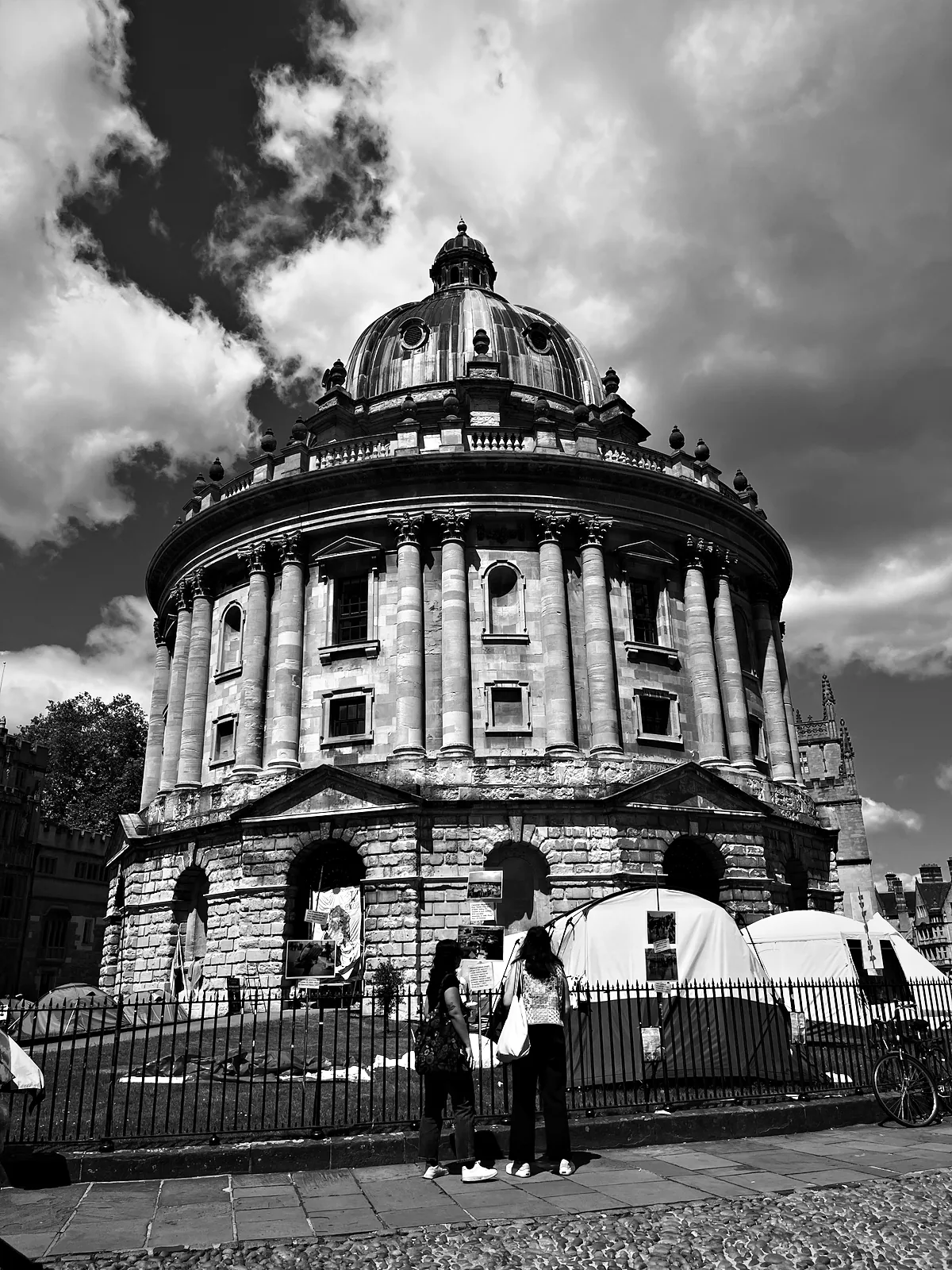
We started under Tom Tower at Christ Church, one of the university’s colleges, where the bell rings 101 times at five past nine every night. Along the High Street and up a lane, the Radcliffe Camera, the round domed library, sat under big white clouds, with its lawn full of tents from a protest camp for Palestine that had been there since May.
In the afternoon I bought my mother a handbag, and a purse with the university’s crest on it. Then we found a shop full of anime figures, which was fantastic. I had been watching Demon Slayer, and I spotted the hanafuda earring its hero Tanjiro wears, the one shaped like a Japanese flower playing card, and bought it. After that came the Covered Market, with bunting strung under its painted roof.
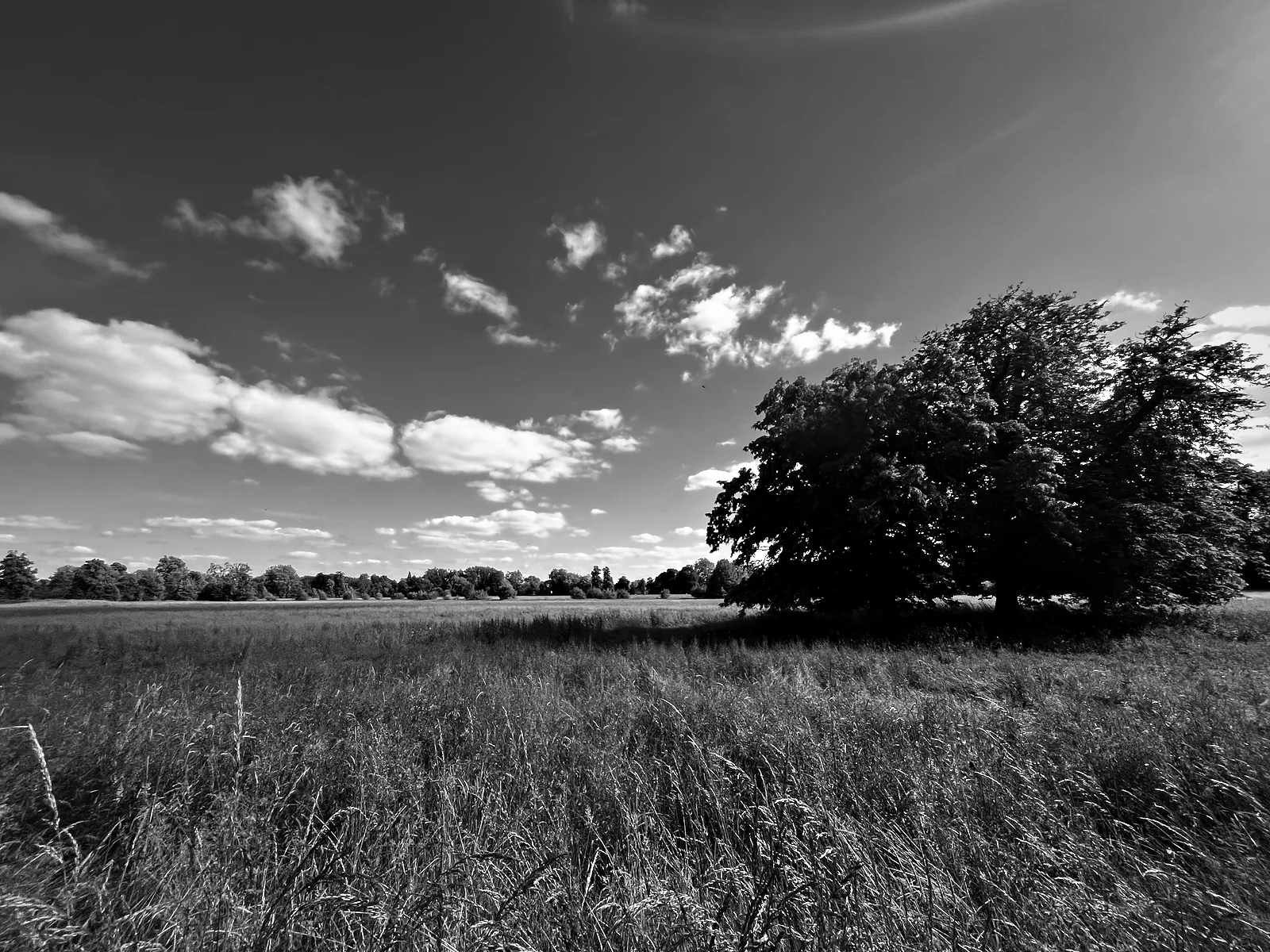
At five we were in Christ Church Meadow, where the grass grows long between the paths and one big tree stands on its own.
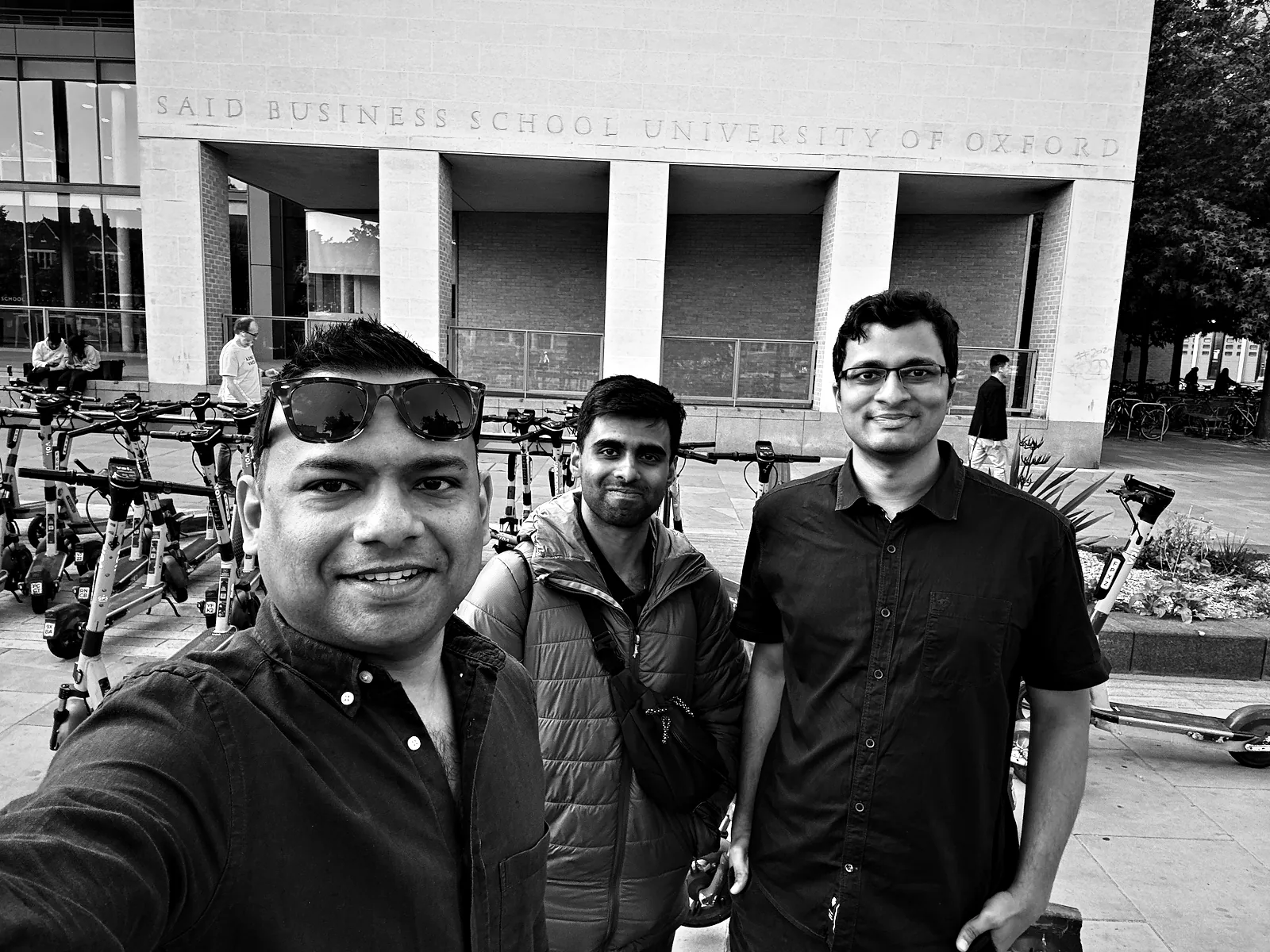
In the evening Viren’s cousin joined us for dinner. At the station afterwards the three of us fitted into one selfie in front of the Saïd Business School, and we took the train back after seven.
Sunday 23 June: Bath
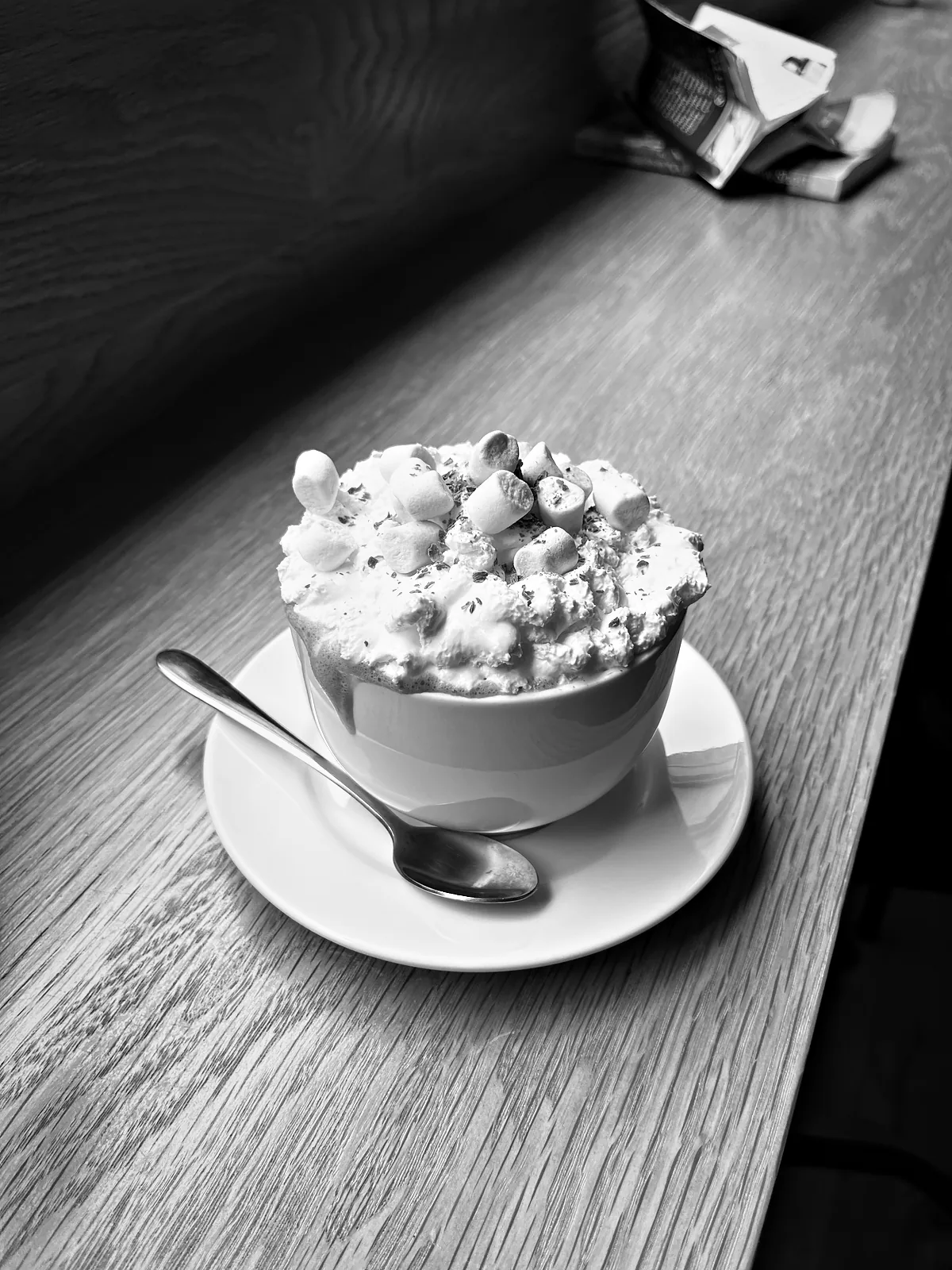
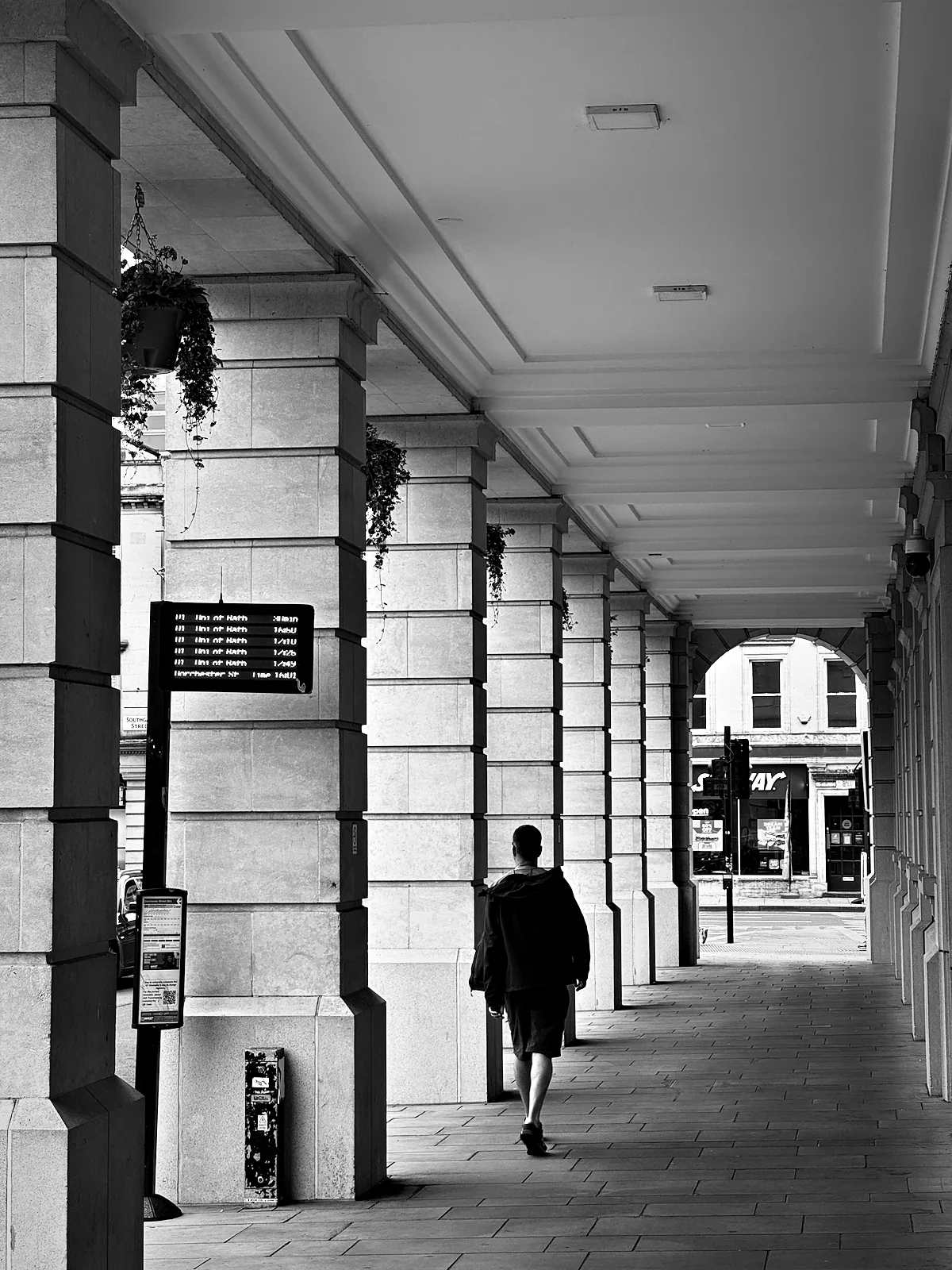
On Sunday we took the train from Paddington to Bath Spa and were there by twenty to eleven. The first place we found was The Bath Chocolate Company, just by the station on Railway Street, where they make the chocolate on the premises. We had the best hot chocolate ever there, buried under marshmallows.
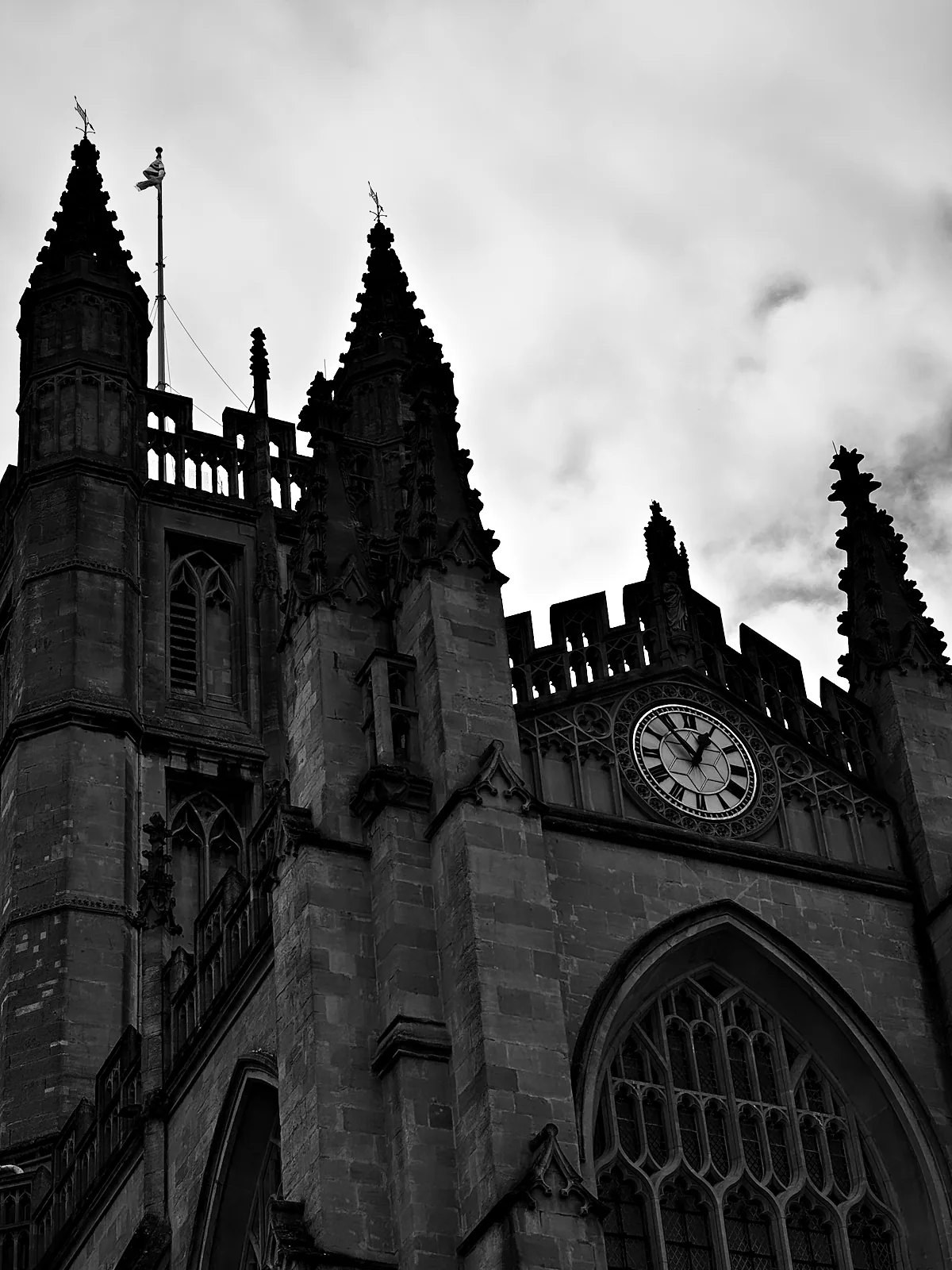
Bath Abbey stands in the middle of town, next to the Roman Baths, the bathhouse the Romans built over the hot spring that gave the town its name. On its west front, angels climb stone ladders up both sides of the great window, from a dream the bishop said he had before he rebuilt the church in 1499. Round the side, its pinnacles and clock stood against a grey sky.
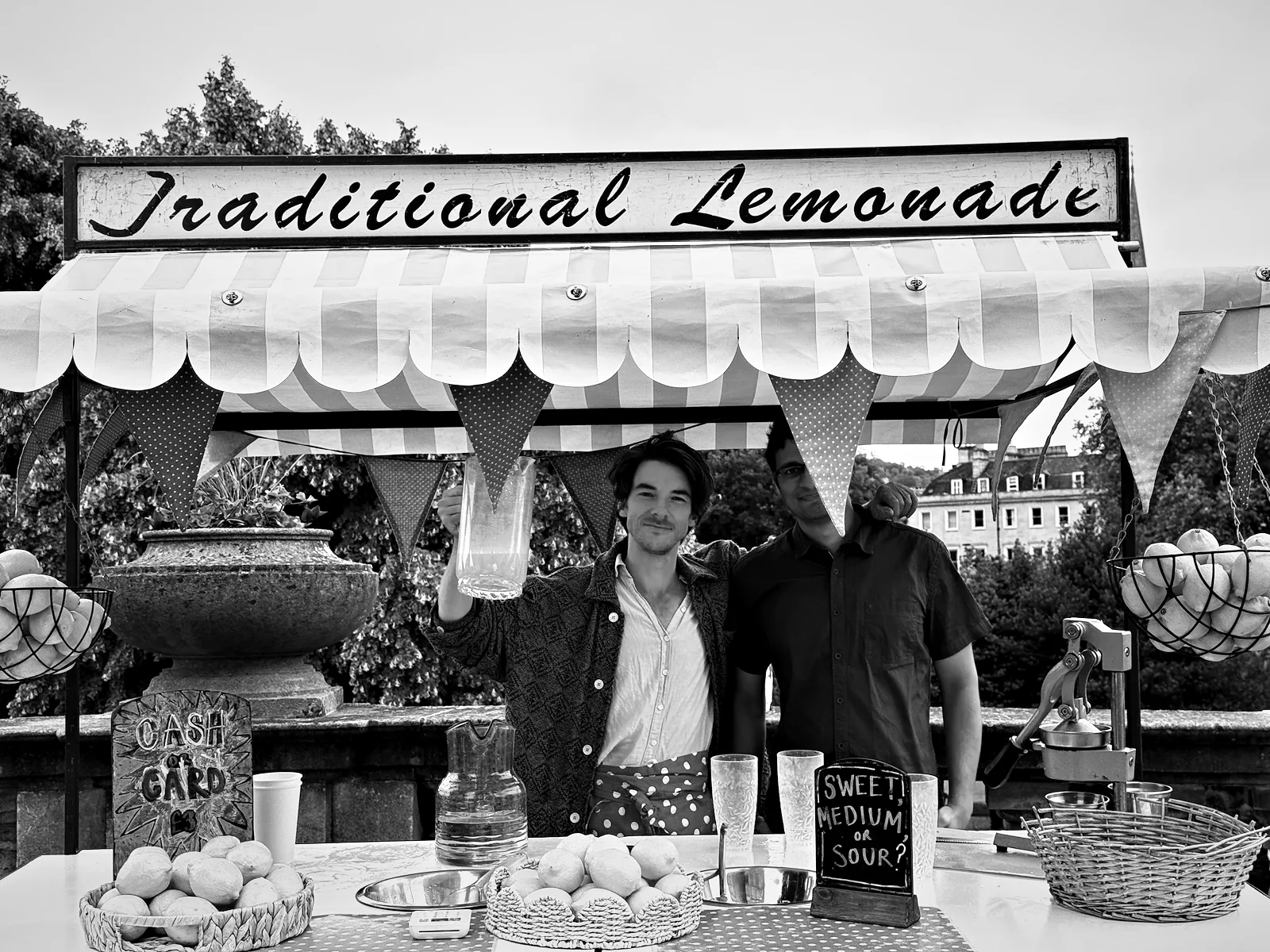
Just past the Abbey, the Avon comes over Pulteney Weir in a wide stepped curve, right below Pulteney Bridge, which has shops all the way across on both sides. By then we were parched from walking around, and a lemonade stall by the road there was a saviour. Its chalkboard asked Sweet, medium or sour?, and the man behind it raised a whole jug for the photo, with Viren beside him.
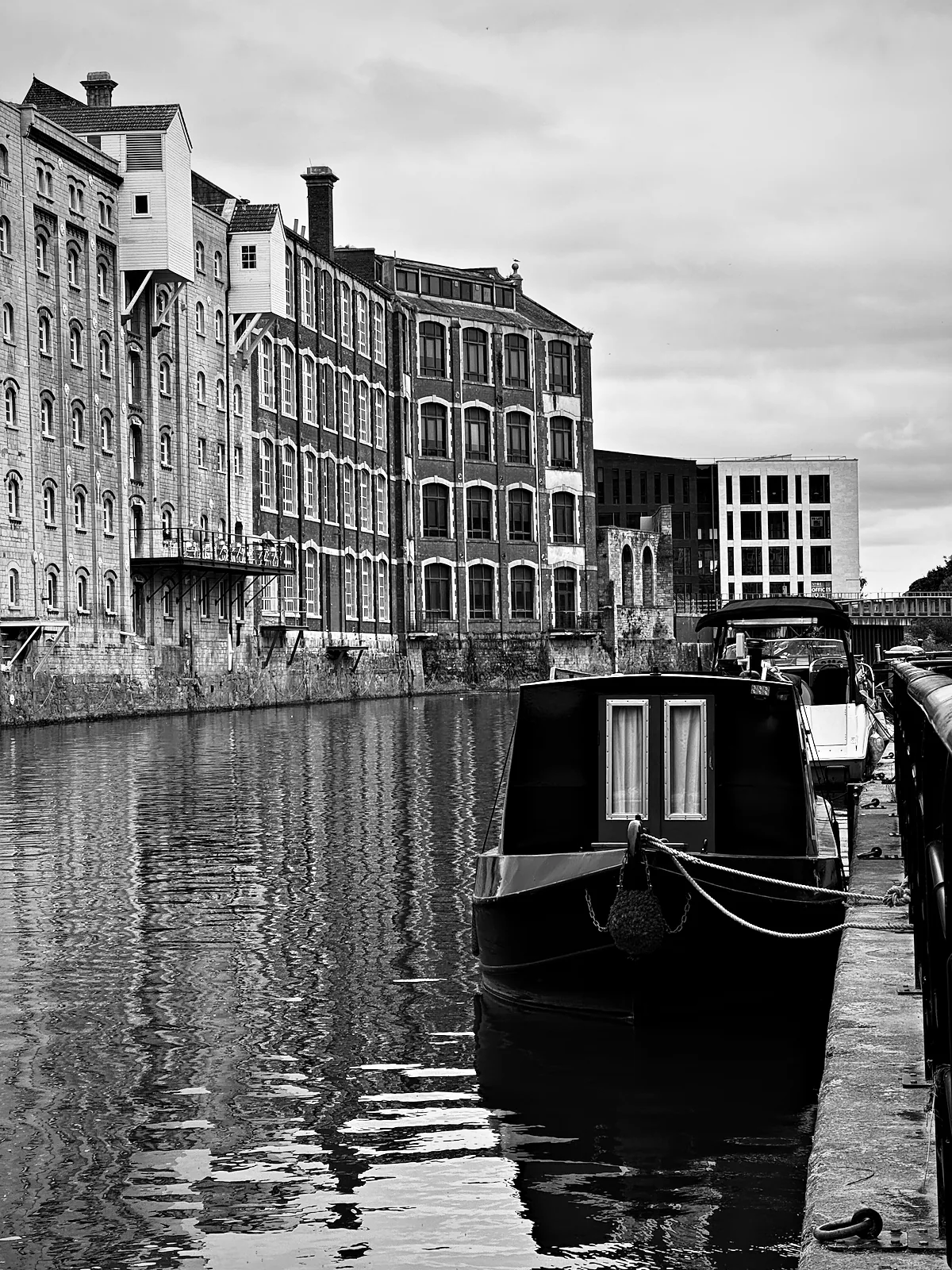
In the afternoon we walked west along the river, past a stone colonnade and a narrowboat moored below old mill buildings. From there we went up to Queen Square, the first of the squares John Wood the Elder built in the seventeen hundreds, in the style people call Georgian.
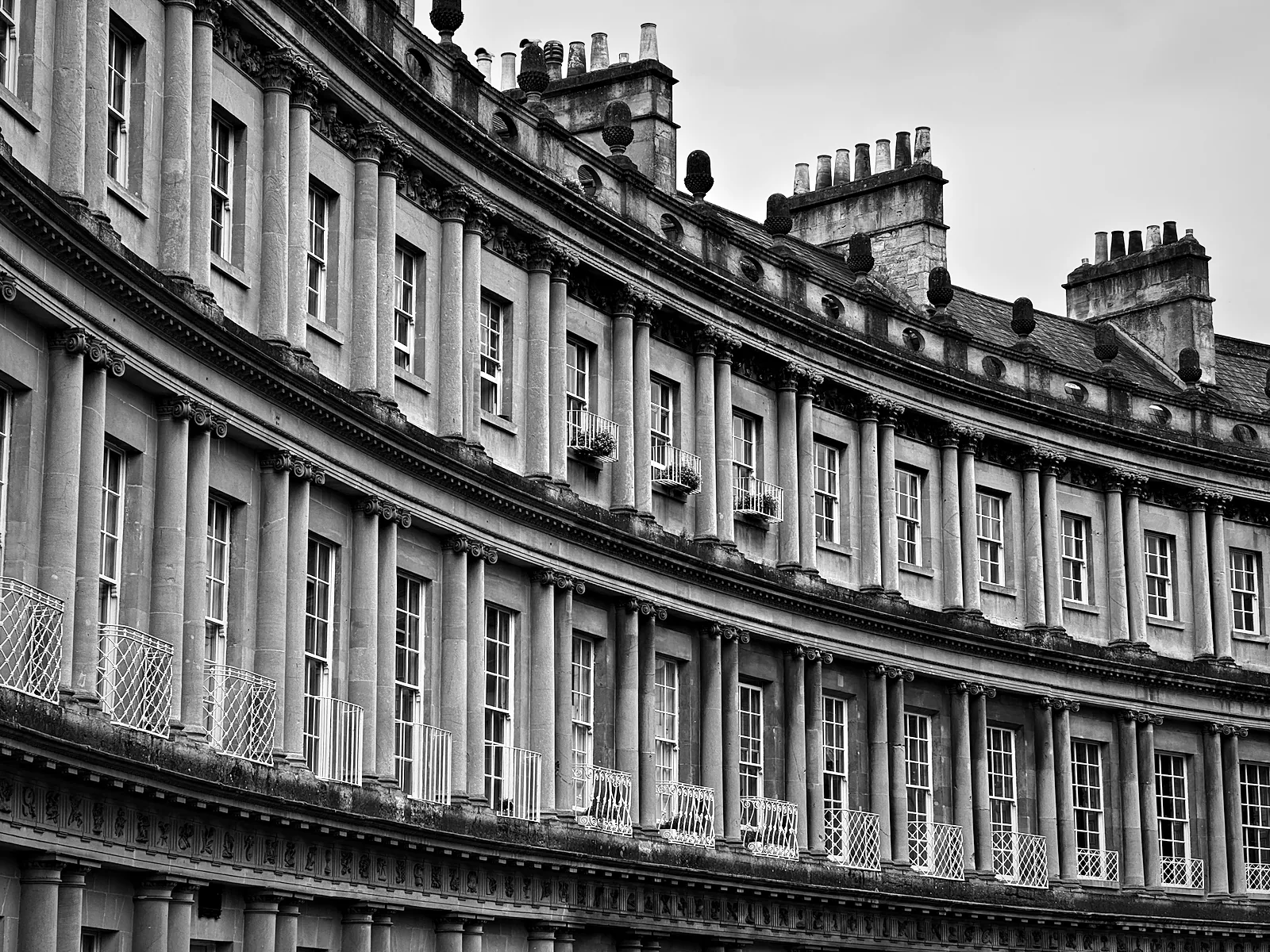
Uphill from Queen Square is the Circus, also by Wood. He believed Bath had been a centre of the ancient Druids, hence he surveyed Stonehenge and made the Circus almost as wide. Three curved terraces make the circle, with three orders of columns stacked one above another and stone acorns along the roof.
Brock Street leads from there to the Royal Crescent, thirty houses in one long curve facing a lawn. We walked along it, but we only took a photo of the house at the end, not of the whole crescent.
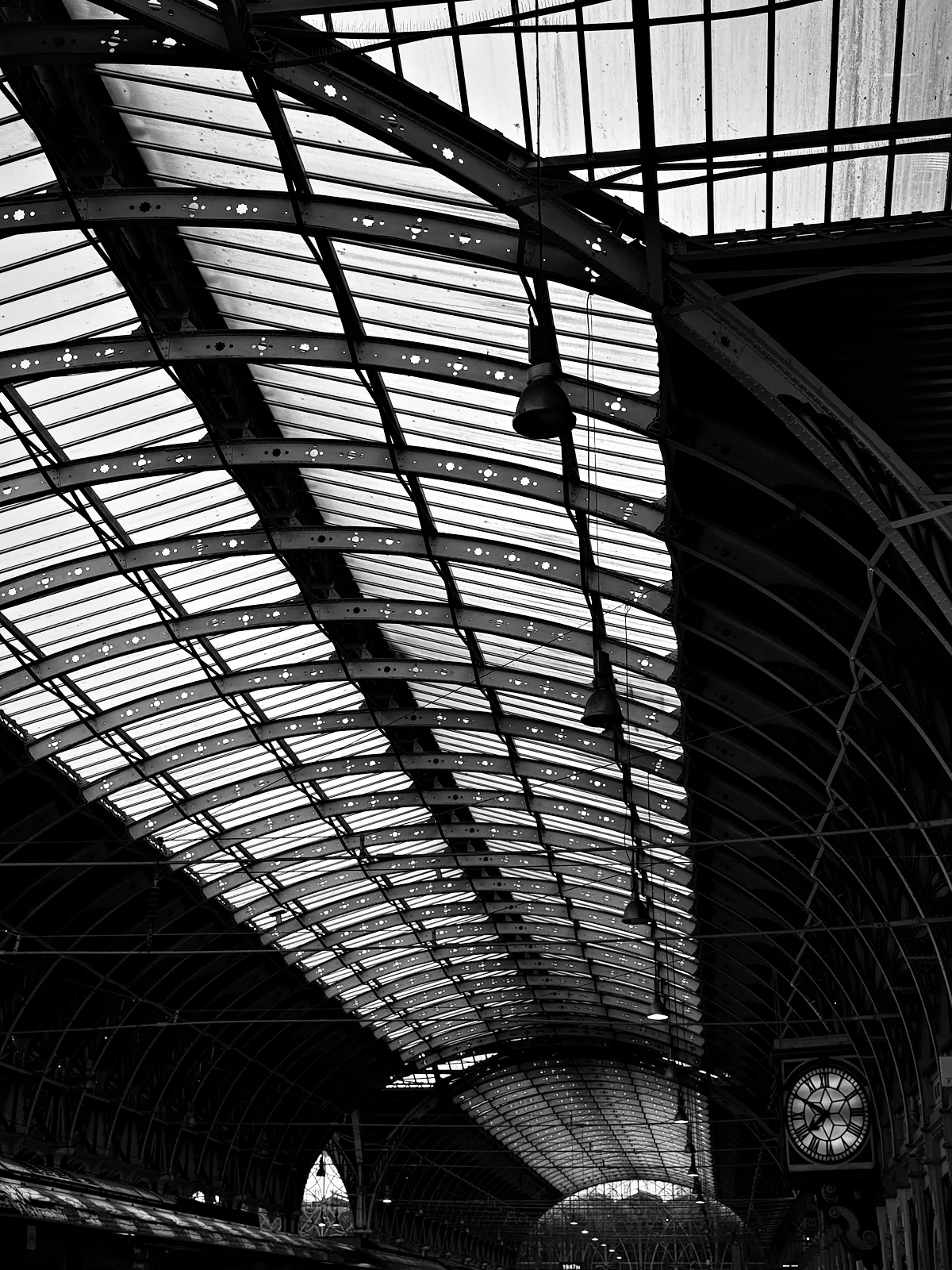
We were back at Paddington just before eight, under the curved roofs of iron and glass that Brunel, the engineer who built the line, gave the station. On Platform 1 is the Great Western Railway’s war memorial, a bronze soldier in a greatcoat and helmet, reading a letter.
Monday 24 June: the relaxed day
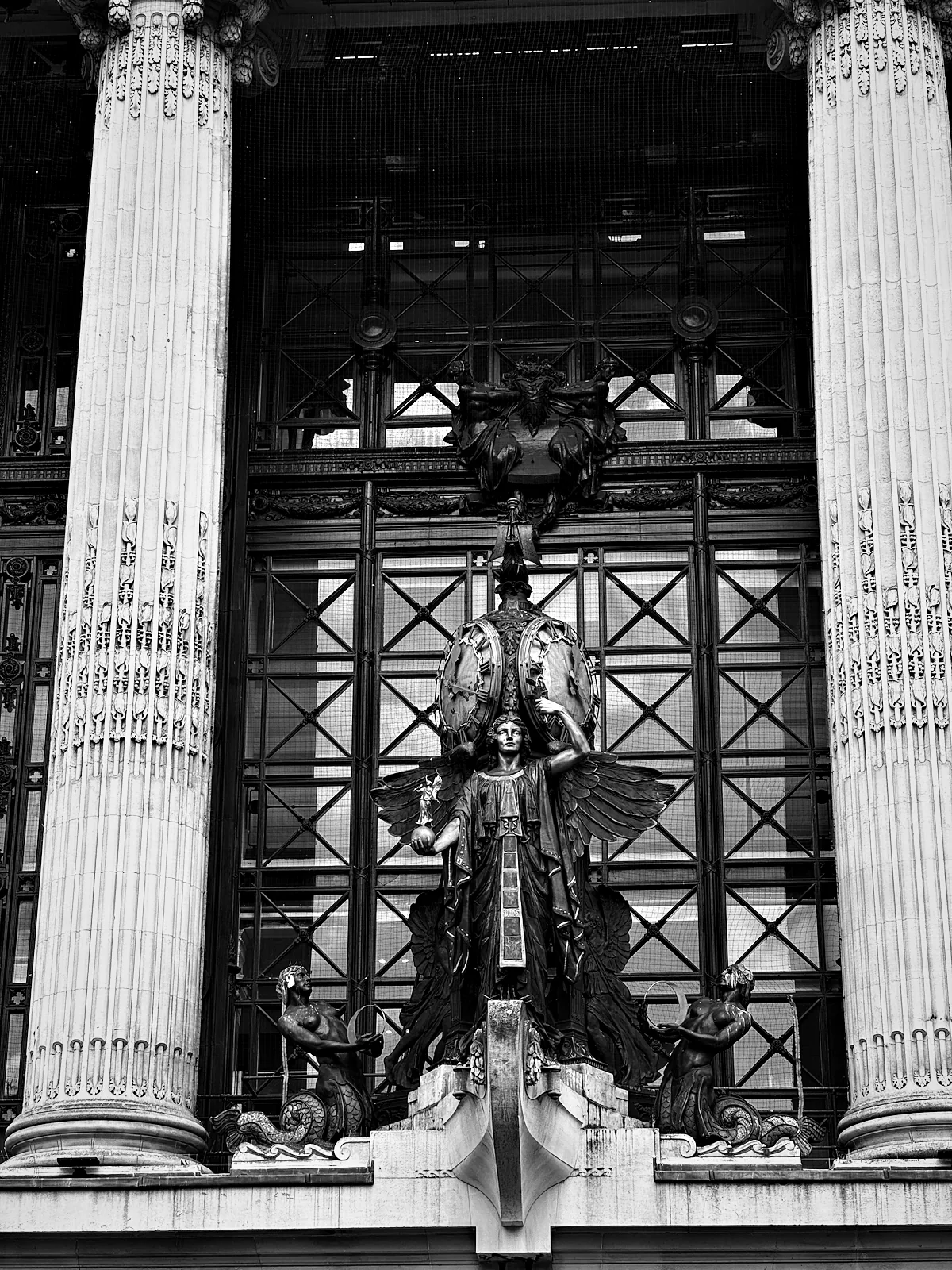
The last full day was marked Relaxed Day in the itinerary, with shopping in the afternoon, and that is what we did. We spent it buying souvenirs to take back home and sweets to distribute to friends, family and colleagues. Regent Street had Pride flags strung across it for June, and on Oxford Street, over the main doors of Selfridges, the Queen of Time stands above the clock.
A little after one, further along Oxford Street, Harmonie London was singing at a keyboard on the pavement, with the crowds and the buses going past behind her. She is a gospel singer with a big following on YouTube, and this pavement is where she sings. We stopped, and I filmed a bit of it.
Dishoom was recommended to us by many people as the “go to” Indian place in London, so at twenty to two we were in the queue outside the one on Kingly Street, just off Carnaby Street. It is modelled on the old Irani cafés of Bombay, and while we waited we held a card that began Humble apologies for the wait and promised Tipples and Chai. We ordered the fried okra, and since we had just come there from India, we found the food bland, lacking the right spice and taste.
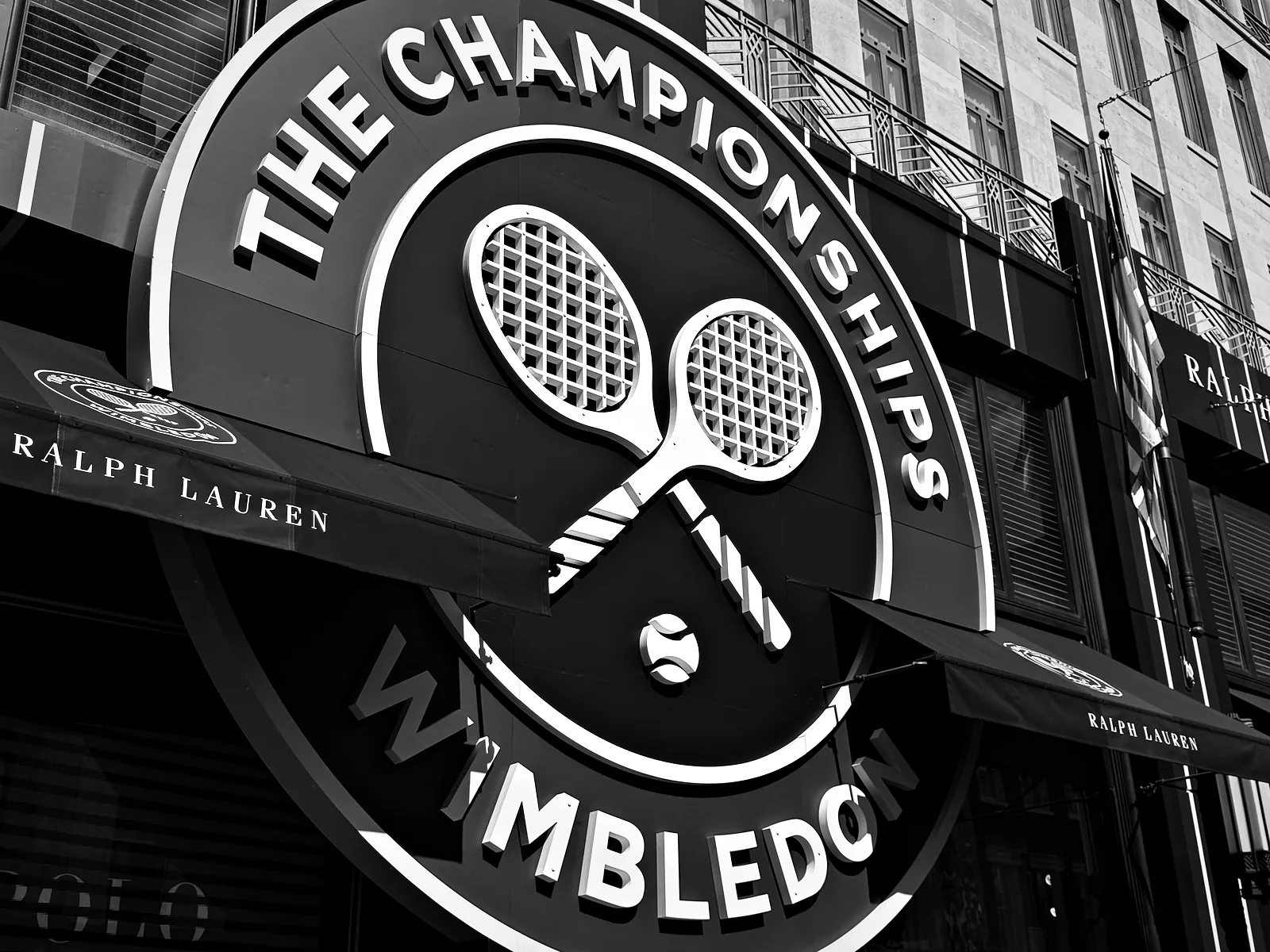
In Mayfair, a Ralph Lauren shop on Bond Street had a giant Wimbledon crest over its front a week before the tournament, and inside I bought a sweater for my father.
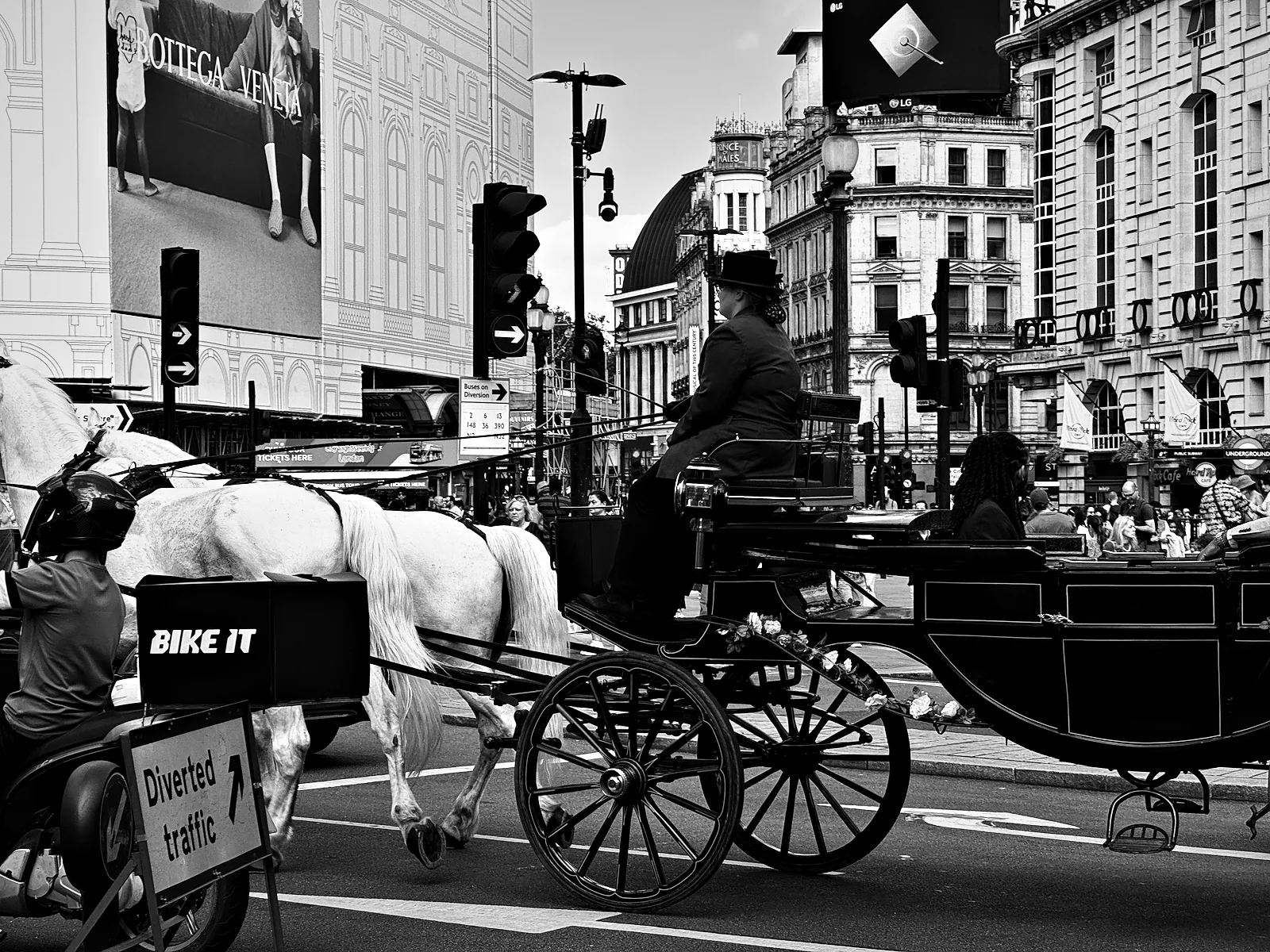
Piccadilly Circus was the end of the day. We were standing by the curve of Regent Street when a horse-drawn carriage came round the Circus, with two white horses, a driver in a top hat and roses along its side, and a delivery scooter riding right beside it.
Tuesday 25 June: home
We checked out on Tuesday morning and flew home the way we had come, Heathrow to Mumbai to Bengaluru.
Viren and I had a lot of philosophical questions on this trip. Coming from Bengaluru, we are used to the pollution, the noise, the chaos and the traffic. It is an overload on the senses which you don’t even know about until you go to a place like the UK, where you immediately realise what you have been quietly ignoring. The traffic there is structured, and the buildings and their paints have coherence. Even the simplest desserts were delicious, like the ice creams in Edinburgh and the Maltesers waffle in Greenwich, and people dressed elegantly and wore exquisite perfumes, so much so that their gentle presence lingered even after they had left.
So why can’t India be more like this? Because in India there are too many layers of friction to get anything done, and people aren’t incentivised to be kind, whereas every stranger we met in the UK went out of their way to be kind - the train to Edinburgh was just one example.
Viren agreed with all of it, and put it in his own words. In India we are big fish in small ponds, but in the UK we are small fish in a big pond, with ample space to grow and less systemic resistance.
We landed at KIA, Bengaluru’s airport, at quarter to six on Wednesday morning. Stepping outside the terminal, the first thing that hit my nose was the smell of the soil, the old red farming soil smell that India is known for. It brought back the familiar feeling of being home, but the tug of war in my head between the UK and India is still going.